


Paul the Octopus captivated the world with his accurate World Cup predictions, becoming as big a phenomenon as the competition itself.
Paul correctly predicted the result of eight out of eight World Cup matches, including Spain’s victory in the final over the Netherlands, leading many to speculate about his apparent divine powers.
However, many fortune tellers in Taiwan were unimpressed, and were keen to put their small red-beaked, white java sparrows that have long been revered for their psychic ability up against the cephalopod in a battle for world zoomancy supremacy.

PHOTO: CNA
Chen Mei-hsiu, a fortune teller at the underground plaza of Taipei’s Longshan Temple, says her sparrow Big Lucky knew Spain would be this year’s champion long before the octopus.
“Of course he knew. We just didn’t have the attention of the international media or else it would have been Big Lucky’s name all over the news instead of Paul’s,” Chen said, showing a picture of the bird pecking the Spanish flag.
Weighing an average of 2g, sparrows like Big Lucky are considered a vital pillar of the fortune telling profession in Taiwan because of their omniscient power to predict anything, even if some self-claimed seers dub the practice as nothing but a sham.
During a quick stroll through the underground plaza, cages of the small white creatures, advertised as “Psychic Birds” by their fortune telling owners, can be seen everywhere.
“We can tell which bird is endowed with special gifts during the three-month training process, but we only select the ones that are obedient, friendly and cooperative,” Liao Ho-chun, another fortune-teller said.
Benefiting from the wisdom of these feathered forecasters is easy. Those looking for a glimpse into the future simply write down their name and the date and time of their birth.
After a brief consultation with the fortune teller, the seers recite their own names and ask their questions silently as they then open the door of the cage and place a grain of rice over a stack of cards containing different pictures and messages.
The birds, their wings clipped, will then eat the grain of rice and proceed to pick out three cards to be interpreted by the tellers.
Birds, Liao says, are more accurate than human beings, and any incorrect predictions made by the birds are the fault of the fortune teller for misinterpreting the message.
“The birds are so intuitive that sometimes they purposely pick out the wrong cards because they can detect the people who are not morally upstanding,” he said.
Chinese Astrology Association president Chen Ching also touted the power of the sparrow, saying that once the trainer has successfully “opened the minds” of the bird, “the bird can see into the past and the future.”
When asked for details of the training process, Chen paused, lowered his voice and slowly said, “now that’s top secret.”
Kevin Wang, a 42-year-old public relations manager, swears by the divination of the birds and credits one of them with saving his life.
“A few years ago, I was confused about whether to marry my girlfriend or not. So I consulted with a sparrow,” he said.
“The sparrow immediately said no and even warned me to break up with the girl as soon as possible. Later I found out that she was really crazy and my life would have been ruined had I married her,” he said.
Not all fortune-tellers, however, hold the birds’ powers of prediction in such high regard. In fact, some brand the practice a giant hoax.
“I can assure you the 99.9 percent of the fortune-tellers who claim that their birds can see the future are big fat liars,” said Kuo Chi-hsiung, who operates a stall in Xingtian Temple’s famous psychic alley.
“Those birds were trained to pick out certain cards and it is up to a fortune teller to make up a story on the spot to deceive the customer,” he said.

“China is preparing to invade Taiwan,” Deputy Minister of Foreign Affairs Francois Wu (吳志中) said in an exclusive interview with British media channel Sky News for a special report titled, “Is Taiwan ready for a Chinese invasion?” the Ministry of Foreign Affairs said today in a statement. The 25-minute-long special report by Helen Ann-Smith released yesterday saw Sky News travel to Penghu, Taoyuan and Taipei to discuss the possibility of a Chinese invasion and how Taiwan is preparing for an attack. The film observed emergency response drills, interviewed baseball fans at the Taipei Dome on their views of US President
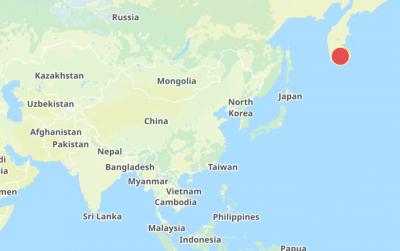
The Central Weather Administration (CWA) today issued a "tsunami watch" alert after a magnitude 8.7 earthquake struck off the Kamchatka Peninsula in northeastern Russia earlier in the morning. The quake struck off the east coast of the Kamchatka Peninsula at 7:25am (Taiwan time) at a depth of about 19km, the CWA said, citing figures from the Pacific Tsunami Warning Center. The CWA's Seismological Center said preliminary assessments indicate that a tsunami could reach Taiwan's coastal areas by 1:18pm today. The CWA urged residents along the coast to stay alert and take necessary precautions as waves as high as 1m could hit the southeastern

The National Museum of Taiwan Literature is next month to hold an exhibition in Osaka, Japan, showcasing the rich and unique history of Taiwanese folklore and literature. The exhibition, which is to run from Aug. 10 to Aug. 20 at the city’s Central Public Hall, is part of the “We Taiwan” at Expo 2025 series, highlighting Taiwan’s cultural ties with the international community, National Museum of Taiwan Literature director Chen Ying-fang (陳瑩芳) said. Folklore and literature, among Taiwan’s richest cultural heritages, naturally deserve a central place in the global dialogue, Chen said. Taiwan’s folklore would be immediately apparent at the entrance of the
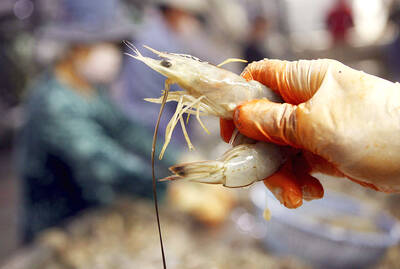
ECONOMIC BENEFITS: The imports from Belize would replace those from Honduras, whose shrimp exports have dropped 67 percent since cutting ties in 2023 Maintaining ties with Taiwan has economic benefits, Ministry of Foreign Affairs officials said yesterday, citing the approval of frozen whiteleg shrimp imports from Belize by the Food and Drug Administration (FDA) as an example. The FDA on Wednesday approved the tariff-free imports from Belize after the whiteleg shrimp passed the Systematic Inspection of Imported Food, which would continue to boost mutual trade, the ministry said. Taiwan’s annual consumption of whiteleg shrimps stands at 30,000 tonnes, far exceeding domestic production, the ministry said. Taiwan used to fill the gap by importing shrimps from Honduras, but purchases slumped after Tegucigalpa severed diplomatic ties with Taiwan


 RSS
RSS