


Priority rights and plant variety rights are expected to be included in a cross-strait cooperation agreement on intellectual property rights (IPR) protection, government officials said.
Wang Mei-hua (王美花), director-general of the ministry's Intellectual Property Office, made the remarks on Friday during a presentation, along with officials from the Mainland Affairs Council (MAC) and the Council of Agriculture, on forthcoming cross-strait IPR talks.
The IPR protection pact is expected to be signed during a meeting between Straits Exchange Foundation Chairman Chiang Pin-kung (江丙坤) and China's Association for Relations Across the Taiwan Strait Chairman Chen Yunlin (陳雲林) either late this month or early next month.
Wang said the electric and high-tech industries have long hoped for the inclusion of the right of priority in the IPR pact.
The right of priority means that when Taiwanese manufacturers file for patent or trademark applications in Taiwan, they will also be accorded priority patent or trademark protection in China for one year or six months until they file for similar protection in China.
Wang said there have been rampant copyright infringement of Taiwanese trademarks and products in China, such as names of Taiwanese production sites being registered in China, Chinese fruit being sold as Taiwanese fruit, and Taiwanese music, film and TV programs being illegally posted on Chinese Web sites.
“The two sides will help prevent such practices and step up the crackdown after the signing of the IPR protection agreement,” Wang said.
Yeh Ying (葉瑩), deputy director-general of the Bureau of Animal and Plant Health Inspection and Quarantine, said the pact would not only help deal with trademark problems, but also include plant variety rights.
Plant breeders will enjoy cross-strait plant variety rights once it is certified in Taiwan that an applicant has developed a new variety, yeh said.
Wang said that the cross-strait IPR agreement would be similar to the ones that China has signed with other countries, but would be more substantive because of the right of priority and variety rights.
Wu Mei-hung (吳美紅), director of the MAC's Department of Legal Affairs, said she expected that after the signing of the pact, an agency-to-agency cross-strait platform would be established to crack down on counterfeiting and forgery, especially on Web sites that provide illegally downloaded music or films.
Taiwanese applications for patents or trademarks in China over the past five years have totaled more than 20,000 and 9,000 annually respectively, according to statistics from the Intellectual Property Office.
Chinese businesses coming to Taiwan to apply for patents or trademarks have also been on the rise, averaging several hundred patent applications per year, the office said.

Taipei has once again made it to the top 100 in Oxford Economics’ Global Cities Index 2025 report, moving up five places from last year to 60. The annual index, which was published last month, evaluated 1,000 of the most populated metropolises based on five indices — economics, human capital, quality of life, environment and governance. New York maintained its top spot this year, placing first in the economics index thanks to the strength of its vibrant financial industry and economic stability. Taipei ranked 263rd in economics, 44th in human capital, 15th in quality of life, 284th for environment and 75th in governance,

The Sports Administration yesterday demanded an apology from the national table tennis association for barring 17-year-old Yeh Yi-tian (葉伊恬) from competing in the upcoming World Table Tennis (WTT) United States Smash tournament in Las Vegas this July. The sports agency said in a statement that the Chinese Taipei Table Tennis Association (CTTTA) must explain to the public why it withdrew Yeh from the WTT tournament in Las Vegas. The sports agency said it contacted the association to express its disapproval of the decision-making process after receiving a complaint from Yeh’s coach, Chuang
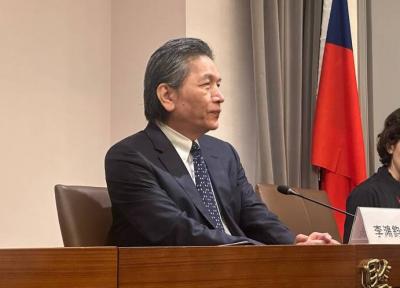
Control Yuan Secretary-General Lee Chun-yi (李俊俋) tendered his resignation last night, admitting that he had misused a government vehicle, as reported by media. His resignation was immediately accepted by the Control Yuan. In a statement explaining why he had resigned, Lee apologized for using a Control Yuan vehicle to transport his dog to a pet grooming salon on May 20. The issue first came to light late last month, when TVBS News reported that Lee had instructed his driver to take the dog to the salon. The news channel broadcast photos that it said were taken by an unnamed whistle-blower, which purportedly showed the

Democratic Progressive Party caucus chief executive Rosalia Wu, front, grabs the pennant in a dragon boat race hosted by Qu Yuan Temple in the Shuanghsi River in Taipei’s Beitou District yesterday.


 RSS
RSS