


Taiwan and China have yet to agree on the date to launch regular cross-strait flights because Beijing insists on handling the issues under a special regulatory framework, Civil Aeronautics Administration (CAA) Director-General Lee Lung-wen (李龍文) said yesterday.
Earlier this year, China set Aug. 31 as the date for regular flights. Taiwan wanted an earlier date.
“Things are easier on our side. We just treat them [cross-strait flights] as international flights,” Lee said. “To them [China], cross-straight flights are neither domestic nor international flights and they want to design a special law to regulate them.”
While both sides have yet to agree on a date, EVA Air (長榮航空) and Uni Air (立榮航空) said yesterday they had started taking reservations for the flights.
Nei Kuo-wei (聶國偉), a spokesman for the Evergreen Group that the two airlines belong to, said EVA Air and UNI Airways would initially operate regular flights to 11 Chinese cities — Beijing, Shanghai, Guangzhou, Hangzhou, Kunming, Xiamen, Shenzhen, Tianjin, Dalian, Ningpo and Chengdu.
Starting Sept. 28, the airlines will also fly to Qingdao, Wuhan and Chongqing, he said.
Lee said the airlines were taking reservations, but that the CAA had voiced concerns.
Meanwhile, Lee said airlines must lower the price of cross-strait tickets.
“They may not be able to do much with some of the popular flights, like those to Shanghai, but they can nevertheless offer some minor discounts on [them],” Lee said.
“The airlines have to try to lower the price for each and every flight route,” he said.
CAA figures showed that since cross-strait flights were launched last July, passenger loads on cross-strait charters had risen from an average of 65 percent to an average of 78.8 percent as of last month.
ADDITIONAL REPORTING BY CNA

“China is preparing to invade Taiwan,” Deputy Minister of Foreign Affairs Francois Wu (吳志中) said in an exclusive interview with British media channel Sky News for a special report titled, “Is Taiwan ready for a Chinese invasion?” the Ministry of Foreign Affairs said today in a statement. The 25-minute-long special report by Helen Ann-Smith released yesterday saw Sky News travel to Penghu, Taoyuan and Taipei to discuss the possibility of a Chinese invasion and how Taiwan is preparing for an attack. The film observed emergency response drills, interviewed baseball fans at the Taipei Dome on their views of US President
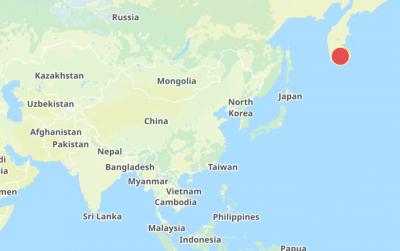
The Central Weather Administration (CWA) today issued a "tsunami watch" alert after a magnitude 8.7 earthquake struck off the Kamchatka Peninsula in northeastern Russia earlier in the morning. The quake struck off the east coast of the Kamchatka Peninsula at 7:25am (Taiwan time) at a depth of about 19km, the CWA said, citing figures from the Pacific Tsunami Warning Center. The CWA's Seismological Center said preliminary assessments indicate that a tsunami could reach Taiwan's coastal areas by 1:18pm today. The CWA urged residents along the coast to stay alert and take necessary precautions as waves as high as 1m could hit the southeastern

The National Museum of Taiwan Literature is next month to hold an exhibition in Osaka, Japan, showcasing the rich and unique history of Taiwanese folklore and literature. The exhibition, which is to run from Aug. 10 to Aug. 20 at the city’s Central Public Hall, is part of the “We Taiwan” at Expo 2025 series, highlighting Taiwan’s cultural ties with the international community, National Museum of Taiwan Literature director Chen Ying-fang (陳瑩芳) said. Folklore and literature, among Taiwan’s richest cultural heritages, naturally deserve a central place in the global dialogue, Chen said. Taiwan’s folklore would be immediately apparent at the entrance of the
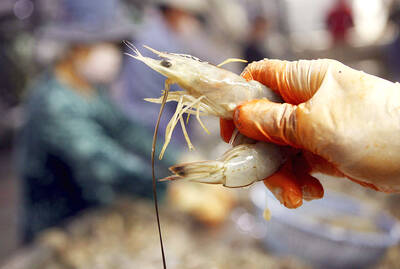
ECONOMIC BENEFITS: The imports from Belize would replace those from Honduras, whose shrimp exports have dropped 67 percent since cutting ties in 2023 Maintaining ties with Taiwan has economic benefits, Ministry of Foreign Affairs officials said yesterday, citing the approval of frozen whiteleg shrimp imports from Belize by the Food and Drug Administration (FDA) as an example. The FDA on Wednesday approved the tariff-free imports from Belize after the whiteleg shrimp passed the Systematic Inspection of Imported Food, which would continue to boost mutual trade, the ministry said. Taiwan’s annual consumption of whiteleg shrimps stands at 30,000 tonnes, far exceeding domestic production, the ministry said. Taiwan used to fill the gap by importing shrimps from Honduras, but purchases slumped after Tegucigalpa severed diplomatic ties with Taiwan


 RSS
RSS