


The first geographic park of the northeast coast and Ilan area opens to the public tomorrow, a tourism official said yesterday.
Chen Mei-kang (陳梅岡), head of the Northeast and Ilan Coast National Scenic Area Administration, said the opening of Bitou-Longdong Geopark was intended to promote eco-friendly tourism and inject new life into communities in the area.
ROCK FORMATIONS
The geology of the northeast coast, including unusual rock formations created by erosion over thousands of years, draws international researchers and impresses tourists, he said.
At Nanya (南雅), the northern gateway to the Northeast Coast National Scenic Area, visitors can take in the mountain peaks, ocean, unusual rock formations and fishing villages. From there, tourists can travel to Bitou (鼻頭) and Longdong (龍洞) and visit Bitou-Longdong Geopark.
Geologists from Taiwan and 11 other East Asian countries will gather at a separate location in Taipei County tomorrow to celebrate the opening of the park’s “geography pavilion.”
PROTECTED AREAS
In addition to Bitou-Longdong Geopark, Chen said a second geopark located between Longdong and Cape San Diego (三貂角) and a third area between Dali (大里) and Turtle Island (龜山島) off the coast were also protected by the Tourism Bureau.
A tour route through the region will also be unveiled tomorrow to tempt tourists to visit, Chen said.
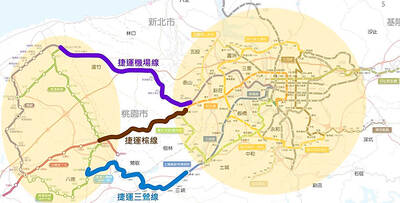
The Executive Yuan yesterday approved a southwestern extension of the Sanying MRT Line from New Taipei to Bade District (八德) in Taoyuan, with a goal of starting construction by late 2026. The 4.03-kilometer extension, featuring three new stations, will run from the current terminus at Yingtao Fude Station (LB12) in New Taipei City to Dannan Station (LB14), where it will connect with Taoyuan’s Green Line, New Taipei City Metro Corp said in a statement. This extension will follow the completion of core Sanying Line, a 14.29-kilometer medium-capacity system linking Tucheng (土城), Sansia (三峽)

CARGO LOSS: About 50 containers at the stern of the ‘Ever Lunar’ cargo ship went overboard, prompting the temporary closure of the port and disrupting operations Evergreen Marine Corp, Taiwan’s largest container shipper, yesterday said that all crew members aboard the Ever Lunar (長月) were safe after dozens of containers fell overboard off the coast of Peru the previous day. The incident occurred at 9:40am on Friday as the Ever Lunar was anchored and waiting to enter the Port of Callao when it suddenly experienced severe rolling, Evergreen said in a statement. The rolling, which caused the containers to fall, might have been caused by factors including a tsunami triggered by an earthquake in Russia, poor winter sea conditions in South America or a sudden influx of waves,

The Ministry of Culture yesterday officially launched the “We TAIWAN” cultural program on Osaka’s Nakanoshima sandbank, with the program’s mascot receiving overwhelming popularity. The cultural program, which runs from Aug. 2 to 20, was designed to partner with and capitalize on the 2025 World Expo that is being held in Osaka, Japan, from April 13 to Oct. 13, the ministry said. On the first day of the cultural program, its mascot, a green creature named “a-We,” proved to be extremely popular, as its merch was immediately in high demand. Long lines formed yesterday for the opening
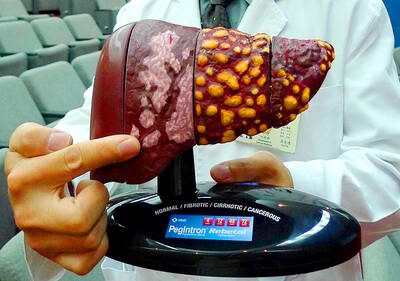
STAY VIGILANT: People should reduce the risk of chronic liver inflammation by avoiding excessive alcohol consumption, smoking and eating pickled foods, the physician said A doctor last week urged people to look for five key warning signs of acute liver failure after popular producer-turned-entertainer Shen Yu-lin (沈玉琳) was reportedly admitted to an intensive care unit for fulminant hepatitis. Fulminant hepatitis is the rapid and massive death of liver cells, impairing the organ’s detoxification, metabolic, protein synthesis and bile production functions, which if left untreated has a mortality rate as high as 80 percent, according to the Web site of Advancing Clinical Treatment of Liver Disease, an international organization focused on liver disease prevention and treatment. People with hepatitis B or C are at higher risk of


 RSS
RSS