


When National Dong Hwa University professor Hsiao Chao-chun (蕭昭君) asked to lead an annual gathering for ancestral worship in 2007, it was akin to revolution within the Hsiao (蕭) family clan. The controversy revolved around one simple fact: the professor is a woman.
The debate over whether a woman should serve as chief worshipper at the gathering continues.
“My father actually asked the Doushan Temple’s [斗山祠] administrative committee if I could serve as the chief worshipper at the annual gathering to worship ancestors when I received my doctorate in 1990,” Hsiao said at a news conference yesterday held to announce the release of a documentary on her struggle to lead the gathering.
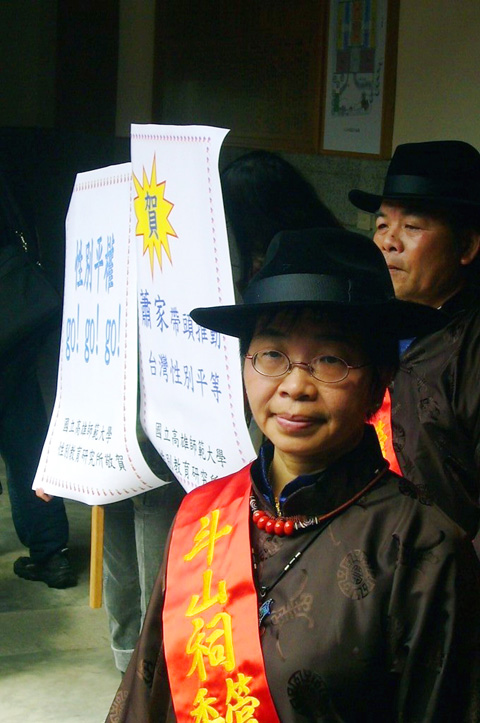
PHOTO COURTESY OF HSIAO CHAO-CHUN
“The committee chairman at the time told my father: ‘Of course a PhD can serve as chief worshipper, but not a woman.”
Doushan Temple is a centuries-old Hsiao family temple in Hsiao Chao-chun’s hometown of Shetou Township (社頭), Changhua County.
The Hsiaos are the biggest family in Shetou. Each year, the worship gathering at the temple attracts around 500 Hsiaos from across the country.
Traditionally, the role of chief worshipper is given to a male descendent considered successful by the temple’s administrative committee.
But Hsiao, a long-time women’s rights activist, felt the tradition constituted discrimination.
“I understand why only successful men can serve as chief worshipper ... Only men were educated or went to work in the past, so clearly only men could succeed,” Hsiao said. “But times have changed and the tradition should, too.”
When Hsiao approached temple administrative committee secretary Hsiao Jui-lu (蕭瑞祿) in 2007 about serving as chief worshipper, Hsiao Jui-lu said yes.
But after media outlets reported the news in advance of the ceremony, organizers were bombarded with protests from members of the Hsiao clan.
The administrative committee called a meeting, which approved Hsiao Chao-chun’s proposal by a vote.
“Some people were worried bad things could befall the Hsiaos if we changed the centuries-old tradition, because it could upset our ancestors,” Hsiao Jui-lu says in the documentary. “But frankly, what does it have to do with a female chief worshipper if misfortune befalls someone in the family?”
“Would you blame [her] if someone got into a car accident while driving drunk or was jailed for a crime?” Hsiao Jui-lu asked.
“It would seem that as long as it’s a male PhD who wants to be the chief worshipper, the clan elders can make the decision alone, but if it’s a woman, the decision is made through democratic means,” Hsiao Chao-chun said.
Lee Yuan-chen (李元貞), a cofounder of the Awakening Foundation, said having a woman serve as chief worshipper was a symbolic step.
“Women basically do not exist in history; their names are not recorded in the family books of their biological families nor of their husband’s family and they don’t have a say in any ancestral worship rituals either,” Lee said.
“Breaking the tradition is symbolic and can be considered a kind of success in the campaign for women’s rights,” Lee said.
Despite the victory, Hsiao Chao-chun was saddened when some of her relatives chose not to take part in the 2007 ritual in protest.
Members of the Hsiao clan in Shetou are still divided over the matter.
“The 2007 situation was an isolated case and a mistake. It won’t happen again, it will absolutely never happen again,” Hsiao Cheng-chi (蕭成洽) says in an interview in the documentary.
“The tradition is passed down from generation to generation — we didn’t just make it up,” he said.
“Of course, I don’t discriminate against women,” he said.
Reflecting on the symbolism of the change, Hsiao Chao-chun said: “I tore down a wall that held women back, but I know there are still many other walls ahead.”
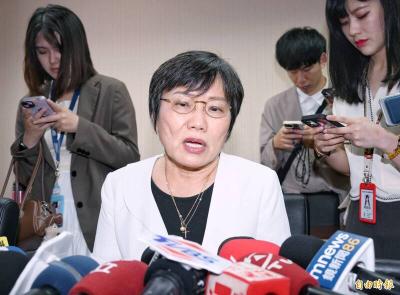
Chinese Nationalist Party (KMT) Chairman Eric Chu (朱立倫), spokeswoman Yang Chih-yu (楊智伃) and Legislator Hsieh Lung-chieh (謝龍介) would be summoned by police for questioning for leading an illegal assembly on Thursday evening last week, Minister of the Interior Liu Shyh-fang (劉世芳) said today. The three KMT officials led an assembly outside the Taipei City Prosecutors’ Office, a restricted area where public assembly is not allowed, protesting the questioning of several KMT staff and searches of KMT headquarters and offices in a recall petition forgery case. Chu, Yang and Hsieh are all suspected of contravening the Assembly and Parade Act (集會遊行法) by holding

PRAISE: Japanese visitor Takashi Kubota said the Taiwanese temple architecture images showcased in the AI Art Gallery were the most impressive displays he saw Taiwan does not have an official pavilion at the World Expo in Osaka, Japan, because of its diplomatic predicament, but the government-backed Tech World pavilion is drawing interest with its unique recreations of works by Taiwanese artists. The pavilion features an artificial intelligence (AI)-based art gallery showcasing works of famous Taiwanese artists from the Japanese colonial period using innovative technologies. Among its main simulated displays are Eastern gouache paintings by Chen Chin (陳進), Lin Yu-shan (林玉山) and Kuo Hsueh-hu (郭雪湖), who were the three young Taiwanese painters selected for the East Asian Painting exhibition in 1927. Gouache is a water-based
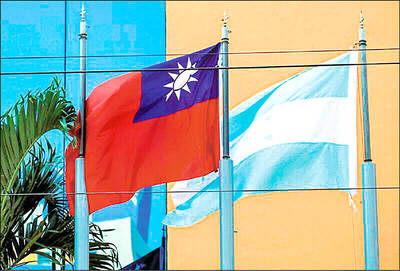
Taiwan would welcome the return of Honduras as a diplomatic ally if its next president decides to make such a move, Minister of Foreign Affairs Lin Chia-lung (林佳龍) said yesterday. “Of course, we would welcome Honduras if they want to restore diplomatic ties with Taiwan after their elections,” Lin said at a meeting of the legislature’s Foreign Affairs and National Defense Committee, when asked to comment on statements made by two of the three Honduran presidential candidates during the presidential campaign in the Central American country. Taiwan is paying close attention to the region as a whole in the wake of a

OFF-TARGET: More than 30,000 participants were expected to take part in the Games next month, but only 6,550 foreign and 19,400 Taiwanese athletes have registered Taipei city councilors yesterday blasted the organizers of next month’s World Masters Games over sudden timetable and venue changes, which they said have caused thousands of participants to back out of the international sporting event, among other organizational issues. They also cited visa delays and political interference by China as reasons many foreign athletes are requesting refunds for the event, to be held from May 17 to 30. Jointly organized by the Taipei and New Taipei City governments, the games have been rocked by numerous controversies since preparations began in 2020. Taipei City Councilor Lin Yen-feng (林延鳳) said yesterday that new measures by


 RSS
RSS