


President Ma Ying-jeou (馬英九) did not denigrate the country’s sovereignty or move toward de-Taiwanization by describing Taiwan as a region, Presidential Office spokesman Wang Yu-chi (王郁琦) said on Monday.
Wang was referring to Ma’s redefinition of the cross-strait status quo as “a special relationship, but not a relationship between states” in an interview with a Mexican newspaper last month.
Wang said Ma did not create the term “Taiwan region” to blur the country’s sovereignty, saying that Ma’s new characterization of the cross-strait relationship as one between the “Taiwan region” and the “mainland region” was in accordance with the Republic of China (Taiwan) Constitution.
Based on the constitutional framework, both regions are part of the Republic of China’s (ROC) territory, but only the “Taiwan region” is under the rule of the ROC, Wang said.
The ROC is an independent sovereign state, the spokesman said. Both sides of the Taiwan Strait are ruled separately and should treat each other equally as defined in the ROC Constitution, which was amended in 1991, Wang said.
Wang denied that Ma’s theory undermined the country’s sovereignty, saying it was undeniable that the ROC is an independent sovereignty and that the relationship between the two regions is an equal one.
Taiwan can move toward improving cross-strait relations without fear of downgrading the country’s sovereignty, Wang said.
Wang cited Ma’s use of the term “Taiwan” 43 times in his inaugural address, compared with the nine references to the “Republic of China” as an indication that Ma was not downgrading Taiwan’s sovereignty.
Ma also said that the ROC spent a brief 38 years in China, but has spent nearly 60 years in Taiwan Wang said. During these last six decades, the destinies of the Republic of China and Taiwan have been intertwined.
Ma said that ROC founding father Sun Yat-sen’s (孫逸仙) dream of a constitutional democracy was not realized in China, but today it has taken root, blossomed and borne fruit in Taiwan, Wang said.
Regarding the changing of Taiwan Post Co’s (台灣郵政) name back to Chunghwa Post Co (中華郵政) soon after Ma took office, Wang said the decision was reached at a board meeting in July and was being implemented in accordance with the law, as the company’s original adoption of Taiwan Post had not followed legal procedures.
As for the former Democratic Progressive Party’s decision to add the word “Taiwan” in English on the ROC passport cover and official documents to make them more easily identifiable, Wang said Ma supported the practice because it did not violate the law.

Taiwanese can file complaints with the Tourism Administration to report travel agencies if their activities caused termination of a person’s citizenship, Mainland Affairs Council Minister Chiu Chui-cheng (邱垂正) said yesterday, after a podcaster highlighted a case in which a person’s citizenship was canceled for receiving a single-use Chinese passport to enter Russia. The council is aware of incidents in which people who signed up through Chinese travel agencies for tours of Russia were told they could obtain Russian visas and fast-track border clearance, Chiu told reporters on the sidelines of an event in Taipei. However, the travel agencies actually applied
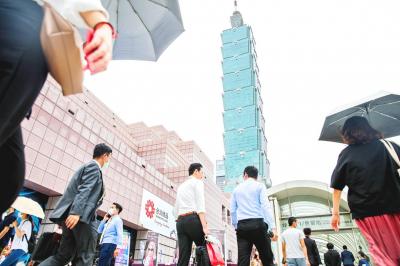
Japanese footwear brand Onitsuka Tiger today issued a public apology and said it has suspended an employee amid allegations that the staff member discriminated against a Vietnamese customer at its Taipei 101 store. Posting on the social media platform Threads yesterday, a user said that an employee at the store said that “those shoes are very expensive” when her friend, who is a migrant worker from Vietnam, asked for assistance. The employee then ignored her until she asked again, to which she replied: "We don't have a size 37." The post had amassed nearly 26,000 likes and 916 comments as of this

New measures aimed at making Taiwan more attractive to foreign professionals came into effect this month, the National Development Council said yesterday. Among the changes, international students at Taiwanese universities would be able to work in Taiwan without a work permit in the two years after they graduate, explainer materials provided by the council said. In addition, foreign nationals who graduated from one of the world’s top 200 universities within the past five years can also apply for a two-year open work permit. Previously, those graduates would have needed to apply for a work permit using point-based criteria or have a Taiwanese company
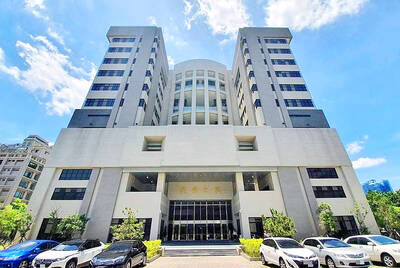
The Shilin District Prosecutors’ Office yesterday indicted two Taiwanese and issued a wanted notice for Pete Liu (劉作虎), founder of Shenzhen-based smartphone manufacturer OnePlus Technology Co (萬普拉斯科技), for allegedly contravening the Act Governing Relations Between the People of the Taiwan Area and the Mainland Area (臺灣地區與大陸地區人民關係條例) by poaching 70 engineers in Taiwan. Liu allegedly traveled to Taiwan at the end of 2014 and met with a Taiwanese man surnamed Lin (林) to discuss establishing a mobile software research and development (R&D) team in Taiwan, prosecutors said. Without approval from the government, Lin, following Liu’s instructions, recruited more than 70 software


 RSS
RSS