


Two Taiwanese nationals were arrested for allegedly trying to smuggle 7 tonnes of Philippine one-peso coins to China for their nickel content, the National Bureau of Investigation said yesterday.
This was the latest in a series of attempts to smuggle coins out of the country so that they could be melted down for their metal, officials said.
The suspects, identified by the last names Lin and Hsin, were arrested during two raids over the weekend in Manila, bureau regional chief Ruel Lasala said.
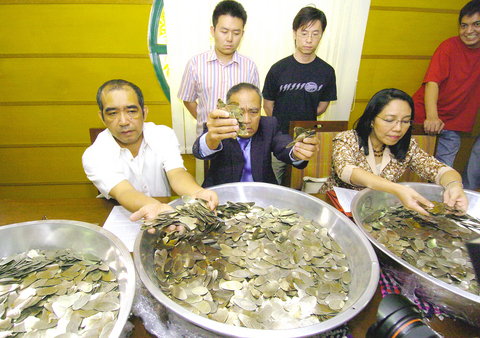
PHOTO: AFP
About a million flattened coins were seized in the raids, Lasala said.
The two suspects face charges of mutilating Philippine currency, but Lasala said that the investigations were continuing to see if they could be charged with more serious crimes.
The bureau had information that the two Taiwanese individuals may have already smuggled out some 45 tonnes of flattened one-peso coins to China, Lasala added.
The suspects had apparently resorted to flattening the coins so that they could be shipped out of the country as ordinary base metals.
The Customs Bureau seized three shipments consisting of millions of one-peso coins from February to July, the investigation bureau official said.
Lasala said that it was not known whether the two suspects had been involved in the previous attempts to smuggle out coins.
The rising price of nickel has made the metal content of the one-peso coin worth more than its face value, which is about US$0.02.
According to local media reports, the coins are sold in China for US$20 per kilogram.
In an effort to cut down smuggling, the Philippine Central Bank is now minting one-peso coins using a cheaper alloy.
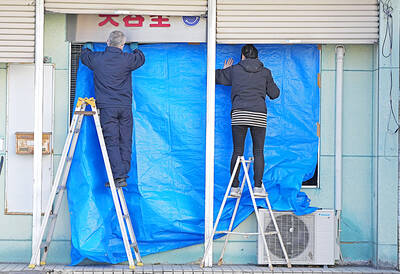
Taiwanese were praised for their composure after a video filmed by Taiwanese tourists capturing the moment a magnitude 7.5 earthquake struck Japan’s Aomori Prefecture went viral on social media. The video shows a hotel room shaking violently amid Monday’s quake, with objects falling to the ground. Two Taiwanese began filming with their mobile phones, while two others held the sides of a TV to prevent it from falling. When the shaking stopped, the pair calmly took down the TV and laid it flat on a tatami mat, the video shows. The video also captured the group talking about the safety of their companions bathing
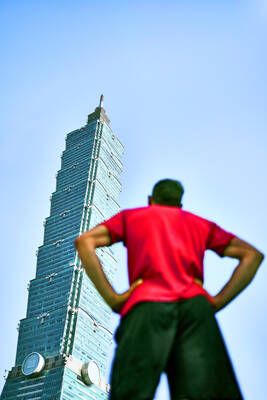
US climber Alex Honnold is to attempt to scale Taipei 101 without a rope and harness in a live Netflix special on Jan. 24, the streaming platform announced on Wednesday. Accounting for the time difference, the two-hour broadcast of Honnold’s climb, called Skyscraper Live, is to air on Jan. 23 in the US, Netflix said in a statement. Honnold, 40, was the first person ever to free solo climb the 900m El Capitan rock formation in Yosemite National Park — a feat that was recorded and later made into the 2018 documentary film Free Solo. Netflix previewed Skyscraper Live in October, after videos

Starting on Jan. 1, YouBike riders must have insurance to use the service, and a six-month trial of NT$5 coupons under certain conditions would be implemented to balance bike shortages, a joint statement from transportation departments across Taipei, New Taipei City and Taoyuan announced yesterday. The rental bike system operator said that coupons would be offered to riders to rent bikes from full stations, for riders who take out an electric-assisted bike from a full station, and for riders who return a bike to an empty station. All riders with YouBike accounts are automatically eligible for the program, and each membership account

A classified Pentagon-produced, multiyear assessment — the Overmatch brief — highlighted unreported Chinese capabilities to destroy US military assets and identified US supply chain choke points, painting a disturbing picture of waning US military might, a New York Times editorial published on Monday said. US Secretary of Defense Pete Hegseth’s comments in November last year that “we lose every time” in Pentagon-conducted war games pitting the US against China further highlighted the uncertainty about the US’ capability to intervene in the event of a Chinese invasion of Taiwan. “It shows the Pentagon’s overreliance on expensive, vulnerable weapons as adversaries field cheap, technologically


 RSS
RSS