

Former TTV Culture Co's general manager Yao Wen-chih (
Prior to being tapped for the Cabinet post, Yao was also the head of Indigenous TV -- one of TTV's subsidiaries, which is slated to be launched on July 1.
"I am quite proud of the establishment of the new TV station for my fellow Aboriginal people and I will keep working hard for them even after I leave the station," Yao said.
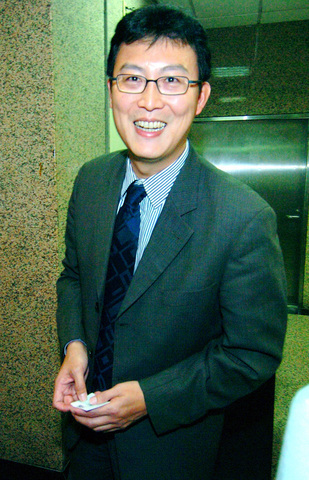
PHOTO: GEORGE TSORNG, TAIPEI TIMES
To encourage his fellow employees at the station, Yao said that he urged everybody to name themselves in an Aboriginal language. He calls himself "Pasuya."
"`Pasuya' is a name from the Tsou tribe (
The Tsou tribe is one of 12 indigenous tribes with a population of approximately 7,000. Most Tsou people live in Alishan, Chiayi County's most famous scenic attraction, Kaohsiung County and Nantou County.
During his first meeting with reporters at the GIO on Wednesday, Yao said that his first priority at the GIO will be to gather more resources and contribute them to the nation's movie industry.
"It is still early for me to give any details of my `plans' since I have not officially begun to work here. But, re-igniting Taiwan's movie industry is definitely my priority," Yao said.
He said approximately 20 movies are made per year here.
"One hundred movies a year will be my goal for now. But that will require a lot of work, for sure," Yao said.
Not everyone has been happy with Yao's appointment. On Friday, People First Party (PFP) Legislator Chiu Yi (
"It is my understanding that Yao stepped down as the deputy secretary-general of the Kaohsiung City Government because he allegedly accepted bribes from local businessmen," Chiu said. "Is this the person you chose to be your new GIO minister?"
However, Hsieh fully endorsed Yao, saying he was the right person for the post.
The premier said that Yao left the city government because he was planning to study abroad. He said the alleged bribery case had been investigated and Yao's innocence confirmed.
"Yao has been working with me for years and he knows me well. With his background and work experience, I think he is the perfect choice for the GIO post," Hsieh told Chiu.
Born on Dec. 4, 1965 in Hsinchu, Yao is no stranger to journalism and politics because he has devoted himself to both professions since he graduated from college in 1988.
Yao holds a bachelor's degree in mass communication from Fu-jen Catholic University and a masters in politics from National Chengchi University, which he received in 1993.
In 1989, Yao began his first job as a reporter for the Liberty Times (the Taipei Times' sister newspaper). After 12 months, he took a sabbatical and then returned to the newspaper as a copy editor in 1992 and stayed for another two years.
In 1994, Yao decided to help Hsieh, who was then a DPP lawmaker, by working for him as a legislative aide. That was the beginning of their working relationship, which is believed to be the prime reason behind his getting the GIO job.
One year later, the DPP chose Peng Ming-min (
After the election loss, Hsieh continued his legislative career and Yao worked as Hsieh's chief aide in his Kaohsiung office until 1998.
Hsieh became Kaohsiung mayor in 1998 and Yao became spokesman for the Kaohsiung City Government, a job he held until 2000, when he was promoted to be deputy secretary-general of the city government.
In 2003, Yao left the Kaohsiung City Government with the plan to pursue a doctorate degree abroad. However, he ended up joining the TTV as a general manager for its Culture Co last year.
A total of 400 foreign “high- level” professionals have been naturalized as Republic of China (Taiwan) citizens over the past decade as the government has eased nationality rules to attract talent from a wider range of fields, the Ministry of the Interior said yesterday. The 400th high-level professional, who works in the electronics industry, was approved for ROC citizenship on Aug. 26, the MOI said. The MOI quoted the newly naturalized citizen as saying that Taiwan is a leader in fields such as semiconductors, electronics manufacturing, artificial intelligence development and energy technology. He also said
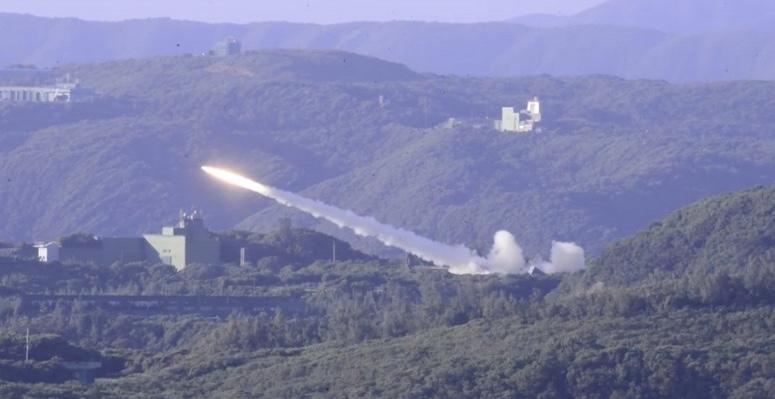
A Chinese military drone was spotted conducting reconnaissance off Taitung County as President William Lai (賴清德) visited Pingtung County this morning to inspect a drill of the armed forces’ precision-strike capabilities, prompting the military to closely monitor its actions. Today was the final day of a three-day military exercise at Jioupeng Base (九鵬基地) to test the joint combat capabilities of the armed forces and coast guard. The exercise began on Wednesday simulating air defense interception and yesterday tested long-range strike capabilities and new air defense weapons. This morning, the military conducted a final exercise involving air defense, anti-ship and drone operations. Military sources said

OCT. 31: The antiviral drugs Tamiflu and Eraflu have been distributed to about 4,000 medical facilities nationwide for people in seven groups who develop flu-like symptoms As the domestic influenza epidemic enters its peak season and continues to escalate, the Centers for Disease Control (CDC) yesterday announced that publicly funded influenza antiviral drugs for seven eligible groups have been extended to Oct. 31, allowing those who develop flu-like symptoms to receive the medication without undergoing a rapid influenza test. The CDC has extended the expanded use of flu antiviral drugs to seven groups: healthcare and influenza-prevention personnel; residents and staff at nursing homes, long-term care facilities and similar institutions; kindergarten and daycare workers and home-based caregivers; students from kindergarten through high school, vocational high school and the
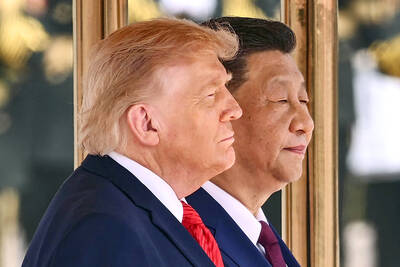
China has warned that it could cancel a planned US-China leaders’ summit if Washington approves new arms sales to Taiwan, a Japanese media outlet quoted sources as saying yesterday. US President Donald Trump, “apparently eager to showcase some diplomatic achievements ahead of November’s midterm congressional elections, places great importance on holding the summit with Chinese President Xi Jinping (習近平),” Japan’s Kyodo News reported. “While preparing for Xi’s upcoming trip, China has restated its position that the Taiwan issue is a ‘red line’ in bilateral relations,” the report said. The report said that when Xi met with Trump in Beijing in May, Xi said


 RSS
RSS