


Brazil’s Bruna Alexandre smashes and chops just like the other table tennis players at the Paris Olympics, but when serving she uses the paddle in her left hand to throw the ball high.
That move, which now seems easy and natural, was what a seven-year-old Alexandre once struggled with the most as a one-armed girl who wanted to play the sport.
On Monday, she made history as the first Brazilian and only the third athlete to compete in the Olympics and Paralympics, following South African runner Oscar Pistorius and Polish table tennis player Natalia Partyka.
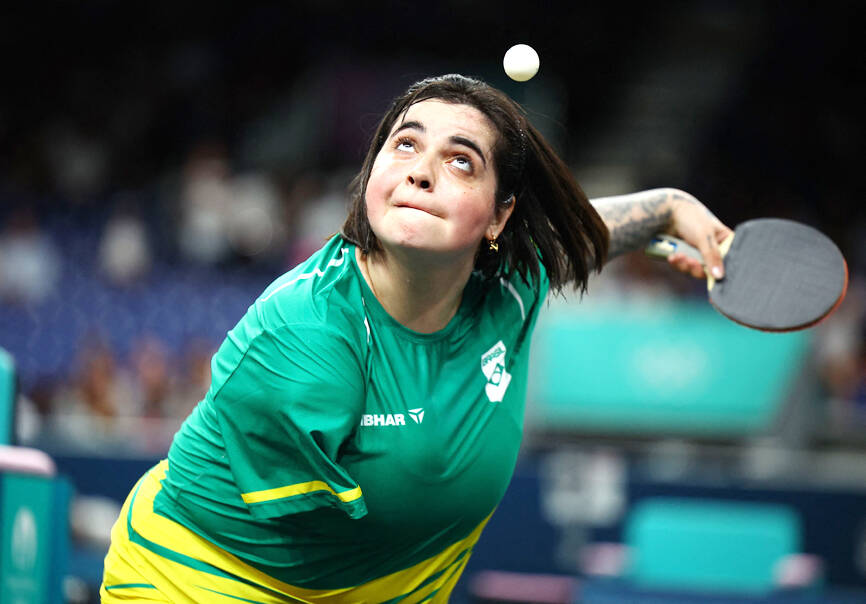
Photo: Reuters
Alexandre’s first Olympic journey was cut short by an unfortunate draw, with Brazil on Monday facing the world No. 1 South Korea team in the first round, but she managed to put up two good performances in losing her doubles and singles matches.
“It wasn’t the result I was hoping for, but we’re very satisfied with what we achieved,” said 29-year-old Alexandre after Brazil lost 3-1.
“We didn’t give up until the end. [South] Korea is one of the best teams. I managed to score some points, which made me very happy personally, and I’m very proud of my team for fighting until the end,” she said.
At three months old, Alexandre lost her arm due to a blood clot. She picked up table tennis aged seven and went on to win several championships plus a bronze medal at the Paralympic Games in Rio de Janeiro in 2016 and silver at the Tokyo Games in 2021.
“Never give up on your dreams, regardless of whether you have one leg or one arm. Believe that everything is possible. After 22 years of my career today I’m here at the Olympics,” she said.
Alexandre added that she was now eyeing gold in the Paralympics and plans to return to the Olympics in Los Angeles in 2028.
“There were other athletes who managed to play in the Olympic Games as well. I think this can help not only the sport, but also the inclusion of people with disabilities,” she said.
The Paralympics run from Aug. 28 to Sept. 8.
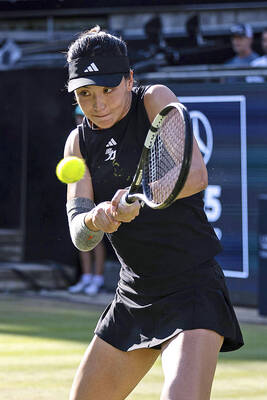
Twelve days after winning her second Grand Slam title at the French Open, Coco Gauff fell at the first hurdle on grass in Berlin on Thursday as beaten Paris finalist Aryna Sabalenka advanced to the quarter-finals. Recipient of a first round bye, American Gauff lost 6-3, 6-3 to Chinese qualifier Wang Xinyu as world number one Sabalenka beat Rebeka Masarova 6-2, 7-6 (8/6) in her second round tie. Winner of 10 main tour titles, including the US Open in 2023 and the WTA Finals last year, Gauff has yet to lift a trophy in a grass-court tournament. “After I won the first

Sergio Ramos on Tuesday outfoxed two Inter players and artfully headed home the first goal for Monterrey at the FIFA Club World Cup. The 39-year-old Ramos slipped through the penalty area for the score just as he did for so many years in the shirts of Real Madrid and Spain’s national team, with whom he combined smarts, timing and physicality. Ramos’ clever goal and his overall defensive play at the Rose Bowl were major factors in Monterrey’s impressive 1-1 draw against the UEFA Champions League finalists in the clubs’ first match of the tournament. “There is always a joy to contribute to the
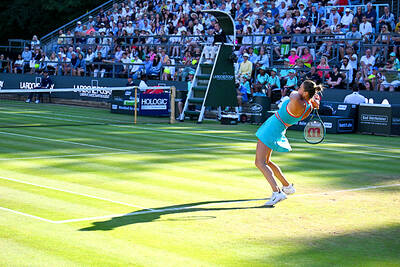
Top-ranked Aryna Sabalenka staged a “crazy comeback,” saving four match points before beating Elena Rybakina 7-6 (6), 3-6, 7-6 (6) in the quarter-finals of the Berlin Open on Friday. Sabalenka was 6-2 down in the final-set tie-breaker, but won six straight points to reach her eighth semi-final of the season. “Elena is a great player and we’ve had a lot of tough battles,” Sabalenka said. “I have no idea how I was able to win those last points. I think I just got lucky.” “I remember a long time ago when I was just starting, I won a lot of matches being down

The Canterbury Crusaders edged the Waikato Chiefs 16-12 in an intense Super Rugby Pacific final battle in Christchurch yesterday to claim their 15th title in 30 years of the Southern Hemisphere competition. Hooker Codie Taylor scored a try and Rivez Reihana contributed 11 points from the kicking tee as the most dominant team in Super Rugby history extended their perfect home playoff record to 32 successive matches since 1998. The Chiefs, who were looking for a first title since 2013, scored first-half tries through George Dyer and Shaun Stevenson, but were unable to register a point after the break and fell to


 RSS
RSS