


FIFA risks plunging the world of soccer into a new conflict with its proposal to hold the World Cup every two years instead of four, raising the possibility of a divorce with leading clubs and the powerful European leagues.
The proposal, first floated in the 1990s, was revived in March by former Arsenal manager Arsene Wenger, now head of soccer development at FIFA.
In May, FIFA president Gianni Infantino agreed, at the request of the Saudi Arabian Football Federation, to launch a “feasibility study” into the proposal, making it clear that he is open to reforming the international calendar.
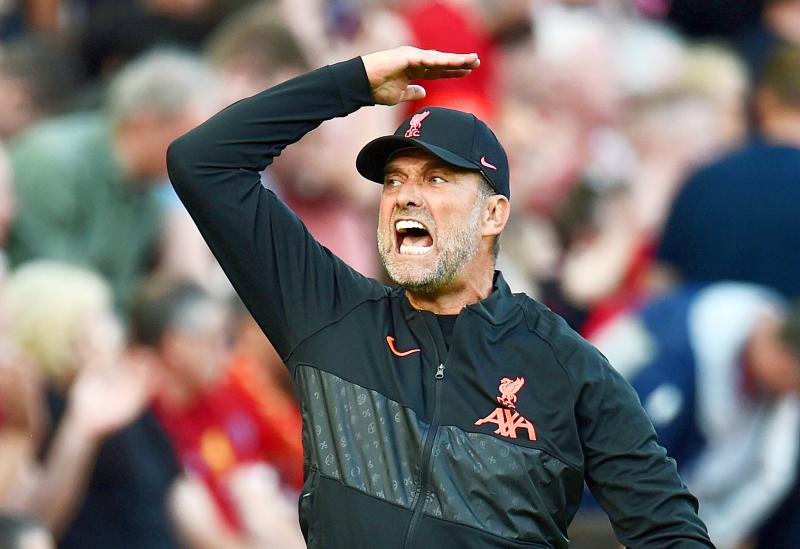
Photo: Reuters
With Wenger saying he hopes the consultation process will be completed by the end of the year, the powerful European leagues have stepped up their opposition.
FIFA’s central argument is that a biennial World Cup would create more profits that could be distributed to federations in Africa, Asia and South America, who have a greater reliance on FIFA funds than the wealthy European leagues.
Wenger says the idea would be to have a final phase every summer from 2025-2026, alternating World Cups and continental tournaments such as the European Championships and Copa America.
Qualifying matches would be grouped together in October, or in October and March.
He refutes the argument that the players would face increased strain, arguing that they would have to make fewer long journeys and would have a minimum of 25 days rest after playing in summer tournaments for their countries.
“Today’s calendar is outdated,” Wenger said. “We want to organize it in a more efficient way.”
UEFA president Aleksander Ceferin is fiercely opposed to the proposal and threatened that European nations and South American powerhouses such as Brazil and Argentina would boycott a biennial World Cup.
“We can decide not to play in it. As far as I know, the South Americans are on the same page. So good luck with a World Cup like that,” he told the Times newspaper on Thursday. “I think it will never happen as it is so much against the basic principles of football.”
South American federation CONMEBOL followed that up with a strongly worded statement on Friday, saying the proposal would “distort the most important football competition on the planet”.
“There is no sporting justification for shortening the period between World Cups,” CONMEBOL said.
Major European clubs have opposed it as well.
“I’m not a fan of it,” Bayern Munich coach Julian Nagelsmann said, adding that “if you want more value, make yourself rare.”
Liverpool manager Juergen Klopp on Friday said that FIFA’s proposal was “all about money.”
The European Club Association, which represents the continent’s biggest clubs, said it believed there was no space in the calendar for the proposals and complained that FIFA had not contacted it to discuss the matter.
The World Leagues Forum, which speaks for 42 leagues around the globe, said the two-year proposal was detrimental to the economic interests of soccer and the players’ health.
Perhaps sensing it was losing the battle of public opinion, FIFA gathered together a group of illustrious former players and coaches in Doha this week to defend the idea of a biennial World Cup.
One of those present, former Manchester United goalkeeper Peter Schmeichel, said: “We all were in agreement.”
Brazilian World Cup winner Ronaldo said that if you asked the world’s two best current players, Lionel Messi and Cristiano Ronaldo, “I’m sure they will all say yes.”
FIFA holds the key. Any final decision on the proposal would have to be made by a FIFA Congress, which usually takes place in May.
Even if the governing body decides to go ahead, it seems unlikely that European clubs — where the best players are mostly concentrated — would be prepared to part with their expensive assets for a month at a time, with the increased risk of injury that would bring.
FIFA could also face legal challenges from clubs.

Yu Yao-hsing on Tuesday nabbed Taiwan’s only goal in the final round of qualifiers for the 2027 AFC Asian Cup, as they fell 3-1 to Sri Lanka at Taipei Municipal Stadium. Early goals from Sri Lanka in the first half left Taiwan struggling to get on the board, and Christopher Tiao’s own goal at 53 minutes sealed the team’s fate in the third round of qualifiers. While acknowledging that the defeat, Taiwan’s sixth in Group D, was disappointing, head coach Matt Ross said he saw reasons to stay positive about the team’s development. “There were lots of positive signs in terms of the
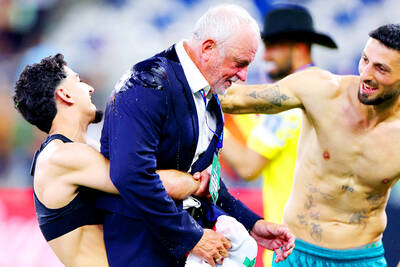
INDIGESTION: Italy failed to qualify for the World Cup for a third consecutive time after a 4-1 defeat to Bosnia on penalties in a loss Gattuso said was ‘difficult to digest’ Coach Graham Arnold on Tuesday challenged his players to “shock the world” after Iraq became the 48th and final team to qualify for the FIFA World Cup with a nerve-shredding 2-1 win over Bolivia in an intercontinental playoff in Mexico, as Bosnia and Herzegovina, Turkey, the Czech Republic, Sweden and the Democratic Republic of the Congo (DRC) also secured their places at the finals. Iraq, whose preparations were disrupted by the war in the Middle East, sealed their first appearance at the finals in 40 years and are to play in Group I against France, Senegal and Norway. Goals from Ali al-Hamadi

“I don’t remember the moment, but ever since I was a kid, that’s the first thing I loved,” two-time NBA All-Star Isaiah Thomas said of his lifelong romance with basketball. However, that journey unfolded against the limitations of his size in a game where height often dictates opportunity — a reality he confronted throughout his career. At 175cm, Thomas is less than 2cm taller than the average Taiwanese adult male, while NBA players during his career stood at about 200cm on average. Compared with the NBA’s average career length of less than five years, Thomas’ 13-season career stands out as

Teng Kai-wei, the only Taiwanese player on an opening-day roster in this year’s Major League Baseball (MLB) season, took his first win of the year with the Houston Astros in his season debut. Teng entered in relief in the top of the fifth inning against the Los Angeles Angels on Saturday, with the Astros trailing 5-0. He pitched 2-1/3 scoreless innings with two strikeouts, as Houston scored 11 runs during his outing to snatch an 11-9 comeback victory. The win is the Astros’ first of the season and the third of Teng’s MLB career. “It’s my first time pitching for the Astros, so


 RSS
RSS