


The Tokyo Olympics were postponed a month ago, but there are still more questions than answers about the new opening on July 23 next year and what form those Games will take.
In the face of the COVID-19 pandemic, will the Olympics really start in 15 months? If so, in what form? With fans? Without fans? Can they open without a vaccine?
TV broadcasters and sponsors provide 91 percent of the income for the International Olympic Committee (IOC). How much pressure will they exert on the form these Olympics take? What about the Beijing Winter Olympics opening in February 2022? China is where the novel coronavirus emerged, and the authoritarian government has been draconian in terms of lockdowns and travel restrictions.
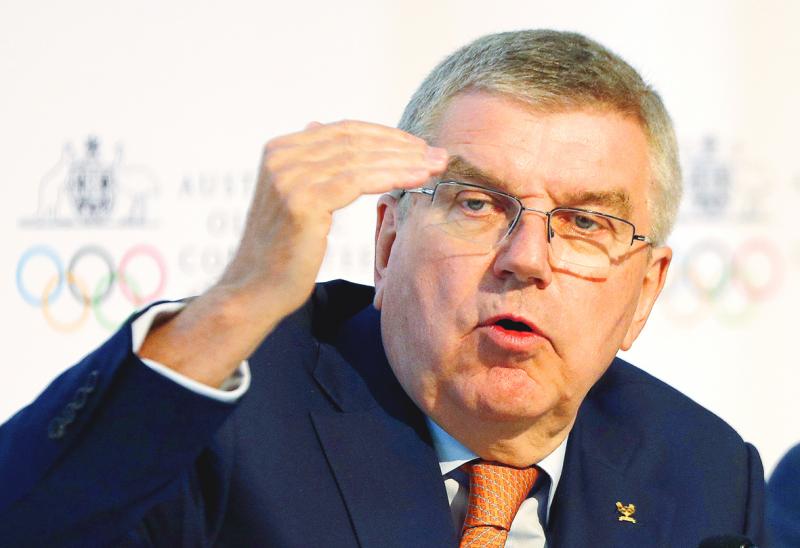
Photo: AP
IOC president Thomas Bach has already said there is “no blueprint” in assembling what he called this “huge jigsaw puzzle.”
“I cannot promise ideal solutions, but I can promise that we’ll do everything to have the best possible Games for everybody,” Bach said.
Some scientists are skeptical that the delayed Tokyo Olympics can open in 15 months.
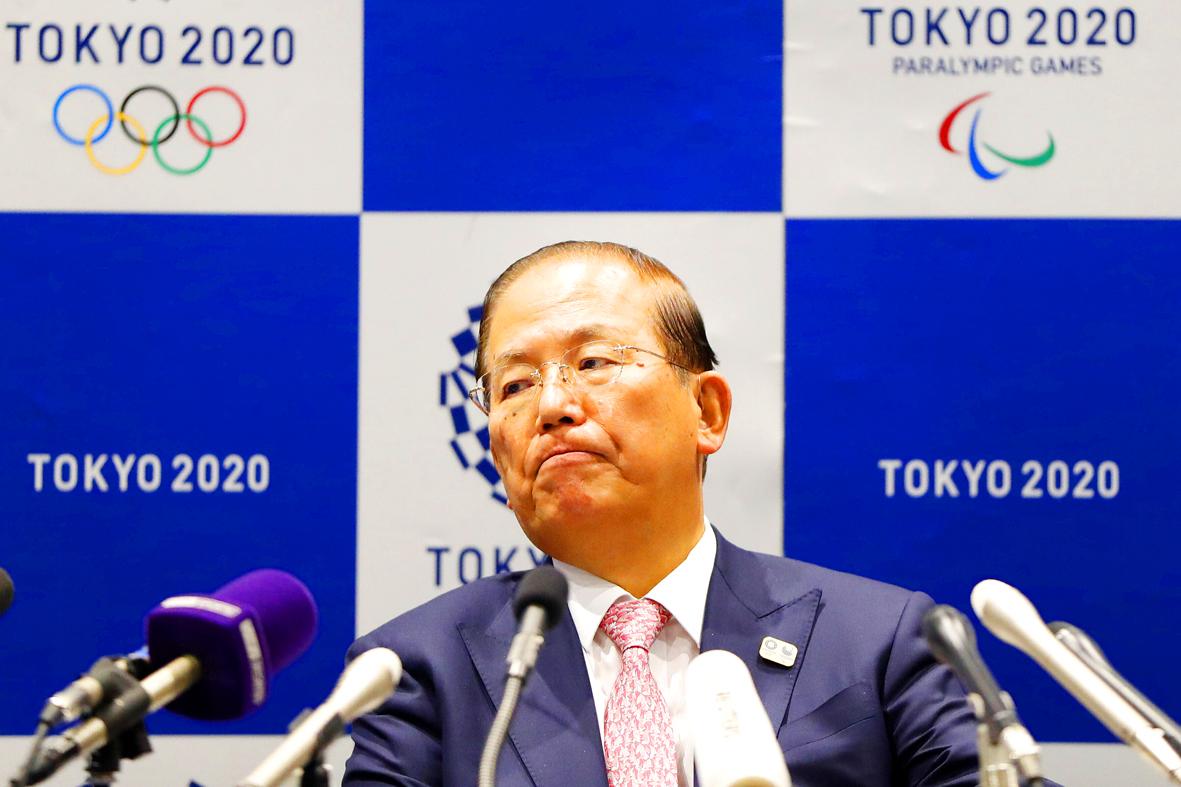
Photo: AP
Many scientists believe that an Olympics with spectators cannot happen until a vaccine is developed. That is probably 12 to 18 months away, experts say, and then there will be questions about efficacy, distribution and who gets it first.
Kentaro Iwata, a Japanese professor of infectious diseases, last week said: “I am very pessimistic about holding the Olympic Games next summer unless you hold the Olympic Games in a totally different structure such as no audience or a very limited participation.”
Yoshitake Yokokura, president of the Japan Medical Association, came to the same conclusion in a recent interview.
Photo: AP
An Olympics in empty venues is looking more likely, which is the scenario for many sports. Fans hungry for some action might have grown accustomed to this configuration by the time the Olympics arrive.
Postponing the Olympics will be costly. Who will pick up the expenses?
In two words: Japanese taxpayers.
Japanese organizers and the IOC have said they are “assessing” the added costs. They have not ventured an estimate — at least not publicly. Estimates in Japan range from US$2 billion to US$6 billion. Host country Japan is bound by the terms of the Host City Contract signed in 2013 to pay most of the bills.
The IOC has already said that the delay would cost it “several hundred million dollars.”
IOC member John Coates, who oversees preparations for Tokyo, said this money would go to struggling international federations and national Olympic committees, and not to Japan organizers.
The bills keep piling up.
Japan originally said the Olympics would cost US$7.3 billion. Officially the budget is now US$12.6 billion, although a national audit board says it is twice that much. All but US$5.6 billion is public money.
On top of that has come the costs of the delay.
Tokyo organizers were upset last week with the IOC. On its Web site it had Japanese Prime Minister Shinzo Abe saying that the nation would pick up the added costs.
The IOC later removed the statement, even though in principle it is correct.
What about the venues and the Olympic Village?
Tokyo Olympic Games Organizing Committee chief executive officer Toshiro Muto has said that it would take time to see if all these venues can be used.
Of course, some might require renegotiated contacts. Proprietors of all venues will be under tremendous pressure to cooperate so the original competition schedule can be maintained.
Tokyo’s Big Sight convention center is likely to remain the media center.
Muto said it has been configured for the Olympics and hinted that it would likely stay that way.
The Olympics draw 11,000 athletes from 206 nations. The Paralympics add 4,400 more.
What about tickets?
Organizers have said that they would try to honor tickets already purchased.
Officials say that 7.8 million are available.
Organizers budgeted US$800 million in revenue from ticket sales and unprecedented demand has pushed that to US$1 billion. That is about 15 percent of the US$5.6 billion of the privately funded operating budget. This income cannot be sacrificed with the bills piling up. The same is true for US$3.3 billion sold in local sponsorships. The problems will arise if ticket holders are not allowed to attend and want refunds. Tickets carry a “force majeure” clause, which might free organizers from the obligation to provide refunds. However, it is not clear that COVID-19 would stand up as a justification.
How reliant is the IOC on income from broadcasters and sponsors?
A massive 91 percent of IOC income is from those two sources — broadcasters and sponsors — and 73 percent is from broadcasters.
Bach has said that the IOC does not have cash flow problems, and the committee reportedly has a reserve fund of about US$1 billion.
However, it stages only two events every four years, almost the entire source of its US$5.7 billion income in a four-year cycle. It is not like a soccer or baseball league with thousands of matches. It needs the Summer Olympics.
American broadcaster NBC pays more than US$1 billion to air each Olympics. The IOC will push the Olympics to go forward, in whatever form.
Where is the Olympic flame, which arrived from Greece on March 26?
It was taken off public display earlier this month in Fukushima Prefecture, 250km northeast of Tokyo.
Muto said after the torch relay was canceled that “the Olympic flame was put under the management of Tokyo 2020.”
“Obviously in the future there is a possibility it might be put on display somewhere. However, for now it is under the management of Tokyo 2020 and I’m not going to make any further comment on the issue,” he said.
There are suggestions that the IOC is thinking of taking the flame on a world tour, hoping to use it as a public-relations tool and a symbol of the battle against the virus.
However, any tour would be impossible until travel restrictions are lifted.
Taking the flame away from Japan could also upset the hosts. China took the flame on a world tour in 2008, which was met with protests over China’s human rights policies.
At the time, then-IOC president Jacques Rogge said that the “crisis” threatened the Olympics.
World tours with the flame have not been held since.
FIFA on Friday blamed the empty seats during the FIFA World Cup match between South Korea and the Czech Republic in Guadalajara, Mexico, on fans who watched from the concourses. There were many visible empty spots at the 45,664-capacity Guadalajara Stadium, with sections in the middle of the stands showing many unoccupied spaces and with other empty seats scattered around the venue. The announced attendance was 44,985 — including FIFA president Gianni Infantino. “Official attendance figures reflect the number of tickets scanned and spectators present within the stadium footprint, rather than visual assessments of seating occupancy at any given moment
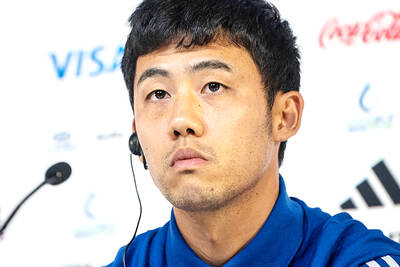
Japan captain Wataru Endo on Thursday was ruled out of the FIFA World Cup with injury and announced his international retirement, three days before his team’s opener against the Netherlands. The Liverpool midfielder pulled out of the tournament after failing to recover from a foot injury and was replaced in Japan’s squad by Shuto Machino. The 33-year-old Endo said on social media that he was “frustrated” at not being able to play, but backed his team to impress in Group F, where they face the Netherlands, Tunisia and Sweden. “There will definitely come a time in the future when Japan win the World

A rotting body was found on Friday in the trunk of a car parked near the stadium where Iran’s FIFA World Cup team is training in Mexico. The gruesome discovery came with games under way in the tournament, which is being jointly hosted by Mexico, the US and Canada. Reporters watched as police in Tijuana opened the trunk of the gray Toyota SUV, which had California plates, in the parking lot of a supermarket directly across from the Caliente Stadium, where Team Melli are training as they prepare for three games in the US. Specialists in white protective suits worked
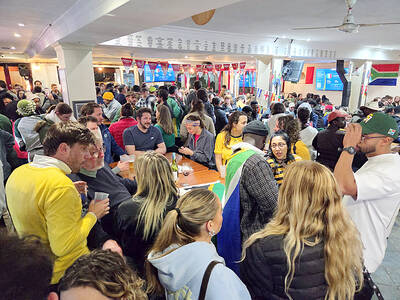
About 100 people gathered at a bar in Taipei to watch the FIFA World Cup start in Mexico, despite the early hour of 3am yesterday. All seats had been reserved before the game started, said a clerk at the Brass Monkey, a bar in Taipei where customers can watch live sports broadcasts. The Group A clash between Mexico and South Africa drew supporters from multiple continents to the venue. For Misael Alanis, a Mexican student who has lived in Taiwan for two-and-a-half years, the atmosphere was just as important as the game itself. “There are a lot of Mexicans here and you can tell


 RSS
RSS