


The OneAsia Tour tees off for its third season in Indonesia today amid continued criticism from the Asian Tour as the battle to be the continent’s golfing power shows no sign of abating.
Since OneAsia began with five tournaments in 2009, Asian Tour officials have accused the organization of stealing their events, bringing down their tour and being bankrolled by a sports management company.
OneAsia have promised to have US$1 million prize money for each of their events as they attempt to offer Asian players a platform to compete in their home region, rather than be forced to play on more lucrative tours overseas.
Led by Ben Sellenger, a lawyer who worked previously with the Australian PGA Tour, they feel that Asia’s financial power and growing love for golf will lead to them having a calendar of 25 events a year, each offering a minimum of US$2 million in prize money.
They strengthened their calendar to 10 events last year and have 13 confirmed for this year, although they hope to extend that to 17.
The Asian Tour, led by former Myanmar professional Kyi Hla Han, have also built a successful product of 25 events this year offering US$45 million in prize money as they promote themselves as a tour run by players for the players.
Much of their success has come from co-sanctioning events with the bigger, more prestigious European and USPGA Tours, with Han looking to offer his members the chance to play against the best players on those tours or a route on to them.
Co-sanctioning makes up much of the US$45 million windfall, with 10 of their stand-alone Asian Tour events offering a meager total prize money of just US$300,000 each, including their ongoing tournament in India this week, leaving Sellenger to suggest the two are competing in different markets.
“We are not in the business of running [US]$100,000, [US]$200,000, [US]$500,000 events. We were never ever the sort to do that,” Sellenger said. “What we wanted to do was to create a level that doesn’t exist. [US]$1 million, full field for 156 leading Asian golfers at the top level 25 times a year, that’s what we want to do and that doesn’t exist in Asia. When somebody asks us can two tours survive in the region, I say it has been doing it for years — it’s been the European Tour and the Asian Tour. Those tours have been coexisting and operating for the last 10 years in Asia. Every event less than a [US]$1million has been an Asian Tour event and every event over [US]$1 million has been European Tour and it has been happening.”
However, the Asian Tour, established in the mid-1990s, remains unhappy.
“It is a sports marketing initiative to try and grab the market place. It hasn’t really brought that much, if it wasn’t there, those tournaments would be on our [Tour] so its brought nothing new only confusion to the market place,” Han said
However, it is not just the tours that are vying for space, exposure and sponsorship in a crowded golfing continent full of blossoming talents and marketing dreams such as teenagers Ryo Ishikawa of Japan and Noh Seung-yul of South Korea.
Korea, Japan, Australasia, India and China also all have their own golf tours, events and money lists which they squeeze into a congested calendar.
Sellenger vehemently denies Han’s accusation that OneAsia are making huge losses on tournaments and being underwritten by sports marketing agency World Sports Group.
However, the spat did involve players when the Asian Tour fined and suspended five of its members who played in a OneAsia event last year.
Han believes that the incident could happen again, but he thinks that because it was only a small number of players it is not a major concern, although it does demonstrate the pressing need for the two tours to find a working partnership for the sake of golf in the continent.
“We would like to work more closely and put into effect some of those original objectives that we talked about six or seven years ago, about co-operation and consolidation across the region to the benefit of the members,” Sellenger said.
“We were never ever meant to be competitive with the Asia Tour. We don’t replicate what they do. Our position is we are not a competitor to the Asian Tour,” he said.

When Paddy Dwyer arrived in China in 1976, crowds jostled to catch a glimpse of him and his companions — the first Western soccer team to play in the country. China was emerging from the chaos of the Cultural Revolution, and on the brink of market reforms that would take the country from economic stagnation to explosive growth. “All we could see was lines of people running beside our bus, trying to look in the windows, to see their first visual of a white person,” he said. “It was all bicycles,” he said. “There were very few cars to be seen.” Dwyer,

Jannik Sinner continued his quest to become the first man in history to win five Masters 1000 tournaments in a row with a 6-2, 6-3 victory over Danish qualifier Elmer Moller at the Madrid Open on Sunday. The world leader extended his winning streak to 19 matches, a run that began early March in Indian Wells, and he has captured 24 consecutive victories at the Masters 1000 level, dating back to the Paris Masters last October. Searching for a maiden title at this level on clay, Sinner advanced to the round of 16 at the Caja Magica with a 77-minute performance against
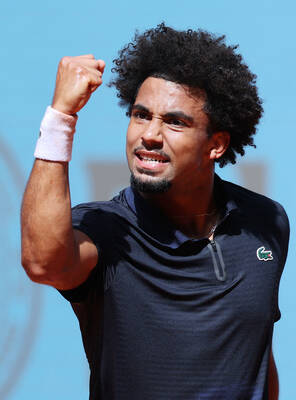
Tennis players are facing an unexpected opponent at the Madrid Open. A stomach virus or food poisoning has affected Iga Swiatek, Coco Gauff, Marin Cilic and others, raising concerns. World No. 1 Aryna Sabalenka avoided an upset by Naomi Osaka on the court on Monday and said she is trying to avoid illness by sticking to a diet of chicken breasts, rice and salad. The rumor among the players was bad shrimp tacos were to blame. Sabalenka knocked on wood for luck and said, “So far, so good. I heard that I have to avoid those tacos,” she laughed, adding “I stick to the

Some of Clearlake Capital Group’s largest investors are growing increasingly concerned about how much time the company’s co-founders are spending on sports investments as they have struggled to complete the fundraising for the private equity firm’s latest flagship fund. One of Clearlake’s co-founders, Behdad Eghbali, has been spending what some investors described as a disproportionate amount of time on the firm’s investment in Chelsea Football Club in recent months. Now, co-founder Jose E. Feliciano and his wife, Kwanza Jones, are nearing a record US$3.9 billion deal to acquire the San Diego Padres. That personal investment by Feliciano has set off the latest


 RSS
RSS