


Aboriginal representatives yesterday made a plea at a public hearing to demand the return of lands appropriated by the government in the Hualien County area.
Forty Amiss tribal chiefs and elders took part in the public hearing to press their claim to 622 hectares that is currently owned by the Taiwan Sugar Corp.
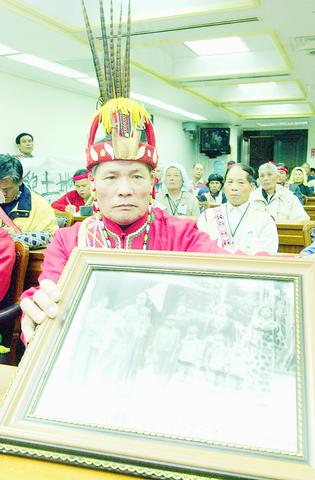
PHOTO: CHIANG YING-YING, TAIPEI TIMES
The public hearing, entitled "Return-My-Land," was sponsored by legislator Payen Talu (
Representatives from Taiwan Sugar, the Council of Aboriginal Affairs, the Legislative Yuan's bureau of legal affairs and the Association of Taiwan Indigenous People's Politics (ATIPP) were also represented at the meeting.
The 622-hectare area has undergone extensive development since it was appropriated and hosts three ethnic-Chinese villages: Da-hsing, His-fu and Fu-yuan.
Historical precedent
"The land historically has belonged to us," said Aaung Nouw Ay Jiyeuss, an Amiss spokesperson. "The Taiwan Sugar Corp received the land from the outside forces who came and took away our land without seeking our consent."
Jiyeuss was referring to the Japanese colonial period from 1895 to 1945 during which tribal peoples were forced to live in mountainous areas.
The colonial government appropriated thousands of hectares of tribal land in order to exploit forest, mineral and agricultural resources.
"When the KMT came to Taiwan in 1949, it received the lands from the Japanese and continued the occupation and exploitation of them by claiming them as government property," said Aaung Nouw Ay Jiyeuss.
Amiss elders present said that as a result, tribal peoples were forced to abandon their land and to live in mountainous areas.
Huang Jorn-hun (黃哲宏), vice president of Taiwan Sugar Corp, said that "the company is willing to negotiate over the matter, though the fact remains that it did gain ownership of the land in accordance with the law."
However, the Amiss disagreed.
"We don't recognize Taiwan Sugar Corp's ownership of the land because the law has been created according to the values of the Han people which have neither incorporated nor acknowledged Aborigines," Aaung Nouw Ay Jiyeuss said.
A legal matter
Huang Nuan-fang (
"No matter what, in a legal fight, Taiwan Sugar Corp is regarded having full ownership of the land," Huang said.
Siao Shih-hui (
"Compiling sufficient background information concerning the land will be difficult," said Chang Chen-jorn (
Most Amiss tribal members live in the mountainous areas around Hualien. It is the largest, with 150,000 members, of the nine Aborigine tribes that still exist in Taiwan.
In total approximately 400,000, or 1.65 percent of Taiwan's 23 million people claim Aboriginal decent. Most Aborigines live in scatter settlements and small villages in the most remote areas of the country's east and southeast.
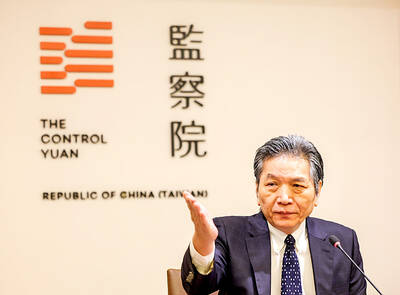
‘ABUSE OF POWER’: Lee Chun-yi allegedly used a Control Yuan vehicle to transport his dog to a pet grooming salon and take his wife to restaurants, media reports said Control Yuan Secretary-General Lee Chun-yi (李俊俋) resigned on Sunday night, admitting that he had misused a government vehicle, as reported by the media. Control Yuan Vice President Lee Hung-chun (李鴻鈞) yesterday apologized to the public over the issue. The watchdog body would follow up on similar accusations made by the Chinese Nationalist Party (KMT) and would investigate the alleged misuse of government vehicles by three other Control Yuan members: Su Li-chiung (蘇麗瓊), Lin Yu-jung (林郁容) and Wang Jung-chang (王榮璋), Lee Hung-chun said. Lee Chun-yi in a statement apologized for using a Control Yuan vehicle to transport his dog to a
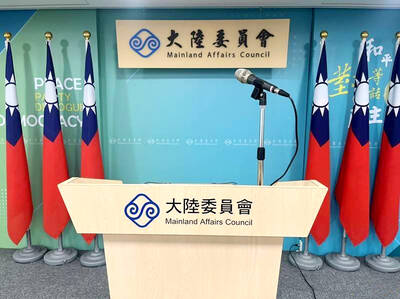
BEIJING’S ‘PAWN’: ‘We, as Chinese, should never forget our roots, history, culture,’ Want Want Holdings general manager Tsai Wang-ting said at a summit in China The Mainland Affairs Council (MAC) yesterday condemned Want Want China Times Media Group (旺旺中時媒體集團) for making comments at the Cross-Strait Chinese Culture Summit that it said have damaged Taiwan’s sovereignty, adding that it would investigate if the group had colluded with China in the matter and contravened cross-strait regulations. The council issued a statement after Want Want Holdings (旺旺集團有限公司) general manager Tsai Wang-ting (蔡旺庭), the third son of the group’s founder, Tsai Eng-meng (蔡衍明), said at the summit last week that the group originated in “Chinese Taiwan,” and has developed and prospered in “the motherland.” “We, as Chinese, should never

‘A SURVIVAL QUESTION’: US officials have been urging the opposition KMT and TPP not to block defense spending, especially the special defense budget, an official said The US plans to ramp up weapons sales to Taiwan to a level exceeding US President Donald Trump’s first term as part of an effort to deter China as it intensifies military pressure on the nation, two US officials said on condition of anonymity. If US arms sales do accelerate, it could ease worries about the extent of Trump’s commitment to Taiwan. It would also add new friction to the tense US-China relationship. The officials said they expect US approvals for weapons sales to Taiwan over the next four years to surpass those in Trump’s first term, with one of them saying

INDO-PACIFIC REGION: Royal Navy ships exercise the right of freedom of navigation, including in the Taiwan Strait and South China Sea, the UK’s Tony Radakin told a summit Freedom of navigation in the Indo-Pacific region is as important as it is in the English Channel, British Chief of the Defence Staff Admiral Tony Radakin said at a summit in Singapore on Saturday. The remark came as the British Royal Navy’s flagship aircraft carrier, the HMS Prince of Wales, is on an eight-month deployment to the Indo-Pacific region as head of an international carrier strike group. “Upholding the UN Convention on the Law of the Sea, and with it, the principles of the freedom of navigation, in this part of the world matters to us just as it matters in the


 RSS
RSS