


With crackling fireworks, dancing lions and clouds of incense, Chinese around the world welcomed the Year of the Snake yesterday, a period astrologers say could be lucky for the new US president but dangerous for the leaders of China and Taiwan.
The start of the Lunar New Year is the biggest holiday for Chinese -- about one-fifth of the world's population -- and most spent the day feasting, showing off new clothes, praying in temples, playing mahjong and visiting friends and relatives.
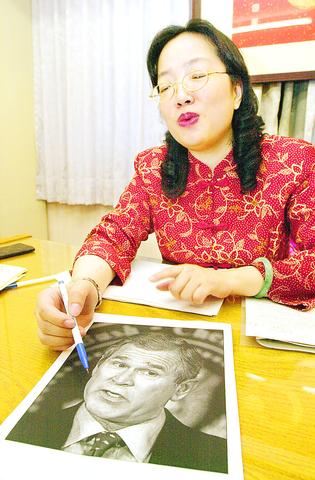
PHOTO: AP
Streets that are normally clogged with traffic in bustling Hong Kong, Beijing and Taipei were eerily empty during the morning rush hour as most people slept in and relaxed during the public holiday.
According to the 12-symbol Chinese horoscope, this is the year of the snake -- or "little dragon" for those who like to put a positive spin on things. Those born under the symbol are supposed to be diplomatic, charming, deep-thinking and romantic, but they can also be stingy with money, vain and unfaithful in marriage.
Famous snakes include US President John F. Kennedy and Chinese revolutionary leader Mao Zedong (
The snake can bring upheaval, revolutions and disasters. But this year won't be a time of great change, predicted Taiwanese astrologer Shao Chung-ling, a master of the Book of Changes, an ancient Chinese book used for predictions.
"You won't see major successes or failures in world events," Shao said. "The year can't be too good or too bad."
But it could be a good year for new US President George W. Bush -- the world's most powerful leader. Bush, born in 1946, is a dog, which is believed to be able to get along with the snake.
For a more accurate prediction for Bush's first year in office, Taiwanese soothsayers say, other factors have to be considered.
Examining a picture of Bush, Taipei astrologer Ni Su-chuan noted the firm and curvy contour of the president's upper lip.
"At 54, his luck is determined by his lips, and his fortune thrives at this point," Ni said.
"His lips have nice contours, but not wide enough," she said, explaining that Bush may be good at continuing the policies of his predecessor but not broad-minded or bold enough in ushering in a new era.
The two leaders of the world's largest Chinese states, Taiwan and China, should be worried about the upcoming year, according to Chinese astrology. President Chen Shui-bian (
China's anticipated entry into the WTO this year could shake up the giant communist nation's economy and bring instability. The country's secretive leadership is also gearing up for a transfer of power -- traditionally a time of infighting and maneuvering.
In Beijing, the Year of the Snake got off to a tense start with protests in Tiananmen Square, the nation's symbolic heart.
On the eve of the holiday, five protesters with the outlawed Falun Gong sect set themselves on fire, a possible sign that the group is becoming more radical despite Jiang's aggressive campaign to quash it.
Trouble in China could create problems for Chen.
Many Chinawatchers believe that China's leaders might try to divert the public's attention from domestic woes by starting a war with tiny Taiwan.
Chen is trying to improve relations with China, while his minority government seeks to calm a hostile, opposition-dominated legislature.
Taiwan astrologer Lin Chen-yi said the intelligent but stubborn Chen is a "sparkling sun" whose success depends on whether he can share glory with others.
"The year of the snake is a year to plant seeds and consolidate your base," Lin said.
"By next year, the year of horse, the dark cloud will dissipate to unveil the sun if the right things are done," Lin added.
Meanwhile, in Hong Kong, tens of thousands of spectators lined the streets for the Lunar New Year parade of dancing lions, dragons and floats. Guest participants this year included cowboys from Canada's Calgary Stampede and cheerleaders from the Denver Broncos football team.
Many weren't ready to let the snake symbolism discourage hopes for more luck.
"I think it will be a better year, and I hope it will be smoother for me at work," said Issara Leung, 50, a cleaning agent who turned out for the parade.
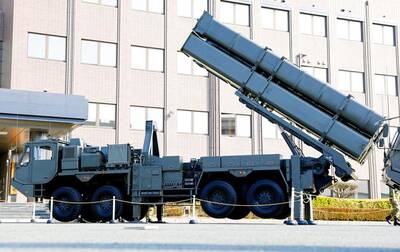
Japan has deployed long-range missiles in a southwestern region near China, the Japanese defense minister said yesterday, at a time when ties with Beijing are at their lowest in recent years. The missiles were installed in Kumamoto in the southern region of Kyushu, as Japan is attempting to shore up its military capacity as China steps up naval activity in the East China Sea. “Standoff defense capabilities enable us to counter the threat of enemy forces attempting to invade our country ... while ensuring the safety of our personnel,” Japanese Minister of Defense Shinjiro Koizumi said. “This is an extremely important initiative for
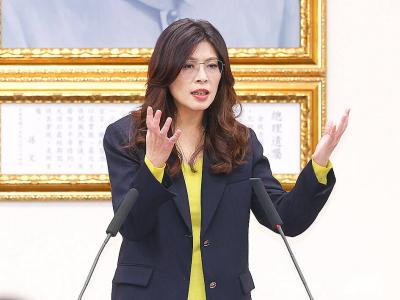
Chinese Nationalist Party (KMT) Chairwoman Cheng Li-wun (鄭麗文) today accepted an invitation from Chinese President Xi Jinping (習近平) to lead a delegation to China next month, saying she hopes to promote the peaceful development of cross-strait relations and bring stability to the Taiwan Strait. “I am grateful and happy to accept this invitation,” Cheng said in a statement from the KMT chairperson’s office. Cheng said she hopes both sides can work together to promote the peaceful development of cross-strait relations, enhance exchange and cooperation, bring stability to the Taiwan Strait and improve people’s livelihoods. At today's news conference, Cheng said any efforts to
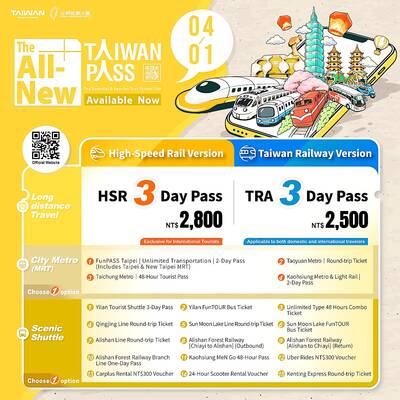
MORE POPULAR: Taiwan Pass sales increased by 59 percent during the first quarter compared with the same period last year, the Tourism Administration said The Tourism Administration yesterday said that it has streamlined the Taiwan Pass, with two versions available for purchase beginning today. The tourism agency has made the pass available to international tourists since 2024, allowing them to access the high-speed rail, Taiwan Railway Corp services, four MRT systems and four Taiwan Tourist Shuttles. Previously, five types of Taiwan Pass were available, but some tourists have said that the offerings were too complicated. The agency said only two types of Taiwan Pass would be available, starting from a three-day pass with the high-speed rail and a three-day pass with Taiwan Railway Corp. The former costs NT$2,800

The nation’s fastest supercomputer, Nano 4 (晶創26), is scheduled to be launched in the third quarter, and would be used to train large language models in finance and national defense sectors, the National Center for High-Performance Computing (NCHC) said. The supercomputer, which would operate at about 86.05 petaflops, is being tested at a new cloud computing center in the Southern Taiwan Science Park in Tainan. The exterior of the server cabinet features chip circuitry patterns overlaid with a map of Taiwan, highlighting the nation’s central position in the semiconductor industry. The center also houses Taiwania 2, Taiwania 3, Forerunner 1 and


 RSS
RSS