


Vice Premier Yu Shyi-kun resigned yesterday and he will go down in the history books as the most short-lived vice premier in the history of Taiwan.
Born into a farmer's family, Yu is regarded as being an honest, simple and hard-working individual. He has said he never thought of becoming a politician before he became interested in the opposition movement.
Yu embraced politics when he was elected a member of the Taiwan Provincial Assembly (
Having served two terms as Ilan County Commissioner, Yu gained more administrative experience than anyone else in the DPP.
A brainchild of Yu's, the "Ilan experience (
Yu then became president of Taipei Rapid Transit Corp, and was appointed Secretary-General of the DPP.
His political career went smoothly and reached its peak when he took up office in the Executive Yuan.
During the presidential election in March, his strong connections with Academia Sinica President Lee Yuan-tseh (
Yu's cooperative spirit character led to his ability to bond with other DPP politicians, especially those who were the rising stars in party politics, Lin said.
"I was hired because I was out of work and going through a mid-life crisis," Yu said jokingly of himself when DPP chairman Lin I-hsiung (
"Yu is obedient and tender in nature, which is a rare quality among DPP members," said Lee Wen-chung (
Yu has also been labeled by some as a perfectionist, a trait which many of his subordinates came to criticize.

The National Chungshan Institute of Science and Technology yesterday showcased its locally developed variants of the Vision 60 robotic patrol dog, which it plans to deploy on the nation’s outlying territories in the South China Sea. The variants were produced under the Joint Lab project — created by the institute and domestic companies — and assembled with domestically produced motors, lenses and artificial intelligence (AI) systems alongside licensed tech from the US, Missile and Rocket Systems Research Division deputy director Jen Kuo-kang (任國光) told the media event at a military base in Taipei’s Dazhi (大直) area. Taiwan has built up its strengths

RIGHT DIRECTION: Taiwan’s efforts to prevent forced labor include a proposal to ‘fully prohibit’ employers from withholding workers’ documents, an official said Taiwan is to establish a mechanism to restrict imports of goods linked to forced labor, the Executive Yuan said yesterday, after the US proposed imposing additional tariffs on Taiwanese goods over labor concerns. “The Ministry of Labor and the Ministry of Economic Affairs are to establish an interministerial review procedure,” Executive Yuan spokesperson Michelle Lee (李慧芝) said at a news briefing in Taipei. “The government is to use the Foreign Trade Act [貿易法] as the legal basis to restrict imports of goods produced with forced labor” and bring its supply chain governance more in line with international standards on human rights, resilience

NOT IMMEDIATE: Taiwan has a chance to appeal the proposed 10 percent tariff before it starts, while other countries face a 12.5 percent tariff from the trade office Taiwan is among 60 economies determined by the US to have failed to impose or enforce a ban on the importation of goods produced with forced labor, according to a notice released on Tuesday by the Office of the US Trade Representative (USTR), which proposed imposing an additional 10 percent or more tariff on them. The USTR in a statement said that following an investigation, it had determined under Section 301 of the Trade Act of 1974 that the failure of the 60 economies to impose and effectively enforce a prohibition on the importation of goods produced with forced labor is
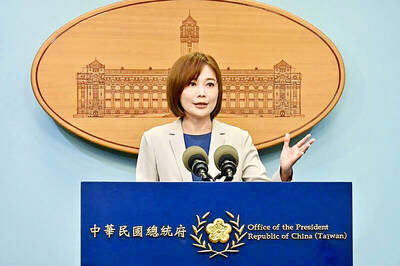
TIT-FOR-TAT: The US allegedly revoked the visa of a Chinese national working at Xinhua News Agency in the US in response to Beijing’s expulsion of Vivian Wang The Presidential Office yesterday condemned China for expelling a New York Times correspondent from Beijing following the newspaper’s interview with President William Lai (賴清德), saying the move highlighted Beijing’s suppression of press freedom and its threat to international news media. Taiwan has noted a series of recent incidents in which Beijing used similar tactics to “threaten and pressure international media outlets and journalists,” Presidential Office spokeswoman Karen Kuo (郭雅慧) said in a statement. “This concerns not only press freedom and freedom of expression, but also the safety of journalists, and Taiwan and relevant partners are paying close attention to the situation,” she


 RSS
RSS