


"Chen Ly must know a great deal about this murder, but he refuses to assist us with the investigation," said Lim Ly, the vice chief of police in Phnom Penh heading the investigation into the murder of Lee Chim-shin (李志鑫), head of the Taiwanese Business Association (TBA) in Cambodia.
"Chen Ly is powerful. He has good relations with Chea Sim," Lim Ly said. Chea Sim is the chairman of Cambodia's Senate and chairman of the ruling Cambodian People's Party.
Chen Ly is Cambodian. But he is also Taiwanese -- his Chinese name is Chen Chi-li (
Chen, now 58, is the former head of the infamous Bamboo Union Gang (竹聯幫), convicted for involvement in the 1984 slaying of Henry Liu (劉宜良) -- author of a biography of former president Chiang Ching-kuo (蔣經國).
Sentenced to 10 years imprisonment, Chen had alleged at his trial that he had been commissioned by then-head of the secret service, Admiral Weng Hsi-ling to kill Liu.
He fled Taiwan in 1996 amid accusations of bid-rigging against Chuan An Construction Company -- which he operated. He is wanted by the authorities in Taiwan (
Chen owns a Cambodian passport and boasts of holding a Cambodian government position of ministerial rank with an official monthly salary of US$350. By comparison the official monthly salary of an education minister is less than US$50.
Chen is known as "Prince Chen Ly" in Cambodia, where he is also the proud owner of a pass which entitles him to travel wherever he pleases, no questions asked.
All this is a far cry from Taiwan, where he is known as a gang leader and fugitive from justice. Chen fled to Cambodia in 1996.
In addition to business, he is also involved in local, government-endorsed charities, for which he has been rewarded with a reputation and good relations with the government.
He donates around US$10,000 every year to the Cambodian Red Cross, whose president is Bun Rany Hun Sen, wife of Premier Hun Sen.
Chen's wife gave birth to a son in Cambodia two years ago. The baby was named -- by the premier himself -- Hun Sen Chen.
The depth and breadth of Chen's relations in Cambodia are said to have made him a magnet for many Taiwanese businessmen, especially minor and private investors, many of whom encounter, in particular, financial difficulties.
He is said to be able to help in various ways, particularly with negotiations and financial support. Sometimes he makes use of his connections to bid for public construction contracts which he then doles out to Taiwanese businessmen.
Many businessmen requesting his his help later invite him to be the main stockholder in their companies. Thus has Chen become the effective owner of many businesses in Cambodia, ranging from travel agencies, Karaoke clubs, restaurants and logging companies.
Eighteen months ago he had surgery to remove a cancer from his back. He now spends most of his time time at the three-story, 2,500m2 villa -- complete with swimming pool and extensive gardens -- that he owns in Phnom Penh.
Plenty of people are more than ready to work for him. "We have to acclimatize ourselves to the local scene," Chen said, pointing out that most Taiwanese businessmen who don't do so encounter problems here.
Having lived in Cambodia for over four years, Chen says he hopes to return to Taiwan.
"My parents are elderly. Of course I would like to go back," he said, adding, "I have done my time. I don't understand what crime Taiwan's government is accusing me of now."
"People must move on with their lives," Chen said, "but governments always stay the same."
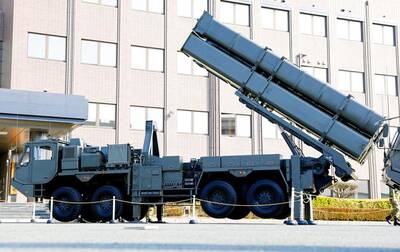
Japan has deployed long-range missiles in a southwestern region near China, the Japanese defense minister said yesterday, at a time when ties with Beijing are at their lowest in recent years. The missiles were installed in Kumamoto in the southern region of Kyushu, as Japan is attempting to shore up its military capacity as China steps up naval activity in the East China Sea. “Standoff defense capabilities enable us to counter the threat of enemy forces attempting to invade our country ... while ensuring the safety of our personnel,” Japanese Minister of Defense Shinjiro Koizumi said. “This is an extremely important initiative for
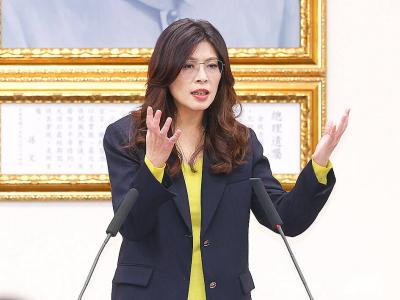
Chinese Nationalist Party (KMT) Chairwoman Cheng Li-wun (鄭麗文) today accepted an invitation from Chinese President Xi Jinping (習近平) to lead a delegation to China next month, saying she hopes to promote the peaceful development of cross-strait relations and bring stability to the Taiwan Strait. “I am grateful and happy to accept this invitation,” Cheng said in a statement from the KMT chairperson’s office. Cheng said she hopes both sides can work together to promote the peaceful development of cross-strait relations, enhance exchange and cooperation, bring stability to the Taiwan Strait and improve people’s livelihoods. At today's news conference, Cheng said any efforts to
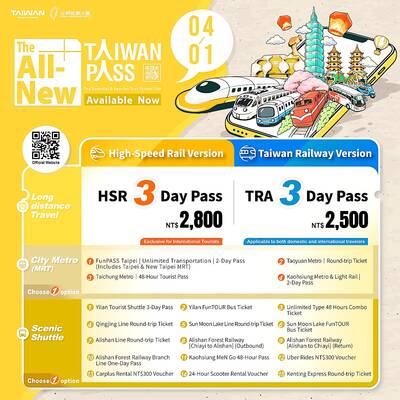
MORE POPULAR: Taiwan Pass sales increased by 59 percent during the first quarter compared with the same period last year, the Tourism Administration said The Tourism Administration yesterday said that it has streamlined the Taiwan Pass, with two versions available for purchase beginning today. The tourism agency has made the pass available to international tourists since 2024, allowing them to access the high-speed rail, Taiwan Railway Corp services, four MRT systems and four Taiwan Tourist Shuttles. Previously, five types of Taiwan Pass were available, but some tourists have said that the offerings were too complicated. The agency said only two types of Taiwan Pass would be available, starting from a three-day pass with the high-speed rail and a three-day pass with Taiwan Railway Corp. The former costs NT$2,800

The nation’s fastest supercomputer, Nano 4 (晶創26), is scheduled to be launched in the third quarter, and would be used to train large language models in finance and national defense sectors, the National Center for High-Performance Computing (NCHC) said. The supercomputer, which would operate at about 86.05 petaflops, is being tested at a new cloud computing center in the Southern Taiwan Science Park in Tainan. The exterior of the server cabinet features chip circuitry patterns overlaid with a map of Taiwan, highlighting the nation’s central position in the semiconductor industry. The center also houses Taiwania 2, Taiwania 3, Forerunner 1 and


 RSS
RSS