

The 2026 Nobel Prize laureates were announced from Oct. 5 to yesterday across six categories: Physiology or Medicine, Physics, Chemistry, Literature, Peace and Economic Sciences. Their award-winning contributions span a broad range of fields, including neuroscience, astrophysics, molecular chemistry, literary innovation, international human rights and macroeconomic policy. Here is a brief overview of this year’s laureates and their achievements:
The Nobel Prize in Physiology or Medicine was awarded to US scientist Karl Deisseroth and German scientists Peter Hegemann and Georg Nagel for their contributions to optogenetics. Combining genetic engineering with optical technology, optogenetics enables specific nerve cells to respond to light, allowing researchers to precisely control neural activity and investigate causal relationships between brain circuits and memory, emotions and behavior. The technology holds promise for research into neurological and psychiatric disorders, including depression, epilepsy and Parkinson’s disease.
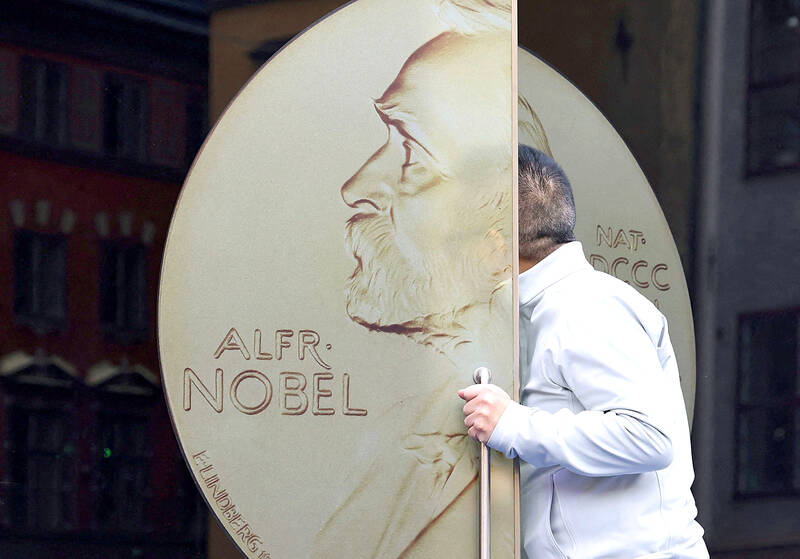
Photo: Reuters 照片:路透
The Nobel Prize in Physics went to Belgian-American physicist Francis Halzen for his pioneering leadership in establishing the IceCube Neutrino Observatory in Antarctica. Neutrinos, often called “ghost particles,” are fundamental particles that rarely interact with matter. IceCube uses deep Antarctic ice and thousands of optical sensors to detect high-energy neutrinos, providing scientists with a new way to investigate black holes and extreme cosmic phenomena beyond conventional optical observations. This breakthrough has helped advance the emerging field of multimessenger astronomy.
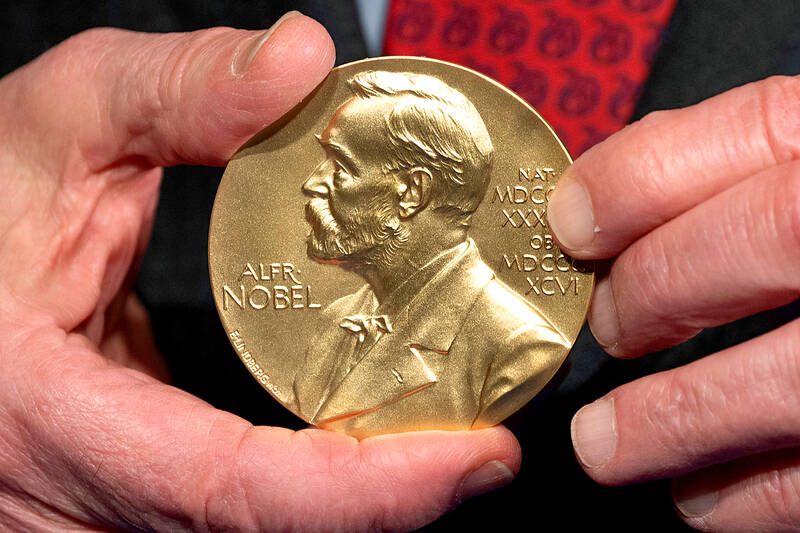
Photo: AP 照片:美聯社
The Nobel Prize in Chemistry was jointly awarded to French chemist Henri B. Kagan and Japanese chemist Kenso Soai for their research on nonlinear effects and autocatalysis in asymmetric organic synthesis. Many molecules exhibit chirality, a property in which two structures are mirror images of each other but cannot be superimposed, much like human hands. Their research revealed how minute molecular asymmetries can be amplified through chemical reactions, with significant implications for pharmaceutical synthesis, asymmetric catalysis and research into the origins of life.
The Nobel Prize in Literature was awarded to Canadian poet, writer and classical scholar Anne Carson. Drawing on ancient Greek mythology, philosophy, poetry, prose and visual art, Carson explores themes such as love, desire, memory and loss. Her acclaimed work Autobiography of Red reimagines classical mythology as a contemporary novel in verse. By transcending conventional literary genres, her writing demonstrates innovative possibilities for literary expression and the construction of meaning.
The Nobel Peace Prize went to South African jurist Navanethem “Navi” Pillay in recognition of her longstanding commitment to international human rights, international justice and accountability for war crimes. Pillay has served as a judge at the International Criminal Tribunal for Rwanda and the International Criminal Court, as well as United Nations High Commissioner for Human Rights. She has also participated in investigations into human rights issues involving Israel and the Palestinian territories. Her recognition underscores the importance of upholding international law, human rights and judicial independence amid ongoing global conflicts.
The Nobel Prize in Economic Sciences was jointly awarded to American economists Michael Woodford and Robert E. Hall for their contributions to the microeconomic foundations of macroeconomic stabilization. Their research has advanced economists’ understanding of how individual and business decisions shape broader economic fluctuations and how monetary and fiscal policies can help stabilize the economy. Woodford is particularly renowned for his work on monetary policy, inflation expectations and forward guidance, which examines how central banks can influence economic behavior by communicating their future policy intentions. Their contributions have strengthened the theoretical foundations of modern macroeconomic policymaking, offering important insights into managing inflation, unemployment and economic instability.(Lin Lee-kai, Taipei Times)
2026年諾貝爾獎,自10月5日至10月12陸續揭曉生理學或醫學獎、物理獎、化學獎、文學獎、和平獎、經濟學獎等六大獎項,獲獎研究涵蓋神經科學、宇宙探索、分子化學、文學創新、國際人權以及總體經濟政策等領域。以下簡介各獎項得主:
生理學或醫學獎
頒給美國科學家卡爾.戴瑟羅斯(Karl Deisseroth)及德國科學家彼得·赫格曼(Peter Hegemann)、葛歐克·內格爾(Georg Nagel),表彰他們對「光遺傳學」(Optogenetics)的貢獻。這項技術結合基因工程與光學,讓特定神經細胞對光產生反應,使研究人員得以精準控制神經活動,進一步探索大腦迴路與記憶、情緒與行為之間的因果關係。其應用潛力涵蓋憂鬱症、癲癇及帕金森氏症等神經疾病研究。
物理學獎
由比利時裔美國物理學家法蘭西斯·哈爾岑(Francis Halzen)獲得,肯定他領導在南極建設「冰立方微中子天文台」(IceCube)的成就。微中子是一種極少與物質產生交互作用的基本粒子,有「幽靈粒子」之稱。IceCube利用南極深層冰層及數千個光學感測器偵測高能微中子,使科學家能藉由不同於傳統光學觀測的方式,研究黑洞及宇宙極端高能現象,推動多信使天文學發展。
化學獎
由法國化學家亨利·B·卡甘(Henri B. Kagan)與日本化學家硤合憲三共同獲獎,表彰他們在不對稱有機合成中的非線性效應與自催化研究。許多分子具有「手性」(Chirality,又稱對掌性),如同左右手互為鏡像卻無法重疊。兩人的研究揭示微小的分子不對稱性如何在化學反應中被放大,對藥物合成、不對稱催化及生命起源研究具有重要意義。
文學獎
由加拿大詩人、作家及古典學者安妮·卡森(Anne Carson)摘下桂冠。她擅長結合古希臘神話、哲學、詩歌、散文與視覺藝術,探索愛、慾望、記憶及失落等主題。代表作《紅的自傳》(Autobiography of Red)以當代詩體小說重新詮釋古典神話。她的作品打破傳統文類界線,展現語言形式與意義建構的創新可能。
和平獎
得主為南非法律學者瓦妮瑟姆.「納薇」.皮萊( Navanethem “Navi” Pillay),肯定她長期致力於國際人權、國際司法及戰爭罪責追究。她曾任盧安達問題國際刑事法庭法官、國際刑事法院法官及聯合國人權事務高級專員,並參與以色列與巴勒斯坦相關人權調查。在國際衝突持續之際,此獎凸顯維護國際法、人權與司法獨立的重要性。
經濟學獎
由美國經濟學家麥可.伍德福德(Michael Woodford)與羅伯特.霍爾(Robert E. Hall)共同獲得,表彰兩人在「總體經濟穩定政策的個體經濟基礎」方面的貢獻。他們的研究讓經濟學界更能理解個人與企業決策對整體經濟波動的影響,以及貨幣與財政政策如何穩定經濟。伍德福德尤其以貨幣政策、通膨預期及前瞻指引(forward guidance)研究聞名,探討中央銀行如何透過傳達未來政策方向,影響經濟行為。兩人的貢獻鞏固了現代總體經濟政策制定的理論基礎,並為因應通貨膨脹、失業及經濟不穩定等問題提供重要見解。
(台北時報林俐凱)
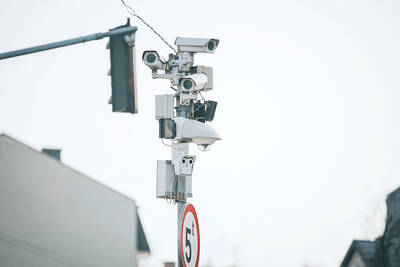
In a recent incident shared on social media, a troubling scene unfolded at a busy intersection. An ambulance, its siren blaring, attempted to pass through traffic, yet the vehicles ahead remained still. According to the original poster, the intersection was monitored by traffic enforcement cameras. Drivers, wary of automatic fines for crossing the stop line or running a red light, chose compliance over compassion and didn’t move. As a result, the ambulance was delayed for four crucial minutes, which could have meant the difference between life and death. The intent of automated enforcement is both practical and necessary. These
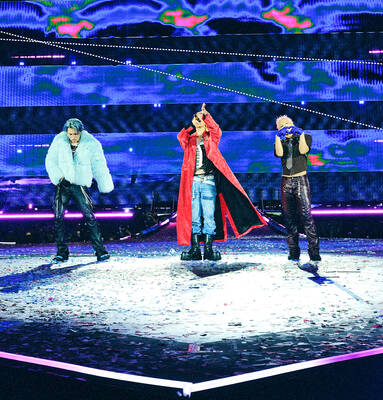
A: What’s your plan for the three-day “Double Ten” National Day holiday weekend starting tomorrow? B: The South Korean supergroup BigBang is set to stage three shows at the Taipei Dome. I’m going to see them live. A: Oh my gosh, you actually got the ticket? B: Since I became a BigBang VIP member in advance, I could participate in the “presale.” But the highest ticket price of NT$9,430 was so expensive that it even broke the Taipei Dome record. A: Having debuted in 2006, BigBang is celebrating their 20th anniversary. Seeing G-Dragon, Tae-yang and Dae-sung reunite again will
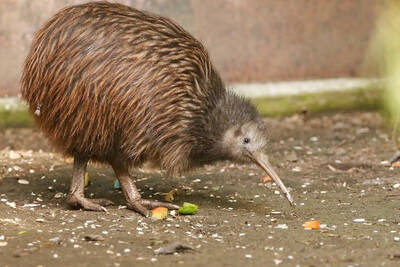
What animal looks like a bird, acts like a mouse, and sounds like the name of a fruit? Meet the kiwi. Native to New Zealand, the kiwi has tiny wings, furry-looking feathers and a long beak, making it strangely cute. Still, it has become one of the nation’s best-known symbols. Evolution had a hand in shaping the kiwi’s unique look. Millions of years ago, when New Zealand lacked land predators, the kiwi lived in an environment where flight was unnecessary for survival. Gradually, it adapted to a ground-dwelling lifestyle. Its wings shrank into small stubs hidden beneath its feathers, while its

A: The three-day “Double Ten” National Day holiday weekend actually begins today. I’m attending the flag raising ceremony at Taipei City Hall tomorrow morning, hoping to receive a limited souvenir. What about you? B: I’m considering going to Taipei 101 for the lighting show tomorrow evening, or heading to Taitung County for this year’s National Day fireworks display. A: It’s a pity that I didn’t get the ticket for K-pop supergroup BigBang’s concerts at the Taipei Dome this weekend. B: Well, it’s OK. The group will stage more shows at Kaohsiung’s National Stadium in late February


 RSS
RSS