

Nestled within the heart of Taipei, National Taiwan University (NTU) contains a grand and spacious sanctuary where nature and academia come together in perfect accord. Across its expansive 111-hectare campus, NTU reveals a landscape rich with history, lush greenery, and a thoughtfully preserved ecosystem. This tranquil haven invites visitors to take their time wandering among the elegant buildings, to admire the rare plants, and to experience a space that exudes quiet inspiration.
Zhoushan Road: A Gentle Prelude to NTU’s Tranquility
Beginning at Gongguan MRT Station, the enchanting avenue Zhoushan Road leads visitors into NTU shaded by golden rain trees, cottonwoods, and Javanese bishopwood trees. This verdant corridor changes through the seasons, offering an evolving palette of colors and textures that welcomes visitors into NTU’s peaceful world. The soft dappled light, gentle breezes, and vibrant foliage prepare the senses for the beauty that lies within the campus itself.
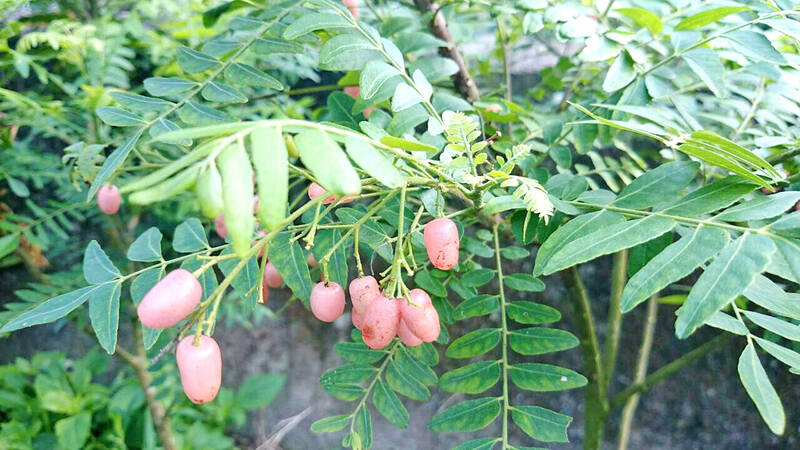
Photos: Bookman l 圖片:書林提供
Liugong Pool: A Living Tribute to Taipei’s Ecological Past
Just off Zhoushan Road near the NTU Life Sciences Center, Liugong Pool—often called the NTU Ecological Pond—stands as a testament to Taipei’s natural heritage. Once a saline lake surrounded by wetlands, Liugong Pool was restored in 2003 to recreate a rich habitat for native species. Now encircled by buttonbush, Warburg willows, and pongame oiltrees, the pond’s surface gently reflects its lush surroundings. A series of winding paths invites visitors to explore further, as the pond’s natural filtration system fosters an abundant ecosystem, where water birds, butterflies, and aquatic plants thrive. This sanctuary offers a serene retreat and a glimpse into the Taipei of centuries past.
Fu Garden: A Harmony of History and Natural Beauty
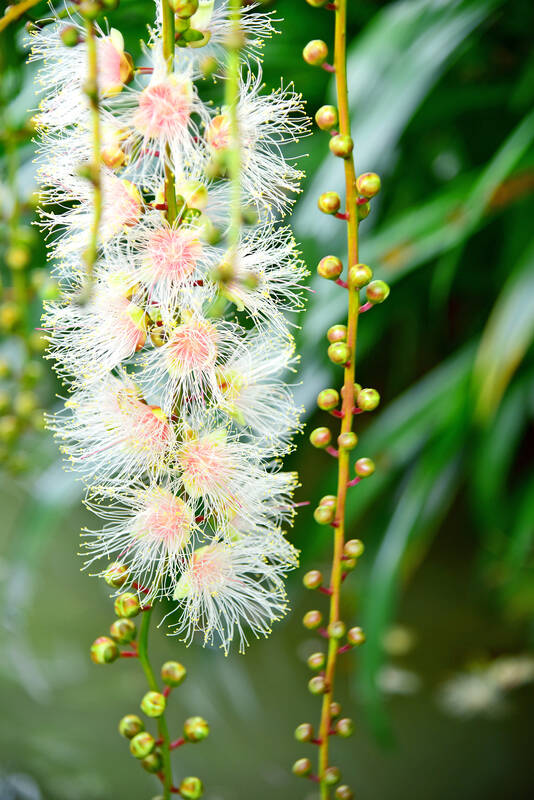
Photos: Bookman l 圖片:書林提供
A short distance from the main NTU gate lies Fu Garden, a cultural treasure intertwined with botanical richness. Originally a botanical specimen garden from Taiwan’s colonial era, Fu Garden was later dedicated to former NTU president Fu Ssu-nien (傅斯年). The garden’s pathways, inspired by classical Greek architecture, lead visitors to Ssunien Hall, where sixteen grand Doric columns evoke the dignified architecture of the Parthenon. Amid the tall Alexandra palms, fan palms, and ancient strangler figs, the garden’s serene beauty pays homage to the enduring union of knowledge and nature. Visitors may encounter the vibrant Taiwan blue magpie, the crested goshawk, and other native species, as well as peaceful ponds encircled by verdant greenery—an invitation to pause and savor the interplay of nature and history.
Embracing NTU’s Timeless Landscape
NTU’s campus is a welcoming oasis for those drawn to the artful blend of nature and academia. From the seasonal transformation of Zhoushan Road to the reflective stillness of Liugong Pool and the storied splendor of Fu Garden, NTU offers an inspiring escape from city life. Here, the rhythms of flora, fauna, and thoughtful architecture weave a living story, inviting visitors to explore and find peace within. This timeless landscape, where history, ecology, and intellectual pursuit flourish side by side, offers a profound experience—one that captures the essence of harmony and quiet beauty at the heart of Taipei.
Transportation
NTU is conveniently located near Gongguan MRT Station on the Green Line. A short 500m walk from Exit 2 along Zhoushan Road will lead you to the Liugong Pool. Fu Garden is just a three-minute walk from Exit 3. Additionally, the university is accessible by bus and bike-sharing services, making it easy for visitors to explore the greenery and cultural landmarks campus.
台大校總區將近111公頃,(網路上「台大總校區位於台北盆地南緣蟾蜍山山腳,西北面向觀音山,北眺大屯山,東背拇指山,占地約27公頃」是不正確的。)植物種類繁多,我根據最近十年來多次導覽的紀錄,重新踏勘修訂,以下是公館捷運2號出口沿舟山路,經鹿鳴堂到瑠公池(臺大生態池)約500公尺沿途,以及傅園裡的植物。有些珍貴植物,如傅園裡的「台灣土肉桂」已不見了(給盜採了嗎?)。生態池的「過山香」也消失了,池中許多水生植物也沒了,改種外來植物落羽杉,令人浩歎。
台大校園
台灣大學成立於1928年,校總區佔地110.76公頃,除日治時期保存下來的優雅建築外,草木蔥蘢,還有池塘、溼地、農場等,擁有豐富的自然生態資源。台大正門右邊是傅園,原本是日治時代台北帝大的熱帶植物標本園,收集台灣與南洋的熱帶植物栽植於園中,當時熱帶植物標本園的範圍包括現今台大大一女生宿舍及公館捷運站部分現址。
瑠公池(臺大生態池)
台北曾經是半鹹水湖及沼澤溼地,所以台大校園至今仍可看到許多水濱植物;諸如水柳Warburg Willow、風箱樹Buttonbush (Cephalanthus tetrandrus)、水黃皮 Pongame Oiltree、穗花棋盤腳Powder-puff Tree、欖仁樹Indian Almond等。瑠公池(臺大生態池),位於舟山路台大生命科學館左方的農場旁,是臺大瑠公公圳復原計畫的第一期工程,做為該計畫的水源源頭,於2003年11月完成。第一期工程包括生態池區、舊圳道區、新設湧泉及水道區、水圳淨化區、瑠公公橋、眺望平臺及休憩步道空間等,並栽植數十種水生植物於水源池中及周遭。瑠公公圳在臺大校區內是屬於大安支線的一部分,經過校園內的農場、舟山路、小椰林道及醉月湖。生態池水源主要來自隔壁的生命科學館。
傅園
1949年傅斯年先生接任台大第四任校長,1950年12月20日辭世。傅校長是著名學者、教育家、五四運動的領袖人物,在動盪不安的時代,維持台大校園內的自由學風,保護師生不受政治干擾,為台大奠定重要的發展基礎。傅校長辭世後,為紀念他對台大的貢獻,各界與傅夫人討論後,決定將傅校長骨灰遷入,1951年12月斯年堂完成,熱帶植物標本園更名為「傅園」。
傅園的建築
傅園的園道與建築設計,仿希臘的帕森農神殿(Parthenon)。帕森農神殿從入口衛門(Acropolis)進入後,路徑蜿蜒,最後才得見神殿正面,隱喻追求學問有許多曲折,峯迴路轉,才得見真章。斯年堂即是埋放傅斯年骨灰之處,也是仿造帕森農神殿的比例和建築語彙,有十六根多利克柱式(Doric Order)圓柱圍繞,柱式沉穩雄壯,只有柱頭與柱身,沒有柱基。柱身有凹槽 (flute),柱頭是一塊方形頂板,上方是楣樑與飾帶。希臘文明崇尚自由與邏輯,這些建築特色,也反映了傅校長的個性剛直,以及嚴謹、開放的治學態度。斯年堂正中為長方形、高出地表,莊嚴隆重的「傅校長斯年之墓」。傅校長斯年之墓前方樹立一座方尖碑(obelisk),下大上小,頂為方錐形,是埃及古代象徵太陽的錐形石碑,也代表重要的世界古文明埃及文化。(參考《臺大校訊第752期》〈傅園風華再現〉)
文章由書林出版公司提供:
www.bookman.com.tw
蘇正隆 — 台灣翻譯學學會前理事長、師大翻譯研究所兼任副教授; 編著《走讀自然.花言樹語》,《英語的對與錯》,《世紀病毒:必讀防疫英文知識與詞彙》...等。國家教育研究院中英雙語詞彙審議委員;研究領域為翻譯、術語及詞典編譯,從事植物與人文導覽數十年,亦曾應邀遠赴國外大學做植物人文導覽。

對話 Dialogue 清清:你在看什麼?看得這麼認真! Qīngqing: Nǐ zài kàn shénme? Kàn de zhème rènzhēn! 華華:我在看一些災害的影片,這兩年颱風好多。 Huáhua: Wǒ zài kàn yìxiē zāihài de yǐngpiàn, zhè liǎng nián táifēng hǎoduō. 清清:對啊!放了不少颱風假呢!每次放颱風假,我朋友就找我去唱歌。 Qīngqing: Duì a! Fàng le bùshǎo táifēngjià ne! Měicì fàng táifēngjià, wǒ péngyou jiù zhǎo wǒ qù chànggē. 華華:這樣是不對的,颱風來就應該好好在家,不要隨便出門,很危險。 Huáhua: Zhèyàng shì búduì de, táifēng lái jiù yīnggāi hǎohǎo zài jiā, búyào suíbiànchūmén, hěn wéixiǎn. 清清:特別是現在這個季節,秋天的颱風最可怕了。 Qīngqing: Tèbié shì xiànzài zhège jìjié, qiūtiān de táifēng zuì kěpà le. 華華:秋颱常常風大雨大,到處都淹水,山區還容易有土石流。 Huáhua: Qiūtái chángcháng fēng dà yǔ dà, dàochù dōu yānshuǐ, shānqū hái róngyì yǒu tǔshíliú. 清清:所以啊!我們都只去唱歌,不敢跑到山上或海邊玩。 Qīngqing: Suǒyǐ a! Wǒmen dōu zhǐ qù chànggē, bùgǎn pǎodào shānshàng huò hǎibiān wán. 華華:你還說!下次颱風來,你就買好食物和水,在家自己唱就好了,注意安全。 Huáhua: Nǐ hái shuō! Xiàcì táifēng lái, nǐ jiù mǎihǎo
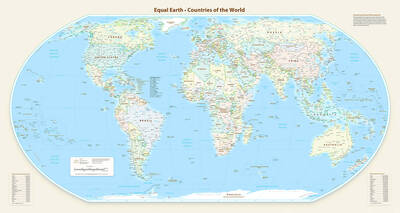
The UN has voted to adopt a resolution for the world to formally phase out the traditional Mercator map of the globe in favor of one that more accurately displays Africa’s size. In a session at its headquarters in New York, the UN general assembly officially retired the 16th-century Mercator projection in favor of one based on the more accurate 2018 Equal Earth design. At the session, 164 countries voted in favor of the resolution. Only the US voted against it while six other countries — Serbia, Estonia, Georgia, Lithuania, Moldova and Ukraine — abstained. UN resolutions are non-enforceable, so countries and institutions

Effective presentations focus on delivering a clear perspective rather than simply listing facts and numbers. To achieve this, you must prioritize logic and visual simplicity over information overload. Successful speakers follow the principle that every slide should focus on a single core concept. If your content feels crowded, it’s better to split the information across multiple slides so that your audience can grasp the main point within seconds. Furthermore, opt for visuals instead of lengthy descriptions, as a meaningful photo or a clear chart communicates much more effectively than a crowded table. Additionally, maintaining consistency by using the same font, limiting

1. 他太太勸他戒酒,但沒有成功。 ˇ His wife advised him to give up drinking, but in vain. ˇ His wife tried to persuade him to give up drinking, but in vain. χ His wife persuaded him to give up drinking, but in vain. 註︰persuade 是「說服」,沒有說服成功,就不能用 persuade,應用 advise 或 try to persuade,錯句中上下文顯然有矛盾。 2. 他們難道不準備在會議上說些什麼嗎? ˇ Aren’t they planning to say something at the meeting? χ Aren’t they planning to speak something at the meeting? 註︰speak 指「講」的發聲;say 指「講」的達意。孩子牙牙學語,可以說 The baby is learning to speak, but he is unable to say anything.。啞巴不能 speak,而瘋子能 speak,但不能 say anything sensible。可以說 speak English ( / Chinese / the Shanghai dialect / a foreign language), speak at the meeting,


 RSS
RSS