


The WHO has recently issued a new list of carcinogenic food which categorizes Chinese-style salted fish as a Group 1 carcinogen, alongside tobacco, alcohol and betel nuts.
According to the head of Linkou Chang Gung Memorial Hospital’s Department of Toxicology Yen Tzung-hai, salted fish is preserved through salting and smoking, just like sausages, ham, bacon and other processed meats, all of which are carcinogens. This is mainly because nitrite, a constituent common to them all, will form nitrosamine when in contact with high temperatures and when absorbed by the stomach and intestines.
However, Yen notes that the WHO report is only referring to salted fish to which nitrite has been added, that not all salted fish is carcinogenic, and that adding nitrite to food is legal. The cancer risks cited in the report are relative rather than absolute, and the risks can easily be reduced by eating less salted fish, so there is no need to be overly worried, Yen says.
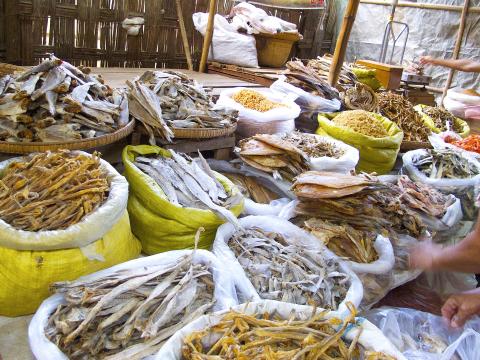
Photo: Pixabay
照片:Pixabay
Yen says that salted fish usually contains high levels of sodium, since large amounts of salt are often added, potentially increasing the risk of cardiovascular diseases. People should avoid eating too much salted fish and when they do, it is advisable this is accompanied with fresh fruit and vegetables, especially those rich in vitamin C and other antioxidants, to prevent the formation of nitrosamine.
(Liberty Times, Translated by Tu Yu-an)
世界衛生組織最近公布新一波致癌物,其中,中式鹹魚與菸、酒與檳榔等同列為一級致癌物。
林口長庚醫院臨床毒物科主任顏宗海表示,鹹魚與香腸、火腿、培根等加工肉品同屬醃製食品,也皆為一級致癌物,主因是亞硝酸鹽碰到高溫會形成致癌物亞硝胺,進入人體內與腸胃道結合也會產生亞硝胺。
不過,顏宗海指出,世界衛生組織所指的不是所有鹹魚,而是製程中添加亞硝酸鹽的鹹魚。亞硝酸鹽是合法食品添加物,世界衛生組織提及的是相對風險,並非絕對,只要少吃即可降低罹癌風險,因此民眾不必過於擔心。
然而顏宗海也提醒,鹹魚通常添加不少鹽,屬於高鈉食物,可能提高心血管疾病的風險,應該少吃,同時最好搭配新鮮蔬果,尤其富含維生素C等抗氧化劑者可抑制亞硝胺形成。
(自由時報記者林惠琴)


In 2023, an 80-year-old woman in Taipei suffocated her paralyzed son after over five decades of caring for him. Turning herself in immediately, she confessed that worsening health and anxiety about who would care for him after her death had driven her to act. The court, acknowledging her difficult situation, sentenced her to two-and-a-half years in prison while recommending a presidential pardon. This rare judicial recommendation drew a complicated social response. Supporters argue that the mother’s half-century of caregiving renders her deserving of compassion instead of incarceration, believing that allowing her to live her final years in dignity and

A: Over 130,000 college graduates are about to enter the workforce upon graduation. B: According to a survey, the top 10 most desired careers among Taiwanese are: independent content creator, civil servant, information engineer, financial professional, medical worker, content planner, flight attendant, news anchor, designer and fitness trainer. A: What are the “dream jobs” for young Gen Zers? B: The top three for men are YouTuber, pro gamer and engineer. For women, they are writer, social media editor and YouTuber. A: Every profession has its champion. Just look at Taiwanese fire dancer Yang Li-wei — who was on fire

★ Bilingual Story is a fictionalized account. 雙語故事部分內容純屬虛構。 The mango looked perfect. It sat on the fruit stand like a small sunset, red on one side and gold on the other. “I’ll take this one,” said Daniel. The fruit seller shook her head. “Not that one.” Daniel was surprised. “Why not? It looks beautiful.” “Yes,” she said, “but beautiful is not always ready.” She picked up another mango and held it near his nose. “First, smell here.” Daniel smelled the top of the mango. It was sweet and warm. “Good mangoes have a smell,” she said. “Next, feel the weight.”
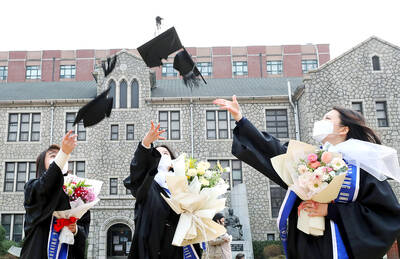
A: While AI is reshaping the world, “Money Talks News” revealed seven career fields that are “AI-proof.” First is the healthcare field, like nursing jobs, personal care aides, and social work specialists. B: This type of job is indeed in high demand. So what’s next? A: Up next are skill-based positions, like electricians, mechanics, and construction workers. Then there’s the field of education, like teachers, tutors, and education specialists. Fourth is the mental health field, like jobs in counseling, therapy, and social work. B: I didn’t expect teaching to be safe from AI. What else is


 RSS
RSS