


Sports watches are all the rage at the moment. These gadgets not only tell the time, they can also help you monitor your pulse. But what exactly is a normal heart rate?
Your heart rate is one of the easiest ways to analyze your health. The average person, when not engaged in exercise, should have a heart beat of approximately 60 to 100 beats per minute (bpm). If it is lower than this, the heart is beating too slowly and, even though a slightly slow heart rate is not overly problematic, if it goes below 40 bpm, this is indicative of an issue with a person’s cardiac conduction system.
On the other hand, if the heart rate is in excess of 100 bpm, one might have a sense of a rapid heart beat in the chest. It often happens that if you skip breakfast, the heart will start to beat especially fast as blood sugar levels have dipped too far by lunchtime. If, however, the heart is beating at more than 150 bpm, this really is too fast, and it could well mean cardiac arrhythmia, or even problems with the thyroid gland. If this does happen, you should seek medical attention, regardless of your normal heart rate.

Photo: Chen Ping-hung, Liberty Times
照片:自由時報記者陳炳宏
(CNA, Translated by Paul Cooper)
時下流行的運動手環,不僅能看時間,還有監控心跳的功能,但究竟每分鐘心跳幾下才算正常?
最簡單的判讀就從心跳開始,正常人在沒有運動的情況下,心跳每分鐘約為六十到一百下,若低於六十則為心跳過緩,稍微過慢問題不大,但要是低於四十下,則代表心臟傳導系統出了問題。

Photo: Tsai Shu-yuan, Liberty Times
照片:自由時報記者蔡淑媛
另一方面,若是心跳超過一百下,就會感到心臟在胸口「砰砰砰」用力跳動的感覺,通常沒吃早餐,到了中午血糖過低就容易心跳特別快,但如果高於一百五十下,就真的太快,可能代表心律不整甚至是甲狀腺出問題,建議不論太高太低都要就醫。
(中央社)
DID YOU KNOW?
你知道嗎?
Cardiac arrhythmia — or irregular heartbeat — affects millions of people, and is caused by problems with the cardiac conduction system. When the heart rate is too fast, it is known as tachycardia; when too slow, it is called bradycardia. While it may occur at any age, it is more common among older people.
While most types are not serious, some can predispose people to stroke or heart failure. The good news is that most types can be effectively treated.

Bilingual Story is a fictionalized account. 雙語故事部分內容純屬虛構。 I stand by the Miluo River as dusk falls. The court betrayal is too much. I served Chu with loyalty. I forged alliances and fought corruption. But the whispers of jealous courtiers, the murmurs of treason, spoke louder. The king cast me out. The water looks calm. It promises peace. I step in. The river is cold against my legs. I hear shouts behind me — fishermen calling my name. I keep walking. The calls grow louder, but I do not turn around. The water rises to my chest. It pulls at me. I

In Taiwan, people can use a platform to rent a power washer for a weekend or share unused garage space for someone’s storage needs. These are examples of the sharing economy, a consumption model that has gained widespread adoption worldwide. This approach allows people to rent or share assets like cars, homes or even services, typically through online platforms. This innovative model poses a simple yet powerful question: why purchase infrequently used items when sharing is more practical? By making useful but idle resources accessible, the sharing economy turns them into sustainable opportunities. Internationally, platforms like Airbnb and Uber have popularized

A: Recently, I’ve been seeing mosquitoes flying around in front of my eyes. The doctor said it’s the “flying-mosquito disease.” B: Flying mosquitoes? What a strange name. A: They’re actually called “floaters” in English, meaning floating debris. When fibrous substances in the vitreous body inside the eyeballs increase, floaters can appear in the visual field. B: Oh my goodness. Can you get rid of them? A: According to ophthalmologist Horng Chi-ting’s research, taking the enzymes of certain fruits is likely to help reduce floaters. A: 我最近一直覺得眼前有蚊子飛來飛去,結果醫生說是「飛蚊症」。 B: 飛蚊症?好奇怪的病名。 A: 英文名稱叫「floaters」, 也就是漂浮物的意思。 因為眼球的玻璃體中纖維化物質增多,導致視野出現漂浮物。 B: 天啊!要怎麼把蚊子趕走? A:
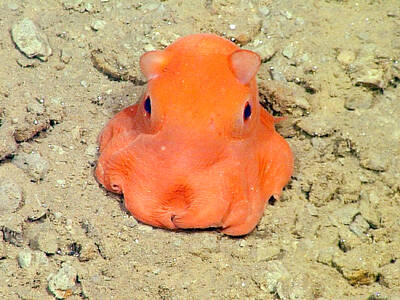
Continued from yesterday(延續自昨日) https://www.taipeitimes.com/News/lang Many people may be familiar with flapjack octopuses thanks to Pearl, a charming character from the Pixar film Finding Nemo. However, her portrayal presents several scientific inaccuracies. In reality, flapjack octopuses are deep-sea creatures, which are unsuitable for the brightly lit shallow reef environment depicted in the film. Their primary defense mechanism relies on their reddish coloration, which would be ineffective in the well-lit shallows. Pearl’s famous line, “You guys made me ink,” is another fictional detail that is not consistent with the observed actions of real flapjack octopuses. As common as it is in many other octopus


 RSS
RSS