


Wearing a sparkling white suit and sporting dyed hair, the world’s shortest man said there was every reason to think big about being tiny.
Recognized last year by Guinness World Records as the world’s shortest man who is mobile, 20-year-old He Pingping stands only 74.1cm and weighs 7kg.
The Chinese national, who was born with a deformity that stunts normal bone growth, said his small size let him slip through tiny spots and eat as much as he wanted.
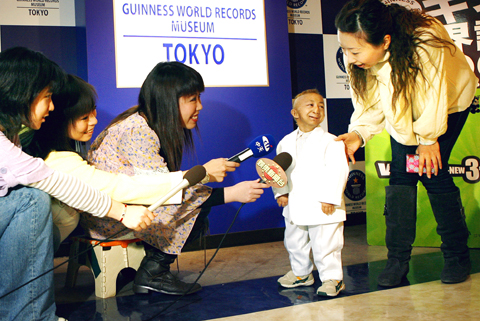
PHOTO: AFP
“I’m not particularly envious of someone who is tall. If you’re tall it is hard to move and it’s very inconvenient,” said He, who was in Japan to appear on television.
“I can weave my way through tight spots if I’m short. It’s much better to be short,” he said, slipping between a poster board and a wall in front of flashing cameras.
“My dream is to continue to hold the world title of smallest man,” He said.
He said one chicken nugget was enough to fill him for the day, although he said he can eat up to a bowl of hot noodle soup when he’s feeling particularly hungry.
Despite his tiny height, He, who lives with his sister, smokes a pack of cigarettes per day but said he was trying to cut back “because it’s bad for the health.”(AFP)
身穿一套白帥帥的全白西裝,頂著一頭染過的頭髮,這個全世界最矮的男人說,他有充分的理由「人小志氣高」。
二十歲的何平平去年通過《金氏世界紀錄》認證,成為全世界最矮的男子,行動自如的他身高僅有七十四點一公分,體重也只有七公斤。
出生時就因為畸形阻礙骨骼正常生長的中國籍何平平說,迷你的身材讓他可以穿過很小的空間,而且想吃多少就吃多少。
為了參加電視節目而來到日本的何平平說:「我不會特別嫉妒個頭高的人。長得高行動困難,很不方便。」
「個子嬌小,才能在狹窄擁擠的地方穿梭前進。個子矮好處多多。」他邊說邊在媒體閃光燈閃個不停的鏡頭前,溜進海報看板和牆面間。
他說:「我的夢想就是繼續保持全世界最矮男人的頭銜。」
他說,吃一塊雞塊就夠他飽一天,但他也說肚子特別餓時,可以吃光一整碗熱湯麵。
和姊姊同住的何平平個頭雖小,但一天要抽上一包菸。他說他正在努力戒菸,「因為抽菸有害健康。」(法新社╱翻譯:袁星塵)
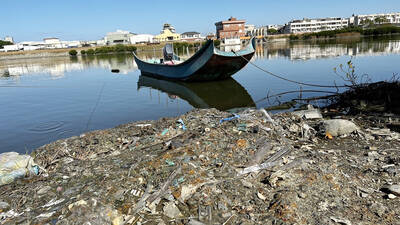
Many consumers are guilty of filling drawers or closets with old laptops, cellphones, fitness trackers and other electronic devices once they are no longer needed. It’s hard to know where to recycle such items, or it seems costly and inconvenient to do so. The world generates millions of tons of electronic waste — also called e-waste — each year. According to the UN’s most recent estimate, people worldwide produced 62 million metric tons of e-waste in 2022, and only about 22 percent of it was properly recycled. The US’ Environmental Protection Agency estimates that less than a quarter of e-waste is
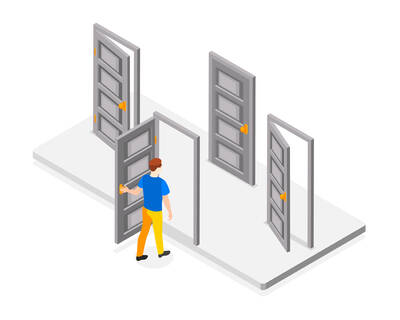
You’re sitting in class when a classmate asks to borrow a pencil. It seems like a small favor, so you agree without hesitation. The following week, the same classmate asks to share your notes. Later, they request help with a group project. You agree each time — after all, you helped out the first time — but before you know it, it has become automatic. This scenario demonstrates the “foot-in-the-door technique,” a psychological concept that shows how agreeing to small, acceptable demands makes it easier to accept larger ones later on. The name for this strategy comes from door-to-door

A: The four-day Tomb Sweeping Day long weekend begins Friday and will run until Monday. Are you going to sweep your ancestors’ tombs? B: I did in advance last weekend, so I can go to Kaohsiung to see the musical “The Phantom of the Opera.” A: Wow, is “Phantom” touring Taiwan again? It debuted in 1986, so this year marks the 40th anniversary of the show. B: And it’s not just touring Kaohsiung starting March 31, but also Taipei starting April 21 and Taichung starting May 26. A: “Phantom” is one of the world’s Four Major Musicals. I’ve seen all of them, except “Les

Dos & Don’ts — 想想看,這句話英語該怎麼說? 1. 我們很早到達電影院。 ˇ We arrived at the theater very early. χ We arrived the theater very early. 註︰arrive 為不及物動詞,後面如果有受詞要用 at 或 in。例如:They arrived in Taipei yesterday.。一般大地方,如國家、省、大城市等前面用 in,凡小地方城鎮、學校等則用 at。 2. 開車半小時以後,我們到達了海灘。 ˇ After half an hour’s drive, we got to the beach. χ After half an hour’s drive, we got the beach. 註︰come, go, get(來、去、到達)某地時,在表示地點的名詞前面應該用 to,如 go to school, go to Taipei, come to Shanghai 等。如果這些動詞後面所跟的是 here, there, home 等副詞,則不用 to。 3. 明天我會回辦公室。 ˇ I will be back in the office tomorrow. χ I will be back to office tomorrow. 註︰to be back 一語裡的 back 是副詞,不是介詞,所以後面要用 at (the market) 或 in (the office)。 假如假期結束,要回學校上課了則可說: ? Kids will be back


 RSS
RSS