

Taiwan’s economy maintained its strong momentum last month, with booming demand for artificial intelligence (AI) hardware continuing to drive exports and industrial activity, while improving consumer sentiment pointed to broader confidence in the expansion.
The National Development Council’s (NDC) business climate monitoring score stayed at 41 points last month, unchanged from July and remaining at a level signaling a booming economy for a ninth straight month, tying the historical record for the longest period from February to October set in 2021.
All nine components of the indicator maintained their signals, the council said yesterday.
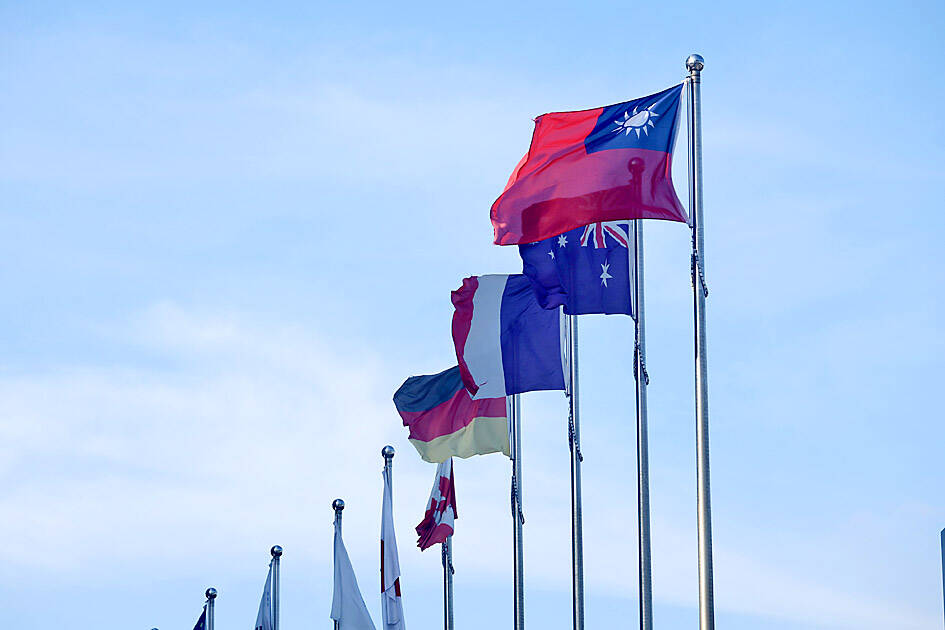
Photo: CNA
“Exports performed the strongest,” NDC Department of Economic Development Director Chen Mei-chu (陳美菊) told a news conference.
Wholesale, retail and food services reached record highs, while more companies said they expected business conditions to improve over the next six months, she said.
The leading index rose 0.51 percent last month, while the coincident index gained 0.36 percent, indicating that the expansion retained momentum, the council said.
Higher capital spending by US AI and cloud computing companies, mass production of new servers and chips, and spillover demand for some traditional industries should continue to support exports, Chen said.
Investment is expected to continue to be supported by expansion across Taiwan’s AI supply chain, particularly in advanced manufacturing and packaging, she said.
A stable labor market and strong corporate earnings could encourage companies to raise wages and dividends, while elevated stock prices might support consumer spending through a wealth effect, Chen said.
The strength of the economy was reflected in household sentiment, with the consumer confidence index rising 3.76 points to 68.77 this month, its highest level since April last year, a survey by the National Central University’s Research Center for Taiwan Economic Development (RCTED) showed yesterday.
All six components improved, with confidence in stock investments posting the biggest gain, climbing 7.7 points to 35.42, its highest level since November last year, the center said.
The gauge measuring sentiment toward home purchases jumped 8.81 points to 98.84, its biggest monthly gain since 2020, after the central bank eased lending restrictions on second-home buyers, it said.
Sentiment toward stock investment remained relatively subdued, despite the TAIEX reaching record highs earlier this month, RCTED executive director Dachrahn Wu (吳大任) said.
He cautioned that consumer surveys measure individual sentiment and might not track actual market movements.
Confidence in Taiwan’s economic outlook rose 5.82 points to 87.02, while sentiment toward household finances and employment improved.
National Central University economics professor Yau Ruey (姚睿) said that robust demand for AI hardware has supported Taiwan’s exports, prompting research institutions to raise their forecasts for GDP growth to between 10.3 percent and 11.6 percent this year.
Nevertheless, risks remain.
The NDC cited uncertainty over Middle East tensions, US tariff policy and monetary policy in major economies, while Yao warned that a rebound in oil prices to about US$100 a barrel could keep inflation elevated.
Strong demand from the cloud-computing boom could add upward pressure on prices, Yao said.
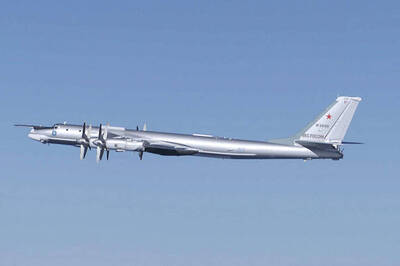
Two sorties by Russian military aircraft were today detected entering Taiwan's air defense identification zone (ADIZ), the Ministry of National Defense said. The aircraft entered the ADIZ from the northeast early today, flying through airspace east of Taiwan before exiting to the southeast, the ministry said. The ministry said it closely monitored the aircraft using joint intelligence, surveillance and reconnaissance capabilities, and responded appropriately. Meanwhile, the Japanese Ministry of Defense wrote on X that two Russian military aircraft were today believed to have entered airspace over Japan's territorial waters northwest of Fukuoka Prefecture, one from 4:07am to 4:10am and the other from 4:09am
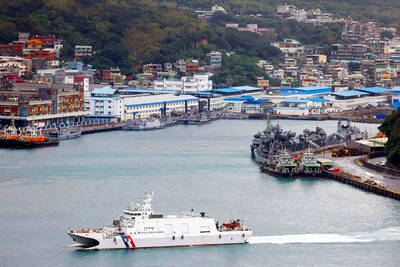
NO ANNOUNCEMENT: The ‘silent drills without a name’ appeared deliberate and aim to allow Beijing to apply military pressure without a diplomatic backlash, a source said China carried out a large, unannounced military exercise across the western Pacific and around Taiwan early this month, in what officials in Taipei have described as a campaign of “silent intimidation” aimed at pressuring Taiwan and other governments before major international meetings. China’s military and coast guard had at one point massed more than 100 vessels in the region early this month, conducting drills that included simulated attacks on other militaries and cities including Taiwan’s, a senior Taiwan security official said on condition of anonymity. The naval deployment was larger than “Justice Mission 2025,” China’s last formally named drills targeting Taiwan nearly
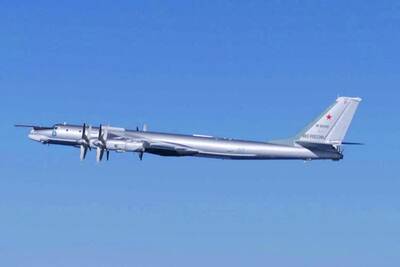
TRESPASSING: Tokyo lodged a strong protest with Moscow when Russian military planes, believed to be the same ones that flew near Taiwan, entered its airspace The Ministry of National Defense yesterday said it detected two Russian military aircraft flying off the nation’s east coast, while Japan protested to Moscow after two aircraft believed to be Russian violated its airspace the same day. The reports, probably about the same aircraft, come ahead of Russian President Vladimir Putin’s arrival in Shenzhen, China, for this week’s summit of APEC leaders. After flying through airspace to the nation’s east, the Russian aircraft, whose type it did not identify, exited Taiwan’s air defense identification zone (ADIZ) south of Taitung County, the ministry said. The ministry used joint intelligence, surveillance and reconnaissance to monitor
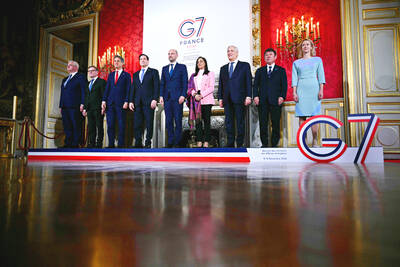
JOINT STATEMENT: G7 ministers said they opposed unilateral attempts to change the ‘status quo’ and supported Taiwan’s participation in international organizations Taiwan will continue bolstering its self-defense capabilities and resilience following a joint statement by G7 foreign ministers emphasizing the importance of peace and stability across the Taiwan Strait, the Presidential Office said yesterday. Presidential Office spokesperson Karen Kuo (郭雅慧) reiterated that peace and stability across the Taiwan Strait and in the Indo-Pacific region are vital to global security and prosperity. Taiwan will continue to bolster its self-defense capabilities and whole-of-society resilience while working with like-minded international partners — including G7 members — to uphold freedom, democracy and human rights while fulfilling its international responsibilities, Kuo said. Taiwan also thanked G7 members for continuing


 RSS