

The EU from today would have the power to enforce landmark artificial intelligence (AI) rules and hit any companies breaking the law with fines.
The EU has the world’s most comprehensive digital rulebook covering social media, online retailers and search engines, with plans for more rules this year.
In 2024, the EU adopted a sweeping AI law known as the “AI Act,” but its rules have been introduced in stages.
Photo: Reuters
The EU’s law takes a risk-based approach to the technology.
The higher the risk to Europeans’ rights or health, for example, the greater the obligations of firms to protect people from harm.
It also bans AI used for predictive policing, emotion recognition systems in workplaces or schools and those that manipulate human behavior.
AI-generated content such as deepfakes must be labeled, while firms must ensure that their AI systems, such as chatbots, make it clear to users they are AI.
Existing AI systems have until Dec. 2 to adapt to the new rules, and there are exemptions for “artistic, creative, satirical, fictional” work.
European regulators in the AI Office would have the power to enforce the bloc’s rules on the most advanced AI models.
The regulatory body attached to the EU executive would be made up of dozens of tech experts, lawyers and economists.
The AI Office would be able to test the most advanced general-purpose AI models such as chatbots to ensure that they comply with the law.
Companies must also give the EU access to their models, and in some cases, it could demand access before they are placed on the market, an EU official said.
The EU would also be able to restrict a model’s deployment if it has concerns that are not addressed by the provider.
The powers arrive at an opportune moment. The EU struggled this year to get access to US AI developer Anthropic’s Mythos model, but the rules kicking in today mean an issue like that should not happen again.
National authorities would be able to enforce the rules for smaller AI systems.
If the EU finds companies breaking the rules, it could force them to take action to remedy the breach and fine the firms if they fail to do so.
The stiffest fines are for businesses that allow their systems to conduct banned practices — up to seven percent of a company’s annual worldwide turnover or 35 million euros (US$40.34 million), whichever is higher.
For other contraventions, companies could be fined up to three percent of their global annual revenue or 15 million euros. They could also be fined if they hinder or fail to cooperate with EU probes.
More rules under the AI Act would be enforceable later this year and beyond.
From December, there would be a ban on AI systems generating sexualized deepfakes, introduced following the global outrage over non-consensual nudes produced by businessman Elon Musk’s chatbot Grok.
The EU is also delaying the implementation of some high-risk AI rules concerning models deemed as potentially dangerous to safety, health or citizens’ fundamental rights — to give companies more time to prepare.
The rules would apply for standalone high-risk AI systems from December next year and in August 2028 for AI tools embedded in other products.

Taiwan has suspended visa processing for Moroccans in response to Morocco halting visa applications for Taiwanese travelers worldwide, the Ministry of Foreign Affairs said yesterday. The Moroccan embassy in Japan on Thursday last week informed Taiwanese travel agencies that it would suspend its visa confirmation letter application service for Taiwanese seeking to travel to Morocco, the ministry said in a statement. Taiwanese are required to obtain the letter before traveling to Morocco, the Bureau of Consular Affairs Web site says. Applications are submitted through the Moroccan embassy in Japan, which forwards them to Morocco for review. Once approved, the authorization
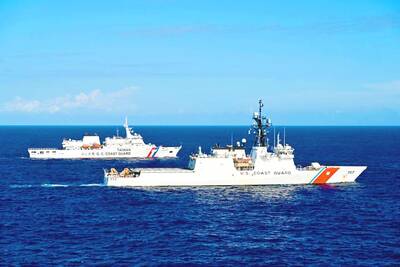
SIDE-BY-SIDE: The US appreciates Taiwan’s partnership in maritime security and safety, and supports its strong contributions to global maritime law enforcement, the AIT said The American Institute in Taiwan (AIT) yesterday for the first time shared a photograph of Taiwanese and US coast guard vessels operating side-by-side, saying that the two sides conducted joint operations ranging from search-and-rescue to maritime law enforcement. The Coast Guard Administration (CGA) and the US Coast Guard are “coordinating shared objectives such as search and rescue, preparing for tropical storms, disaster relief, preserving maritime resources, countering illegal fishing, and interdicting illegal drug shipments at sea,” the AIT said on Facebook. “The US appreciates Taiwan’s partnership in maritime security and safety, and supports Taiwan’s meaningful contributions on global issues including maritime law
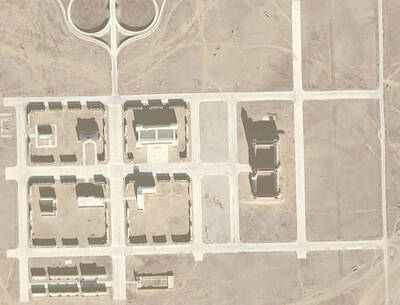
TARGETS: Taiwan has consistently planned for all possible scenarios involving Chinese action against the country and developed contingency measures, a major general said The Ministry of National Defense yesterday said it is monitoring the construction of full-scale replicas of military and government sites in Taiwan by the Chinese People’s Liberation Army’s (PLA). The comments from ministry spokesman Major General Sun Li-fang (孫立方) come after a report by the Telegraph on satellite imagery showing replicas of Taiwan’s Presidential Office Building, Suao Naval Base and other sites. Citing satellite imagery and defense analysts, the report, published on Sunday, said that the PLA had built life-size replicas of key government facilities to rehearse military operations under realistic conditions. The report described the scale and specificity of the training

The Ministry of Foreign Affairs (MOFA) yesterday said it has temporarily suspended spot market purchases of liquefied natural gas (LNG) from Papua New Guinea (PNG) after the country’s foreign minister earlier this month unilaterally announced that Taiwan’s representative office there would be closed. PNG Minister of Foreign Affairs Justin Tkatchenko on July 16 said that his government had decided to close Taiwan’s representative office in Port Moresby. The cessation of operations and the formal closure of the physical presence of Taiwan’s representative office was an “administrative action” to “reaffirm Papua New Guinea’s one China policy,” a statement posted on Tkatchenko’s Facebook page


 RSS
RSS