


The Legislative Yuan yesterday passed a law establishing a regulatory framework for Taiwanese cryptocurrency businesses, including licensing requirements for virtual asset service providers (VASPs) and stablecoin issuers, as well as penalties for fraud and market manipulation.
Under the Virtual Asset Service Act (虛擬資產服務法), VASPs must obtain approval from the Financial Supervisory Commission before operating and comply with internal controls, cybersecurity and business continuity requirements.
VASPs that have completed anti-money laundering registration before the law takes effect would have 12 months to apply for licenses and 21 months to obtain regulatory approval.

Photo: Reuters
The act, which was proposed by the Executive Yuan on April 2, also establishes Taiwan’s first legal framework for stablecoins, which are virtual assets pegged to one or more fiat currencies.
Stablecoin issuers would be required to maintain full reserve backing, with segregated reserve assets held in trust by domestic financial institutions. The reserve assets are protected from claims by other creditors if the issuer enters bankruptcy proceedings.
Issuers must also undergo regular audits and are prohibited from paying interest or other returns to holders.
The act also states that unauthorized operations of a VASP or issuance of stablecoins is punishable by up to seven years in prison and a fine of up to NT$100 million (US$3.14 million).
Fraud involving virtual assets — or manipulation of prices, supply or demand — is punishable by three to 10 years in prison and fines from NT$10 million to NT$200 million.
Lawmakers also adopted a nonbinding resolution requesting that the Financial Supervisory Commission submit a plan within one year to allow virtual asset firms to offer cryptocurrency derivatives.

Japan on Wednesday rejected Beijing’s accusations that the Japanese military harassed a Chinese aircraft carrier strike group during 40 days of exercises in “distant waters” of the Pacific. The Chinese navy earlier this week said that Japanese ships and aircraft “repeatedly engaged in close-range tracking, surveillance, harassment and provocation.” China said a formation led by its Liaoning aircraft carrier had operated in areas including the South China Sea and the western Pacific for “multiple rounds of day-and-night offensive and defensive exercise.” The Liaoning group “maintained a high state of alert throughout, launching carrier-based aircraft for combat sorties ... and steadily responding to the

COUNTER: The government should put forward a more proactive exchange policy for the youth and encourage them to engage with the wider world, the source said Beijing is trying to entice young Taiwanese to attend the Cross-Strait Sun Yat-sen Forum in Guangdong Province, China, by offering to cover all their expenses except round-trip airfare, an official said yesterday. “The cheapest things are the most expensive,” an official familiar with China’s “united front” work said, adding that such tours typically include visits to “red propaganda bases.” “These kinds of united front trips only end up bringing back a lot of falsehoods,” said the official, who wished to remain anonymous. The forum, which began on Saturday last week, ends today. China is offering an all-expense paid trip to Taiwanese participants aged
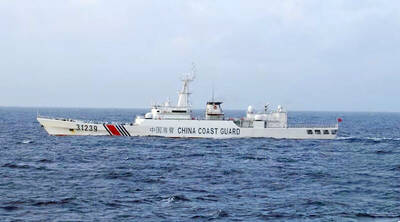
GLOBAL CONCERN: The UK, German and French offices reiterated their opposition to unilateral changes to the Taiwan Strait ‘status quo,’ particularly by threat or force The UK, Germany and France’s de facto embassies in Taiwan, as well as the US’ office, yesterday expressed concern over China’s “special maritime law enforcement operations” in waters east of Taiwan, saying that such behavior threatens regional stability. In a joint statement issued by the British Office Taipei, the German Institute Taipei and the French Office in Taipei, the three offices, which represent their respective countries’ interests in Taiwan in the absence of official diplomatic ties, said that they had “noted with concern novel Chinese activity in the waters east of Taiwan.” “These actions threaten regional stability, and the freedom of navigation
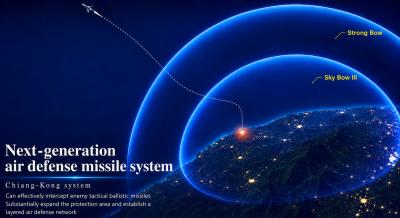
BUDGET HICCUP: While the NCSIST said part of the system is ready for deployment, opposition lawmakers removed the project’s funding during its legislative review Taiwan’s integrated air defense intelligence system is on track to be completed by the end of the year, and, if additional funding is approved, the military aims to deploy it next year, a military source said. The first phase of a next-generation, domestically developed regional air defense system combines the Huanzhan Project (寰展計畫), which integrates air defense intelligence across the armed forces, and the National Chungshan Institute of Science and Technology’s (NCSIST) Chiang Kung (強弓, “Strong Bow”) missile defense program, the source said on Saturday. The Huanzhan Project would establish an automated joint command-and-control network linking the army, navy and air force, replacing


 RSS
RSS