


Chinese authorities yesterday said a small plane that crashed into a building in Beijing the day before had killed the pilot and injured 13 others.
The authorities of Chaoyang district, a vibrant business area, said a two-seat light sport aircraft collided with a high-rise building near the East Third Ring Road at 5:55pm on Friday and caused the casualties.
The short statement on WeChat did not identify the building or the pilot, who the authorities said was the only person in the craft.
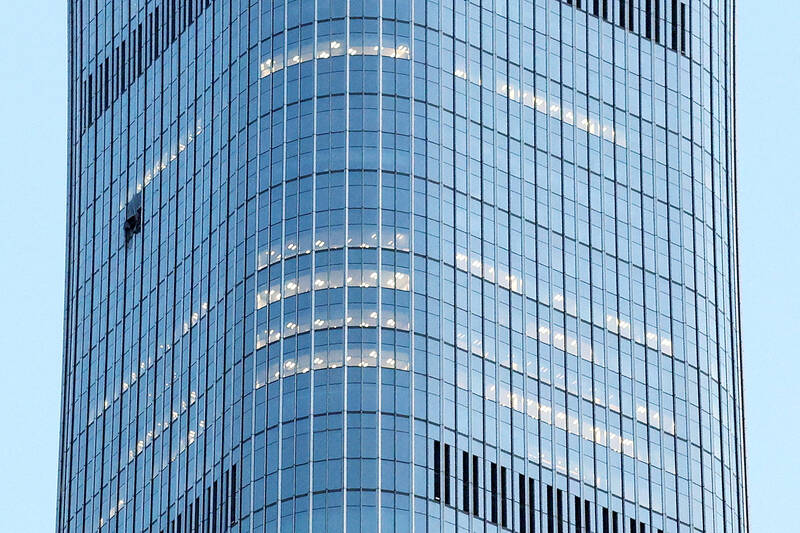
Photo: Reuters
The global flight-tracking service provider Flightradar24 on Friday said the plane crashed into the CITIC Tower, also known as China Zun, which rises more than 528 meters, just east of a major ring road in a cluster of skyscrapers.
The 108-story CITIC tower, shaped like an ancient Chinese wine vessel, is one of the most recognizable skyscrapers in Beijing and is the tallest building in the city.
Flightradar24 posted the plane’s path on social media. The Sunward SA 60L Aurora took off from an airport about 50km east of Beijing and headed westward and ended just east of the East Third Ring Road.
Associated Press photos yesterday showed apparent marks of the crash on the glass facade on one side of the CITIC Tower. A hole there had been covered up.
It was not immediately known what caused the crash in a city with strict airspace controls, including a recent ban on drones. An investigation is under way, the authorities said.
It was also unclear whether the injured were in the building or were hit by debris, but the statement said they were receiving treatment.
The CITIC tower is roughly a 20-minute drive from Zhongnanhai, a former imperial garden that now serves as headquarters of China’s top leadership, and a 15-minute drive from the Forbidden City, a popular tourist attraction.
Social media posts about the crash were scrubbed from China’s walled-off Internet on Friday, though footage has made its way outside of China’s firewall and is circulating on overseas sites such as X.com. A report by financial news platform Caixin about the crash’s casualties soon became inaccessible yesterday. Chinese authorities consider such incidents to be a sensitive matter.
Images and videos shared on social media appeared to show debris from a small aircraft near the skyscraper. While the images were consistent with the location, it was not possible to independently confirm their authenticity. One image of the wreckage shows a partial registration number of “B-12.” The full registration number of the aircraft is B-12PP.
According to Flightradar24, the aircraft was operated by Shuangyue General Aviation, an apparent reference to Dongshi Shuangyue (Beijing) General Aviation, whose Web site was not accessible yesterday. The firm provides services ranging from private pilot training to aerial sightseeing tours, an online platform citing official data said.
SA 60L is a product of Starair Aircraft, based in China’s central Hunan province. According to Starair’s Web site, the single-engine aircraft accounts for more than 70 percent of China’s light sports aircraft market and has been exported to Australia and the US.
Its maximum cruise speed is 220 kilometers per hour and its maximum takeoff weight is 600 kilograms, the Web site said.
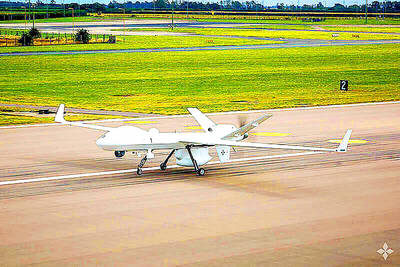
BOOST: By operating the same advanced systems as the US military, Taiwan would be better positioned to share and integrate intelligence with partners, an expert said The first batch of MQ-9B SkyGuardian drones has arrived in Taiwan, and is being assembled and tested by drone manufacturer General Atomics and the military ahead of flight trials as part of the air force’s acquisition to bolster its aerial surveillance capabilities, a source said yesterday. The air force allocated a budget of NT$21.7 billion (US$687 million) from 2022 to 2029 to procure four MQ-9B uncrewed aerial vehicles (UAVs) manufactured by General Atomics along with associated equipment such as ground control stations. The US has agreed to deliver the four MQ-9Bs to Taiwan in two batches this year and next
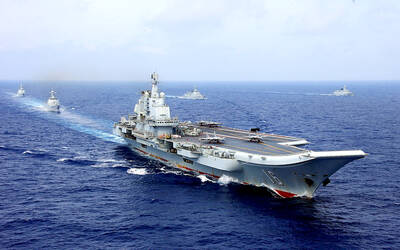
Japan on Wednesday rejected Beijing’s accusations that the Japanese military harassed a Chinese aircraft carrier strike group during 40 days of exercises in “distant waters” of the Pacific. The Chinese navy earlier this week said that Japanese ships and aircraft “repeatedly engaged in close-range tracking, surveillance, harassment and provocation.” China said a formation led by its Liaoning aircraft carrier had operated in areas including the South China Sea and the western Pacific for “multiple rounds of day-and-night offensive and defensive exercise.” The Liaoning group “maintained a high state of alert throughout, launching carrier-based aircraft for combat sorties ... and steadily responding to the
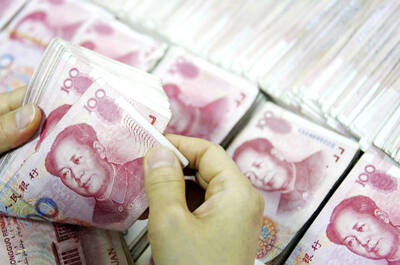
Taiwanese firms’ China investments have dwindled to less than 1 percent of their total foreign investments, putting China-based investments on track for a record low this year, Ministry of Economic Affairs data showed. Taiwan’s investments abroad in the first five months of this year reached US$35.92 billion, Department of Investment Review data showed. Investments outside China totaled US$35.61 billion, up 133.94 percent year-on-year, while investments in China totaled US$310.3 million, down 32.3 percent and about 0.86 percent of the total, data showed. Major overseas projects included Taiwan Semiconductor Manufacturing Co’s (TSMC, 台積電) US$30 billion capital injection into an overseas subsidiary,
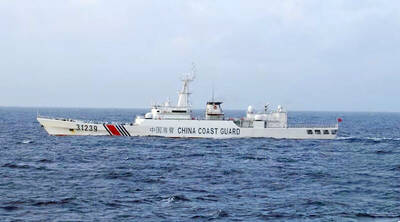
GLOBAL CONCERN: The UK, German and French offices reiterated their opposition to unilateral changes to the Taiwan Strait ‘status quo,’ particularly by threat or force The UK, Germany and France’s de facto embassies in Taiwan, as well as the US’ office, yesterday expressed concern over China’s “special maritime law enforcement operations” in waters east of Taiwan, saying that such behavior threatens regional stability. In a joint statement issued by the British Office Taipei, the German Institute Taipei and the French Office in Taipei, the three offices, which represent their respective countries’ interests in Taiwan in the absence of official diplomatic ties, said that they had “noted with concern novel Chinese activity in the waters east of Taiwan.” “These actions threaten regional stability, and the freedom of navigation


 RSS
RSS