


The Ministry of National Defense (MND) would procure high-throughput portable satellite communication devices and tactical broadband radios that could be used during a complete network outage, the ministry said yesterday.
The systems are part of a NT$40.9 billion (US$1.3 billion) special budget in accordance with the Special Statute on Strengthening the Resilience of the Economy, Society, and National Security in Response to International Developments (因應國際情勢強化經濟社會及民生國安韌性特別條例) aimed at bolstering national security resilience, and which passed a third reading in October last year.
The special budget covers about 20 percent of defense-related expenditures.
Photo: CNA
The content of the special budget includes facility upgrades that would be implemented over the next two years, with planned projects including renovations of ammunition storage facilities; the establishment of backup drinking water and fuel supply capacities; upgrades to military equipment and maintenance factory storage facilities; improvements to pier infrastructure and equipment; procurement of critical components and spare parts; upgrades to training and firing range facilities and equipment; renovations of combat facilities and equipment; procurement of engineering machinery; and upgrades to information, communications, and power facilities and equipment, the ministry said.
The plans also include enhancing information and communications environments and equipment.
While existing post-disaster reporting mechanisms are efficient, they rely too heavily on fixed communications infrastructure, the ministry said.
Capacity at the grassroots level — including borough and neighborhood wardens — remains weak, it added, citing the aftermath of last year’s flooding after a barrier lake in the Mataian River (馬太鞍溪) in Hualien County overflowed.
To address such shortcomings, the ministry said it is procuring high-throughput portable satellite communication devices and tactical broadband radios unaffected by ground-based infrastructure and that can be rapidly deployed.
The systems are intended to enable rapid intelligence transmission in the early stages of a disaster and to resolve communication disruptions during response operations.
The ministry said it also plans to increase variety by deploying multiple communication methods, including radios operating on various frequency bands, digital microwave systems, tactical assault kit related information and communications equipment.
These systems could be rapidly deployed to remote areas to alleviate communication disruptions and establish rescue communication mechanisms, it added.
Separately, the Ocean Affairs Council said the Coast Guard Administration (CGA) would use part of the budget to procure rotary-wing uncrewed aerial vehicles, and other maritime and aerial uncrewed platforms, infrared thermal imaging systems and a nationwide smart surveillance system.
A total of NT$14.8 billion has been allocated to the CGA for the purpose, it said.
Of that amount, NT$4.09 billion is earmarked for the procurement of maritime and aerial uncrewed platforms; NT$1.42 billion for shipborne intelligence, surveillance, reconnaissance and communications equipment; and NT$7.26 billion for replacing radar and infrared thermal imaging systems to address radar blind spots, observation post dead zones and monitoring gaps in high-risk coastal areas.
An additional NT$1.91 billion has been allocated for equipment such as drone jamming systems, life detectors and side-scan sonar to reduce the risk of interference with critical facilities or intelligence, and to enhance inspection, security screening and underwater search-and-rescue capabilities.
About NT$180 million has also been set aside to establish communications reconnaissance and positioning systems, and to procure binocular night vision devices, transport facilities and other reconnaissance equipment, expanding enforcement capacity against smuggling, illegal entry and exit, and drug-related crimes.
The infrared thermal imaging systems and nationwide smart surveillance systems would be used around the clock by personnel at installation units, patrol zones, regional branches and CGA headquarters, the council said.
The systems would enhance monitoring and reconnaissance effectiveness at night and in key areas characterized by complex terrain, radar blind spots, surveillance dead zones, and high risks of smuggling and illegal border crossings, it said.
They would also assist the CGA with observation and evidence collection across various operations, enabling better tracking of coastal target movements, it added.
Artificial intelligence would be incorporated to automatically detect and identify target types within surveillance areas and proactively generate alerts, further improving law enforcement efficiency, it said.
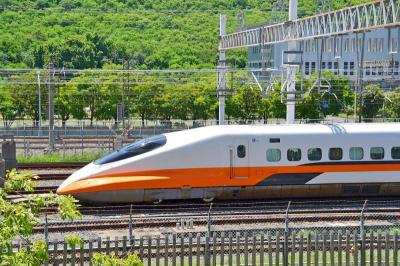
A signaling system malfunction disrupted high-speed rail (HSR) services beginning at 8am today, with trains temporarily reduced to three northbound and three southbound trains per hour as authorities conduct inspections. The malfunction occurred on a section of track in Miaoli County during pre-operation checks early this morning, forcing northbound and southbound trains to use a single track, the HSR operator said. The regular schedule has been replaced with three hourly trains offering only nonreserved seating in each direction, stopping at every station, it said, adding that business class cars would still have reserved seating. Departures from terminal stations are scheduled at the top

Taiwan is still in the process of assessing the possibility of recruiting workers from Eswatini, the Ministry of Foreign Affairs said yesterday, adding that its goal is to help Eswatini upgrade its vocational training centers. If there are plans to recruit workers from Eswatini, safeguarding national security, protecting public health and ensuring the employment rights of Taiwanese would be prerequisites, Department of West Asian and African Affairs Director-General Yen Chia-liang (顏嘉良) told a news conference. Key considerations would also include filling labor shortages in specific industries, and fostering bilateral professional and technical exchanges, he said. Yen was asked about the progress of labor

A US uncrewed surface vessel (USV) encountered multiple Chinese warships during an autonomous transit of the Taiwan Strait, US defense company Seasats said in a statement on Wednesday. Seasats announced that a Lightfish USV had completed the first autonomous transit of the Taiwan Strait. Over five days, the USV traversed the entire length of the Strait while constantly monitoring surface vessel traffic, the company said. The Lightfish encountered multiple Chinese warships, one of which was a Chinese People’s Liberation Army Navy (PLAN) Type 056 corvette, it said. The Chinese vessels were operating “well within Taiwan’s exclusive economic zone without transmitting their identity via the

VERBOSE VESSELS: A CGA cutter and a China Coast Guard exchanged verbal barbs for more than a day in Taiwanese-controlled waters before the Chinese vessel left The Taiwanese and Chinese coast guards had a standoff near the strategically located Pratas Islands (Dongsha Islands, 東沙群島) in the north of the South China Sea, the Coast Guard Administration (CGA) said yesterday. The two sides engaged in intense radio exchanges over sovereignty claims during the 33-hour standoff. China Coast Guard vessel 3501 eventually left the restricted waters, 26.6 nautical miles (49.2km) west of the Pratas Islands, at 5pm yesterday, the CGA said. Lying approximately between southern Taiwan and Hong Kong, the Taiwan-controlled Pratas are seen by some security experts as vulnerable to Chinese attack due to their distance — more than


 RSS
RSS