


A crane at a China-backed high-speed rail project in Thailand yesterday collapsed onto a passenger train, causing it to derail, killing at least 32 people, authorities said.
The massive crane’s broken structure was left resting on giant concrete pillars, while smoke rose from the wreckage of the train below, verified footage from the scene showed.
The company contracted to build the section of the high-speed rail where the crane fell, Italian-Thai Development — one of Thailand’s biggest construction firms — has seen a series of deadly incidents at its sites in the past few years.
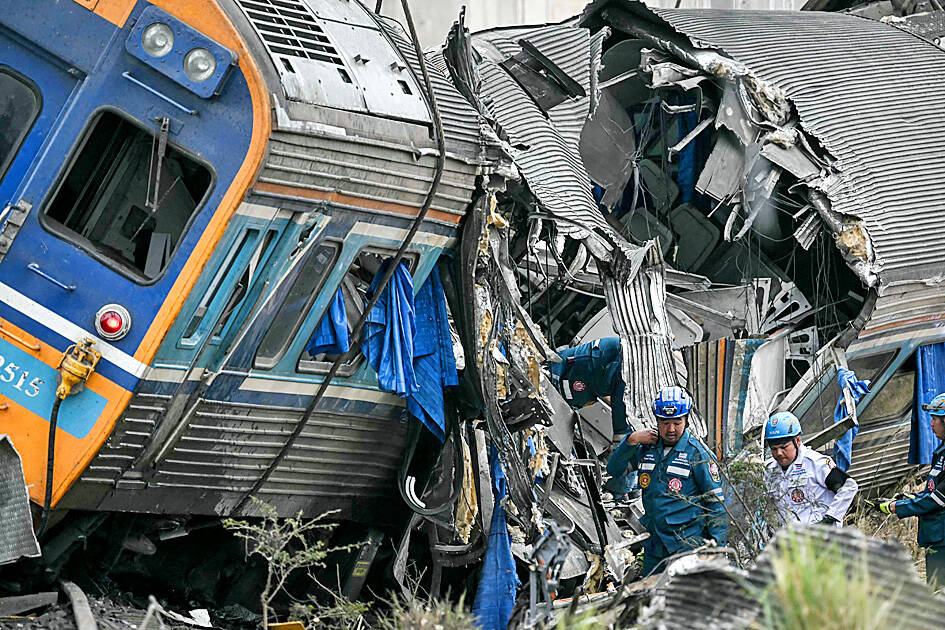
Photo: AFP
The firm expressed condolences for those killed and the dozens injured, saying in a statement it would “take responsibility for compensating the victims’ families and covering medical expenses for those injured.”
Dozens of rescuers worked into the evening, using other cranes to remove wreckage and searching for missing people in the tilted carriages in Nakhon Ratchasima Province, northeast of the capital, Bangkok.
Mitr Intrpanya, who was at the scene, said he heard a loud noise “like something sliding down from above, followed by two explosions.”
“When I went to see what had happened, I found the crane sitting on a passenger train with three carriages,” the 54-year-old said. “The metal from the crane appeared to strike the middle of the second carriage, slicing it in half.”
The Thai Ministry of Public Health said that 32 people were killed, three were missing and 64 were hospitalized, including seven in serious condition.
The incident happened at a construction site that is part of a more than US$5 billion project backed by China to build a high-speed rail network in Thailand.
It aims to connect Bangkok to Kunming, China, via Laos by 2028 as part of Beijing’s vast Belt and Road Initiative.
Theerachote Rujiviphat, an engineering consultant adviser on the high-speed project, said that Italian-Thai Development was solely responsible for the crane collapse.
Theerachote, from the China Railway Design Corp, said the launching crane that fell onto the existing rail tracks also belonged to Italian-Thai.
“It is the only company in charge. A similar accident also happened a few years ago under their responsibility,” Theerachote added.
Thai Prime Minister Anutin Charnvirakul said authorities must determine the cause of the crane collapse and hold those responsible to account.
“These kind of incidents happen very regularly,” he told reporters in Bangkok. “I have heard that it is the same company [involved in previous accidents]. It is time to change the law to blacklist construction companies that are repeatedly responsible for accidents.”
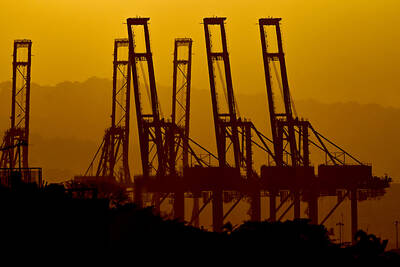
A subsidiary of a Hong Kong-based company that has lost control of two critical ports on the Panama Canal said it is seeking US$2 billion of compensation in damages from Panama over its “illegal” takeover of the ports. Panama Ports Co, a unit of Hong Kong’s CK Hutchison Holdings (長江和記實業), on Friday said in a statement that it is demanding the sum under international arbitration proceedings that it had already started. The Panamanian government last week seized control of the Balboa and Cristobal ports on each end of the Panama Canal, after the country’s Supreme Court declared earlier that a concession allowing
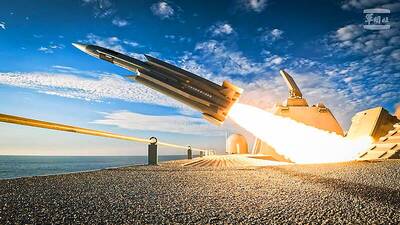
DETERRENCE: With 1,000 indigenous Hsiung Feng II and III missiles and 400 Harpoon missiles, the nation would boast the highest anti-ship missile density in the world With Taiwan wrapping up mass production of Hsiung Feng II and III missiles by December and an influx of Harpoon missiles from the US, Taiwan would have the highest density of anti-ship missiles in the world, a source said yesterday. Taiwan is to wrap up mass production of the indigenous anti-ship missiles by the end of year, as the Chungshan Institute of Science and Technology has been meeting production targets ahead of schedule, a defense official with knowledge of the matter said. Combined with the 400 Harpoon anti-ship missiles Taiwan expects to receive from the US by 2028, the nation would have

POSSIBILITIES EMERGE: With Taiwan’s victory and Japan’s narrow win over Australia, Taiwan now have a chance to advance if South Korea also beat the Aussies Taiwan has high hopes that the national baseball team would advance to the World Baseball Classic (WBC) quarter-finals after clinching a crucial 5-4 victory over South Korea in a nail-biting extra-inning game at the Tokyo Dome yesterday. Boosted by three home runs — two solo shots by Yu Chang (張育成) and Cheng Tsung-che (鄭宗哲) and a two-run homer by Stuart Fairchild — the triumph gave Taiwan a much-needed second victory in the five-team Pool C, where only the top two finishers would advance to the knockout stage in Miami, Florida. Entering extra innings with the game tied at four apiece, Taiwan scored
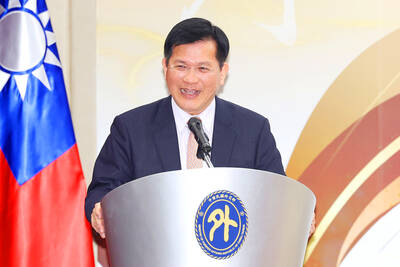
MISSION OF PEACE: The foreign minister urged Beijing to respect Taiwan’s existence as an independent nation, and work together to ensure peace and stability in the region Minister of Foreign Affairs Lin Chia-lung (林佳龍) yesterday rejected Chinese Minister of Foreign Affairs Wang Yi’s (王毅) comments about Taiwan, criticizing China as a “troublemaker” in the international community and a disruptor of cross-strait peace. Speaking at a news conference on the sidelines of the Chinese National People’s Congress, Wang said that Taiwan has always been a territory of China and that it would be impossible for it to become its own country. The “return” of Taiwan to China was the natural outcome of the Chinese people’s resistance against Japan in World War II, and that any pursuit of independence was “doomed


 RSS
RSS