


Some civic groups and Democratic Progressive Party (DPP) legislators yesterday condemned what they called “unlawful” moves and the “brazen political motives of the opposition to seize power” as the legislature opened public hearings regarding an impeachment motion raised by opposition parties against President William Lai (賴清德).
The hearings, launched by Chinese Nationalist Party (KMT) and Taiwan People’s Party (TPP) legislators, are to continue today.
Chilly Chen (陳峻涵), director of Taiwanese independence advocacy group Taiwan Republic Office, accused the KMT and the TPP of “conspiring to wreck Taiwan’s democracy” and “usurping” the president’s and the central government’s power.

Photo: Tien Yu-hua, Taipei Times
“Opposition parties are using impeachment as a pretext ... to avenge their defeat in the presidential election [in 2024], and to undermine our democratic framework,” he said at a protest outside the legislature in Taipei.
KMT Legislator Hsu Chiao-hsin (徐巧芯) said at the hearing that Lai damaged the separation of powers, and his alleged conduct was enough for impeachment.
KMT Legislator Lin Te-fu (林德福) said that Lai and Premier Cho Jung-tai (卓榮泰) contravened the Constitution and trampled on the rule of law by overturning laws that had passed a third reading at the legislature.
TPP Legislator-at-large Liu Shu-pin (劉書彬) said Lai is unfit to serve and has made arbitrary decisions since taking office, monopolizing power, hollowing out the legislature and overstepping the judiciary.
The hearing was the first public impeachment hearing in the nation’s constitutional history, DPP caucus chief executive Chung Chia-pin (鍾佳濱) said, urging the opposition to instead review the central government budget, which it has repeatedly blocked since last year.
The opposition has no evidence or legal foundation to raise the motion, Chung said, adding that their actual intention is to subject Lai to an unconstitutional questioning.
Amendments passed in 2024 to the Act Governing the Legislative Yuan’s Power (立法院職權行使法) that would require the president to deliver a state-of-the-nation address to the legislature and take questions from lawmakers were later ruled unconstitutional, he said.
The opposition is using impeachment proceedings to make the president to appear before the Legislative Yuan regardless, he added.
To impeach the president or vice president, the motion needs to garner the support of two-thirds of the legislature, and the two opposition parties would not be able to reach that threshold, Chung said, calling it “absurd” that they are still holding the hearing.
Presidential Office spokeswoman Karen Kuo (郭雅慧) said that the Presidential Office respects the opposition’s constitutional right to launch an impeachment motion.
However, the Presidential Office hopes legislators would prioritize national development and public welfare by expediting the passage of the general budget and a special national defense budget, she added.
Outside the legislature, Chen called the hearing “a political show to deceive the public,” urging the public to remain vigilant against what the KMT’s and the TPP’s “coup d’etat.”
He accused the opposition parties of following Beijing’s playbook and its narrative that Taiwan is in disarray and experiencing a political crisis due to the DPP’s “dictatorial” rule.
Many democratic nations, including the US, Japan and the EU, are closely observing the developments in Taiwan, as in the past few years they have been aware of the effort by “China’s proxies” in Taiwan to undermine people’s trust in democratic institutions and the rule of law, Taiwan Republic Office adviser Chen Ching-kuen (陳慶坤) said.
After the two days of public hearings, the Legislative Yuan is to convene plenary committee review sessions on Wednesday and Thursday next week.
The sponsor of the motion would explain the grounds for impeachment, and Lai would be invited to give a 15-minute speech followed by questioning.
Additional reporting by Hollie Younger and CNA
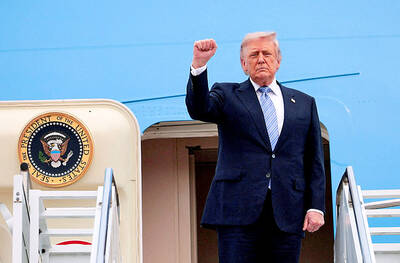
US-CHINA SUMMIT: MOFA welcomed US reassurance of no change in its Taiwan policy; Trump said he did not comment when Xi talked of opposing independence US President Donald Trump yesterday said he has not made a decision on whether to move forward with a major arms package for Taiwan after hearing concerns about it from Chinese President Xi Jinping (習近平). Trump’s comments on Taiwan came as he flew back to Washington after wrapping up critical talks in which both leaders said important progress was made in stabilizing US-China relations even as deep differences persist between the world’s two biggest powers on Iran and Taiwan. “I will make a determination,” Trump said, adding: “I’ll be making decisions. But, you know, I think the last thing we need right
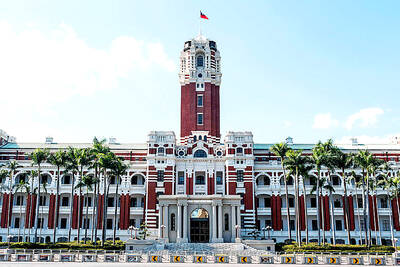
SECURITY: Taipei presses the US for arms supplies, saying the arms sales are not only a reflection of the US security commitment to Taiwan but also serve as a mutual deterrent against regional threats Taiwan is committed to preserving the cross-strait “status quo” and contributing to regional peace and stability, the Presidential Office said yesterday. “It is an undeniable fact that the Republic of China is a sovereign and independent democratic nation,” Presidential Office spokeswoman Karen Kuo (郭雅慧) reiterated, adding that Beijing has no right to claim sovereignty over Taiwan. The statements came after US President Donald Trump warned against Taiwanese independence. Trump wrapped up a state visit to Beijing on Friday, during which Chinese President Xi Jinping (習近平) had pressed him not to support Taiwan. Taiwan depends heavily on US security backing to deter China from carrying

The subsidiary of Taiwan Semiconductor Manufacturing Co (TSMC, 台積電) in Kumamoto, Japan, turned a profit in the first quarter of this year, marking the first time the first fab of the unit has become profitable since mass production started at the end of 2024. According to the contract chipmaker’s financial statement released on Friday, Japan Advanced Semiconductor Manufacturing Inc (JASM), a joint venture running the fab in Kumamoto, posted NT$951 million (US$30.19 million) in profit in the January-to-March period, compared with a loss of NT$1.39 billion in the previous quarter, and a loss of NT$3.25 billion in the first quarter of
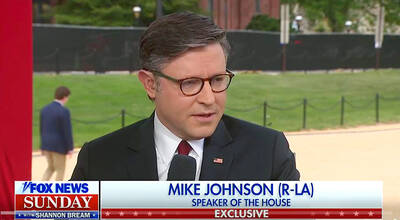
RESOLUTE BACKING: Two Republican senators are planning to introduce legislation that would impose immediate sanctions on China if it attempts to invade Taiwan US House of Representatives Speaker Mike Johnson on Sunday reaffirmed US congressional support for Taiwan, saying the US and “all freedom-loving people” have a stake in preventing China from seizing Taiwan by force. Johnson made the remarks in an interview with Fox News Sunday on US President Donald Trump’s summit with Chinese President Xi Jinping (習近平) last week. In an interview that aired on Friday on Fox News, just as Trump wrapped up a high-stakes visit to China, he said he has yet to green-light a new US$14 billion arms package to Taiwan and that it “depends on China.” “It’s a very good


 RSS
RSS