


The government’s policy to recruit foreign workers to help people hospitalized for acute conditions with daily care needs would benefit medical staff and families, while helping hospitals to staff 30,000 beds, Minister of Health and Welfare Shih Chung-liang (石崇良) said yesterday.
Speaking at a Ministry of Health and Welfare (MOHW) event, Shih said that of the 70,000 beds in general acute wards across the nation, more than half — excluding those treating people with chronic conditions — were for patients who needed help with daily care needs.
The government’s Inpatient Integrated Care Trial Program has since 2022 provided publicly funded care, giving patients’ families more freedom, while medical staff can focus on other duties, Shih said.

Photo: Chiu Chih-jou, Taipei Times
The project has been positively received over the past three years, with medical staff providing favorable feedback, such as having a reduced workload, he said.
However, staff shortages in general acute wards persist, he said, adding that only 110 hospitals participated in the project last year, hiring 2,700 employees, which was only sufficient to staff 5,000 beds.
The ministry plans to provide NT$250 million (US$7.9 million) to expand the project and provide service for 30,000 beds, the ministry said.
After Shih on Monday announced that the MOHW would allow foreign caregivers to be added to the program, the Taiwan Nurses Union on Tuesday criticized the policy, saying it would create more stress for medical workers.
Medical union representatives also said the policy would pose challenges, including language barriers, management issues, concerns about professionalism and the need for complaint channels.
If the policy is enacted, the ministry would only recruit trained foreign caregivers who have worked in Taiwan for at least six years, Shih said, adding that they would have ample experience and would not face severe language barriers as feared.
National Taiwan University Hospital superintendent Yu Chung-jen (余忠仁) said that medical staff shortage was a systemic problem and that the introduction of a foreign workforce would reduce the workload of family members and hospital staff.
The EU, the US and Japan in the past few years have introduced foreign caregivers, Yu said, adding that a high concentration of foreign workers in manufacturing and engineering highlighted a significant lapse on Taiwan’s part.
Not all hospital jobs are performed by nurses, and assigning nurses to perform tasks that trained caregivers can handle is a waste of human resources, he said.
The current care model was designed on the premise that one person could care for multiple patients, but in practice, that ideal has been challenging to achieve, he said.
Nurses need to be relieved of menial tasks so they can refocus on professional issues, Yu said, adding that language barriers are not insurmountable if hospitals clearly define the workers’ roles and responsibilities.
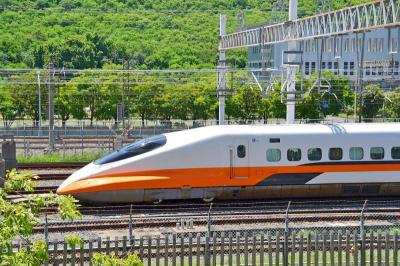
A signaling system malfunction disrupted high-speed rail (HSR) services beginning at 8am today, with trains temporarily reduced to three northbound and three southbound trains per hour as authorities conduct inspections. The malfunction occurred on a section of track in Miaoli County during pre-operation checks early this morning, forcing northbound and southbound trains to use a single track, the HSR operator said. The regular schedule has been replaced with three hourly trains offering only nonreserved seating in each direction, stopping at every station, it said, adding that business class cars would still have reserved seating. Departures from terminal stations are scheduled at the top
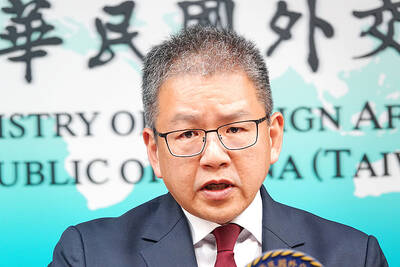
Taiwan is still in the process of assessing the possibility of recruiting workers from Eswatini, the Ministry of Foreign Affairs said yesterday, adding that its goal is to help Eswatini upgrade its vocational training centers. If there are plans to recruit workers from Eswatini, safeguarding national security, protecting public health and ensuring the employment rights of Taiwanese would be prerequisites, Department of West Asian and African Affairs Director-General Yen Chia-liang (顏嘉良) told a news conference. Key considerations would also include filling labor shortages in specific industries, and fostering bilateral professional and technical exchanges, he said. Yen was asked about the progress of labor

VERBOSE VESSELS: A CGA cutter and a China Coast Guard exchanged verbal barbs for more than a day in Taiwanese-controlled waters before the Chinese vessel left The Taiwanese and Chinese coast guards had a standoff near the strategically located Pratas Islands (Dongsha Islands, 東沙群島) in the north of the South China Sea, the Coast Guard Administration (CGA) said yesterday. The two sides engaged in intense radio exchanges over sovereignty claims during the 33-hour standoff. China Coast Guard vessel 3501 eventually left the restricted waters, 26.6 nautical miles (49.2km) west of the Pratas Islands, at 5pm yesterday, the CGA said. Lying approximately between southern Taiwan and Hong Kong, the Taiwan-controlled Pratas are seen by some security experts as vulnerable to Chinese attack due to their distance — more than

A US uncrewed surface vessel (USV) encountered multiple Chinese warships during an autonomous transit of the Taiwan Strait, US defense company Seasats said in a statement on Wednesday. Seasats announced that a Lightfish USV had completed the first autonomous transit of the Taiwan Strait. Over five days, the USV traversed the entire length of the Strait while constantly monitoring surface vessel traffic, the company said. The Lightfish encountered multiple Chinese warships, one of which was a Chinese People’s Liberation Army Navy (PLAN) Type 056 corvette, it said. The Chinese vessels were operating “well within Taiwan’s exclusive economic zone without transmitting their identity via the


 RSS
RSS