


Iranian protests appeared to persist in localized pockets overnight as an activist group warned of imminent executions by the state and said the civilian death toll from the unrest could be in the thousands.
The Oslo-based Iran Human Rights group said at least 648 people had died in the protests by Monday, while estimating the toll could be as high as 6,000.
It said the “risk of mass and extrajudicial executions of protesters is extremely serious.”
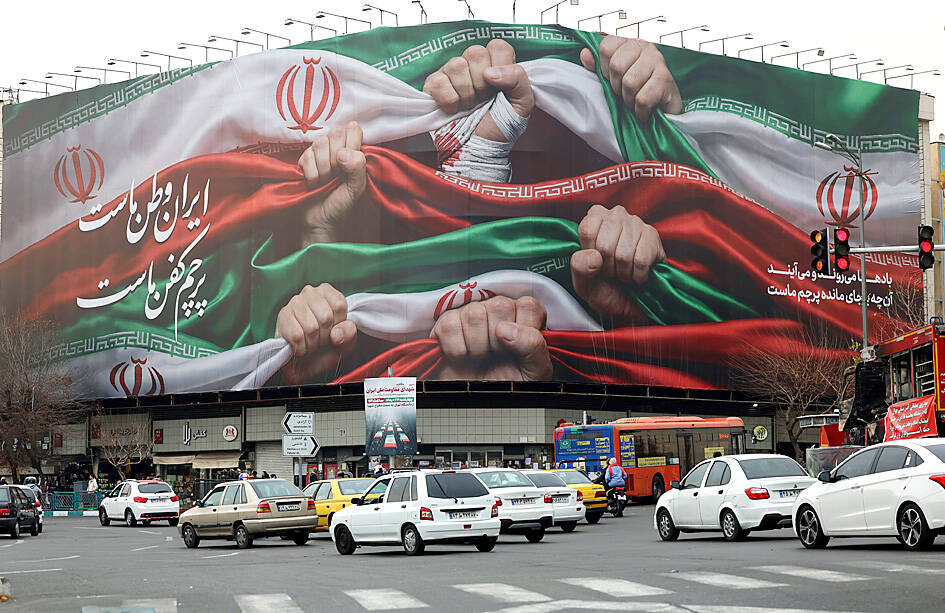
Photo: EPA
In one video that has been verified by the BBC as coming from a mortuary on the outskirts of Tehran, at least 180 bodies can be seen.
The US-based Human Rights Activists News Agency reported that more than 10,700 people had been detained in connection with protests by Monday, and put the death toll at 646.
Concern about the scale of fatalities is mounting, as US President Donald Trump moved to further isolate the Islamic republic over the violence, saying on Monday that he was imposing a 25 percent tariff on goods from countries “doing business” with Iran.
Trump, who has repeatedly threatened Iran with military intervention, said in a social media post on Monday that the new levies would “immediately” hit the Islamic republic’s trading partners who also do business with the US.
“This order is final and conclusive,” he wrote, without specifying who it would affect.
Iran’s main trading partners are China, Turkey, the United Arab Emirates and Iraq, economic database Trading Economics said.
The move followed reports that Iranian Minister of Foreign Affairs Abbas Araghchi reached out to US special envoy to the Middle East Steve Witkoff about a potential meeting in the coming days.
German Chancellor Friedrich Merz, who was on a two-day visit to India, yesterday predicted that the Islamic republic is in its “final days” and “effectively finished” after the two weeks of nationwide upheaval against Supreme Leader Ayatollah Ali Khamenei’s regime.
The Iranian government has not given any figures for civilian deaths and the state broadcaster, which has an effective monopoly on domestic news services, has repeated official claims that “terrorists and rioters” killed scores of security forces amid a continued Internet blackout.
The NetBlocks group, which monitors global Internet connectivity, yesterday said that a nationwide Internet shutdown had entered its fifth day.
Reports said some citizens were able to make international calls as of yesterday morning.
Trump has called on Starlink — which some Iranians already use, despite it being banned in the country — to help restore communication.
Connecting Iran to the Internet via Elon Musk’s service would not be easy. Owning a Starlink terminal is illegal, so equipment would have to be smuggled in.
The military is also working to jam Starlink and is hunting down any users, said Amir Rashidi, director of digital rights and security at Internet human rights group Miaan Group.
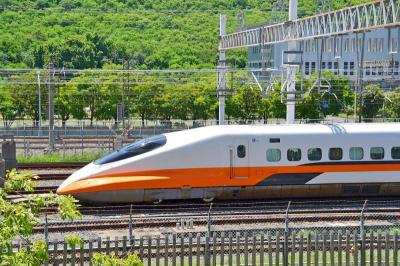
A signaling system malfunction disrupted high-speed rail (HSR) services beginning at 8am today, with trains temporarily reduced to three northbound and three southbound trains per hour as authorities conduct inspections. The malfunction occurred on a section of track in Miaoli County during pre-operation checks early this morning, forcing northbound and southbound trains to use a single track, the HSR operator said. The regular schedule has been replaced with three hourly trains offering only nonreserved seating in each direction, stopping at every station, it said, adding that business class cars would still have reserved seating. Departures from terminal stations are scheduled at the top
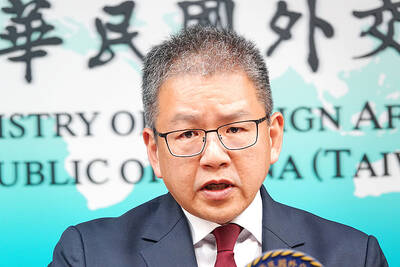
Taiwan is still in the process of assessing the possibility of recruiting workers from Eswatini, the Ministry of Foreign Affairs said yesterday, adding that its goal is to help Eswatini upgrade its vocational training centers. If there are plans to recruit workers from Eswatini, safeguarding national security, protecting public health and ensuring the employment rights of Taiwanese would be prerequisites, Department of West Asian and African Affairs Director-General Yen Chia-liang (顏嘉良) told a news conference. Key considerations would also include filling labor shortages in specific industries, and fostering bilateral professional and technical exchanges, he said. Yen was asked about the progress of labor
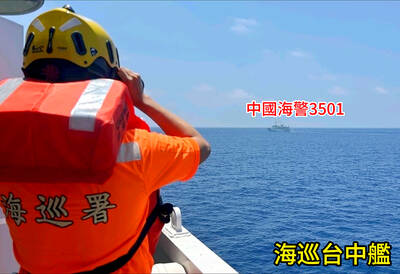
VERBOSE VESSELS: A CGA cutter and a China Coast Guard exchanged verbal barbs for more than a day in Taiwanese-controlled waters before the Chinese vessel left The Taiwanese and Chinese coast guards had a standoff near the strategically located Pratas Islands (Dongsha Islands, 東沙群島) in the north of the South China Sea, the Coast Guard Administration (CGA) said yesterday. The two sides engaged in intense radio exchanges over sovereignty claims during the 33-hour standoff. China Coast Guard vessel 3501 eventually left the restricted waters, 26.6 nautical miles (49.2km) west of the Pratas Islands, at 5pm yesterday, the CGA said. Lying approximately between southern Taiwan and Hong Kong, the Taiwan-controlled Pratas are seen by some security experts as vulnerable to Chinese attack due to their distance — more than

A US uncrewed surface vessel (USV) encountered multiple Chinese warships during an autonomous transit of the Taiwan Strait, US defense company Seasats said in a statement on Wednesday. Seasats announced that a Lightfish USV had completed the first autonomous transit of the Taiwan Strait. Over five days, the USV traversed the entire length of the Strait while constantly monitoring surface vessel traffic, the company said. The Lightfish encountered multiple Chinese warships, one of which was a Chinese People’s Liberation Army Navy (PLAN) Type 056 corvette, it said. The Chinese vessels were operating “well within Taiwan’s exclusive economic zone without transmitting their identity via the


 RSS
RSS