


The Taipei City Government is looking at options to limit smoking in public places, with one version of the policy likely to be implemented this year, Taipei Mayor Chiang Wan-an (蔣萬安) said yesterday.
A “Taipei smoke-free city” plan is expected to be launched by the end of this year, Chiang said.
City officials would study the “very successful” establishment of designated smoking areas in Tokyo, which has cut down secondhand smoke and cigarette litter in the Japanese capital, he said.
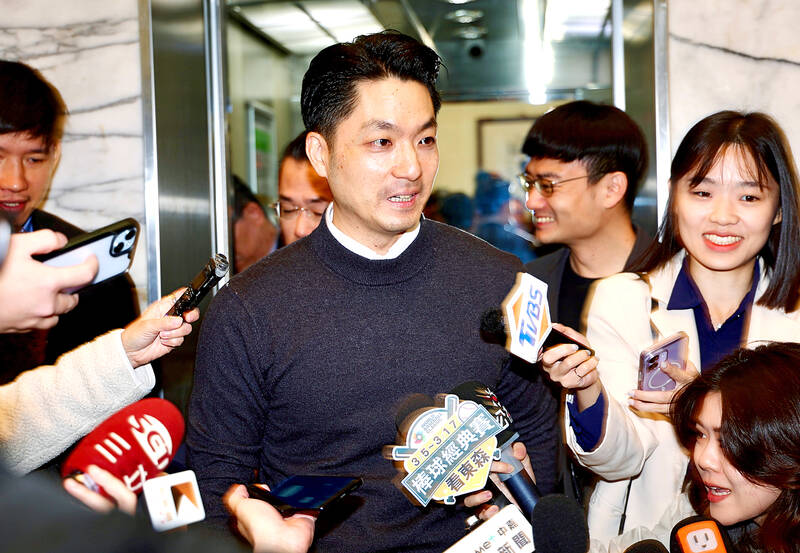
Photo: Wang Yi-sung, Taipei Times
“I hope we can change people’s thinking — that is, to prohibit [public smoking] in principle, but allow for some exceptions,” Chiang said.
“It’s very possible that we’ll refer to examples abroad, such as using designated smoking areas or booths,” thereby separating smokers and non-smokers to improve the quality of public spaces, he said.
Taiwan’s approach has been to designate non-smoking areas, allowing smoking everywhere else outside those zones, Chiang said.
However, that has not only led to cigarette butt pollution, but also caused inconvenience to the public, he said.
Chiang said that since taking office, he has promoted smoke-free public housing and smoke-free Lunar New Year market streets, and implemented comprehensive smoking bans around large event venues.
At the same time, in accordance with the Taipei City Emerging Tobacco Products Management Self-Governance Ordinance (台北市新興菸品管理自治條例), the sale of heated tobacco products is prohibited within 50m of schools at the senior-high level and below, including bans on displaying and advertising such items, he said.
He added that artificial intelligence systems would be used for identification to discourage people from smoking in non-smoking areas.
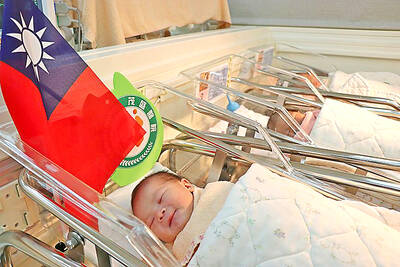
AGING: As of last month, people aged 65 or older accounted for 20.06 percent of the total population and the number of couples who got married fell by 18,685 from 2024 Taiwan has surpassed South Korea as the country least willing to have children, with an annual crude birthrate of 4.62 per 1,000 people, Ministry of the Interior data showed yesterday. The nation was previously ranked the second-lowest country in terms of total fertility rate, or the average number of children a woman has in her lifetime. However, South Korea’s fertility rate began to recover from 2023, with total fertility rate rising from 0.72 and estimated to reach 0.82 to 0.85 by last year, and the crude birthrate projected at 6.7 per 1,000 people. Japan’s crude birthrate was projected to fall below six,
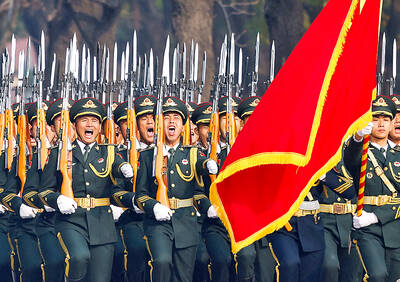
Conflict with Taiwan could leave China with “massive economic disruption, catastrophic military losses, significant social unrest, and devastating sanctions,” a US think tank said in a report released on Monday. The German Marshall Fund released a report titled If China Attacks Taiwan: The Consequences for China of “Minor Conflict” and “Major War” Scenarios. The report details the “massive” economic, military, social and international costs to China in the event of a minor conflict or major war with Taiwan, estimating that the Chinese People’s Liberation Army (PLA) could sustain losses of more than half of its active-duty ground forces, including 100,000 troops. Understanding Chinese
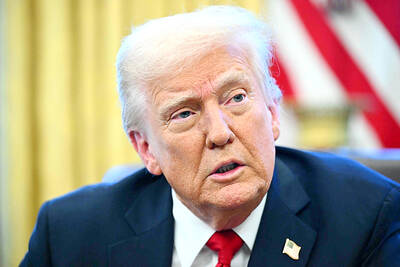
US President Donald Trump in an interview with the New York Times published on Thursday said that “it’s up to” Chinese President Xi Jinping (習近平) what China does on Taiwan, but that he would be “very unhappy” with a change in the “status quo.” “He [Xi] considers it to be a part of China, and that’s up to him what he’s going to be doing, but I’ve expressed to him that I would be very unhappy if he did that, and I don’t think he’ll do that. I hope he doesn’t do that,” Trump said. Trump made the comments in the context
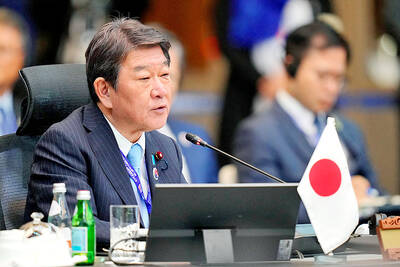
SELF-DEFENSE: Tokyo has accelerated its spending goal and its defense minister said the nation needs to discuss whether it should develop nuclear-powered submarines China is ramping up objections to what it sees as Japan’s desire to acquire nuclear weapons, despite Tokyo’s longstanding renunciation of such arms, deepening another fissure in the two neighbors’ increasingly tense ties. In what appears to be a concerted effort, China’s foreign and defense ministries issued statements on Thursday condemning alleged remilitarism efforts by Tokyo. The remarks came as two of the country’s top think tanks jointly issued a 29-page report framing actions by “right-wing forces” in Japan as posing a “serious threat” to world peace. While that report did not define “right-wing forces,” the Chinese Ministry of Foreign Affairs was


 RSS
RSS