


Six local governments might be forced to borrow due to a funding shortfall of NT$299.2 billion (US$9.48 billion) due to opposition lawmakers blocking this year’s budget, Premier Cho Jung-tai (卓榮泰) said yesterday.
This year marks the first time in constitutional history that January has started without the legislature referring the general budget to committee for review, Cho told a news conference after the first Cabinet meeting of the year.
Lawmakers from the Chinese Nationalist Party (KMT) and the Taiwan People’s Party have said they would not approve the proposal until the Cabinet allocates funds for salary increases for active-duty military personnel, and pension increases for public-school teachers and civil servants.
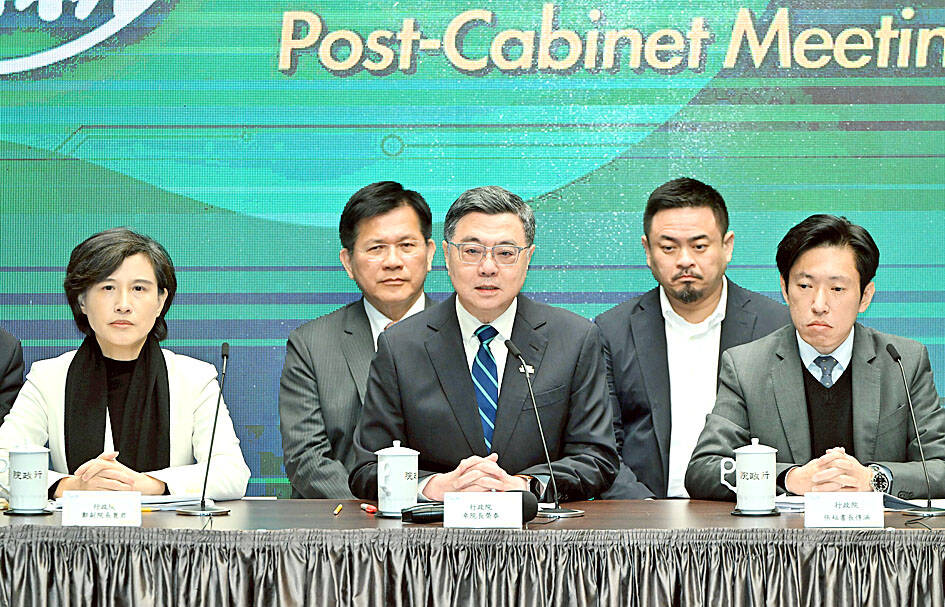
Photo: Tien Yu-hua, Taipei Times
Although the legislature passed amendments last year making such raises mandatory, the Democratic Progressive Party government has requested constitutional interpretations, which are still pending.
It has been more than four months since the Executive Yuan submitted this year’s general budget to the legislature, but it has yet to be reviewed, Cho said.
The delay would affect NT$299.2 billion of budget allocations, disrupting the fiscal operations of six local governments — Tainan, as well as Changhua, Chiayi, Lienchiang (Matsu), Penghu and Pingtung counties — which could face fiscal management difficulties, forcing them to borrow, Cho said.
The fiscal allocation formula unfairly disadvantages regions that rely heavily on agriculture, as well as outlying counties with smaller populations and lower business turnover, leaving them with less in tax revenue allocations, he said.
The central government had earmarked NT$32.1 billion in the general budget for this year to ensure that shared tax revenues and subsidies would be no lower than last year, he said.
Among the blocked funds are NT$101.7 billion for new initiatives, NT$180.5 billion to cover recurring costs and ongoing projects exceeding last year’s budget, and NT$17 billion for first and second reserve funds, as well as disaster preparedness, which would affect national security, flood control plans and local governments subsidies, he said.
The Ministry of National Defense would face the greatest funding shortfall of NT$75.2 billion, Cho said.
Yesterday’s meeting was intended to discuss implementation of new policies and programs, but the Cabinet was instead forced to report on the blocked budget, he said.
The general budget is the foundation of democratic governance and essential to meeting public needs, Cho said, calling on the legislature to expedite the review.
The stalled budget would negatively affect economic growth, Directorate-General of Budget, Accounting and Statistics Minister Chen Shu-tzu (陳淑姿) said.
Although the economy is expected to grow, the extent would be dampened by the stalled budget, Chen said.
The economy is estimated to shrink by 0.05 percent for every NT$10 billion cut to government spending on procurements and investments, and 0.03 percent for every cut of the same amount to government spending on operational expenses, she said.
KMT Chairwoman Cheng Li-wun (鄭麗文) on Monday told reporters that repeated calls to review the budget were “missing the point.”
The Cabinet should first earmark salary raises for military personnel in its budget proposal in accordance with legislation and refrain from creating unnecessary social division, Cheng said.
Separately yesterday, the DPP published a poll showing that 56.3 percent of respondents disapproved of the legislature’s performance, 2.5 times more than those who approved.
The survey also showed that 66.9 percent believed lawmakers should prioritize passing the budget instead of impeaching President William Lai (賴清德), DPP spokesman Justin Wu (吳崢) told a news conference in Taipei.
Sixty-three percent worried that killing the resiliency special budget would make the nation vulnerable to natural disasters, while more than 60 percent expressed concern that water management infrastructure construction would be delayed, he said.
About 58.8 percent voiced worry over the lack of public subsidies for childcare and 52.2 percent reported concern about the impact of canceling the TPass policy, he said.
The survey was conducted on Monday and Tuesday last week. It garnered 1,043 valid responses, had a 95 percent confidence level and a margin of error of 3 percent.
Additional reporting by Chung Li-hua and Chen Cheng-yu
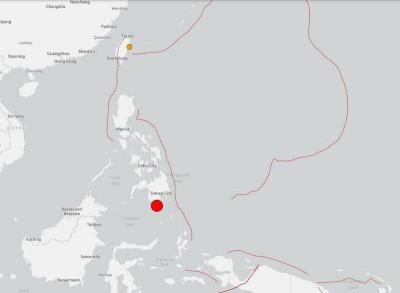
A magnitude 7.8 earthquake struck off the southern coast of Mindanao in the Philippines at 7:38am today, prompting the US Tsunami Warning System to issue an alert for neighboring countries, including Taiwan. The system issued a purple alert indicating a "tsunami threat." The potential threat zone includes Taiwan, the Philippines, Papua New Guinea, Yap and Palau. Philippine authorities were assessing the damage from the quake, with the office of civil defense seeking to verifying initial reports that 15 people had been killed and 129 injured in the region, mostly from falling debris. Arlene Hollero, disaster chief of Maasim town in the Philippines' Sarangani Province,
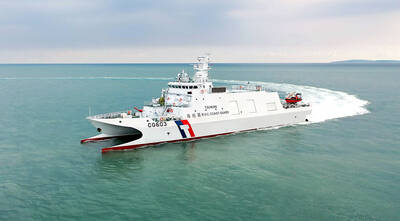
‘GRAY ZONE’ PRESSURE: Beijing’s activities are intended to create the deceitful impression that China has jurisdiction over the area around Taiwan, the CGA said Taiwan’s rights over its territorial waters and exclusive economic zone must not be violated by any country, the Mainland Affairs Council said yesterday, adding that it will not accept any unprovoked actions. The council issued the remarks in response to the China Coast Guard conducting maritime enforcement drills near eastern Taiwan and claiming to fully exercise China’s maritime administrative law enforcement authority. The Coast Guard Administration (CGA) has been closely monitoring the situation and is taking concrete steps to defend the nation’s sovereignty and secure its waters, the council said. China has no sovereign rights over the waters off eastern

RESILIENCE: Taiwan plays a key role in semiconductors, energy, information infrastructure and advanced manufacturing, AIT Director Raymond Greene said Taiwan’s continued investment in deterrence and resilience remains vital, especially in uncrewed systems and other emerging technologies, American Institute in Taiwan (AIT) Director Raymond Greene said yesterday. Greene made the remarks at the annual National Strategic Summit on Supply Chain Resilience held by the Research Institute for Democracy, Society and Emerging Technology (DSET), a government-backed think tank. As Taiwan last year became the US’ fourth-largest trading partner and supply chain security is becoming more important, cooperation in emerging technologies continues to deepen between the two countries, he said. The US is committed to accelerating innovation, building key infrastructure, strengthening cooperation

The National Chungshan Institute of Science and Technology yesterday showcased its locally developed variants of the Vision 60 robotic patrol dog, which it plans to deploy on the nation’s outlying territories in the South China Sea. The variants were produced under the Joint Lab project — created by the institute and domestic companies — and assembled with domestically produced motors, lenses and artificial intelligence (AI) systems alongside licensed tech from the US, Missile and Rocket Systems Research Division deputy director Jen Kuo-kang (任國光) told the media event at a military base in Taipei’s Dazhi (大直) area. Taiwan has built up its strengths


 RSS
RSS