


The government yesterday vowed to defend national sovereignty and the safety of all Taiwanese after China sanctioned two Cabinet ministers, accusing them of “separatism.”
Minister of the Interior Liu Shyh-fang (劉世芳) and Minister of Education Cheng Ying-yao (鄭英耀) were added to Beijing’s list of “Taiwanese independence diehards,” while Chen Shu-yi (陳舒怡) of the High Prosecutors’ Office was named as an “accomplice.”
China’s Taiwan Affairs Office spokesman Chen Binhua (陳斌華) told a news conference that Liu and Cheng have committed numerous actions backing independence, “angering people on both sides of the Taiwan Strait.”
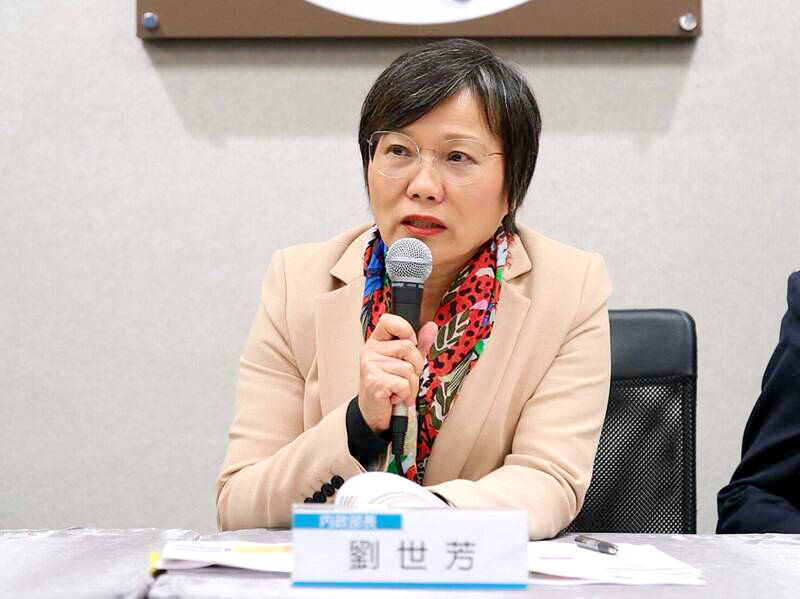
Photo: Lee Wen-hsin, Taipei Times
Chen accused Liu of promoting independence, “suppressing cross-strait exchanges and persecuting Chinese spouses living in Taiwan,” and Chen of “compiling pro-independence teaching materials” and “poisoning the minds” of young people.
The office called on the public to provide evidence of Liu’s and Cheng’s “crimes.”
Liu and Cheng said that the accusations would not deter them.
“My commitment to defending national sovereignty, and a free and democratic way of life will not change, and I will continue to safeguard Taiwan,” she said.
The Fundamental Act of Education (教育基本法) says that the right to education revolves around the people, and that education’s purpose is to instill, among other traits, moral character, patriotism and understanding of democracy, Cheng said.
The Ministry of Education has been fulfilling its lawful duties as defined by the act and would continue to do so unflinchingly, he said.
Mainland Affairs Council (MAC) Deputy Minister Liang Wen-chieh (梁文傑) told reporters on the sidelines of a legislative hearing in Taipei that Beijing’s so-called “diehards” are “steadfast defenders of the Republic of China’s existence, fighting Chinese communist infiltration.”
“The government will persevere with full faith that those targeted will not change their views,” Liang said.
Separately, the MAC said that those being sanctioned by China have implemented strong and effective measures to counter Beijing’s pressure, infiltration and espionage campaigns.
China’s goal is not to harm the people on its sanction list, but assert the right to treat Taiwan as an internal territory and to sow internal division in the nation, concurrent with efforts to cultivate local collaborators, it said.
Beijing’s intimidation would never shake the resolve of Taiwanese to defend freedom and democracy, it said, adding that the government would dauntlessly uphold sovereignty, the rule of law and the well-being of Taiwanese.
China must take full responsibility for the consequences of its actions after undermining stability across the Taiwan Strait with its provocations, the MAC said.
Deputy Minister of Justice Huang Mou-hsin (黃謀信) said that Taiwan does not brook challenges to its sovereignty and his ministry fully supports prosecutors carrying out their duties.
District prosecutors’ offices have been ordered to take all necessary precautions to ensure the safety of staff and punish collaborators who break the law on Beijing’s behalf, Huang said.
Additional reporting by Chen Yu-fu and Wang Ting-chuan

‘NO SECURITY RISK’: The Railway Bureau reassured the public that the technicians’ activities were limited to technical guidance and did not involve sensitive systems The Railway Bureau yesterday said it had invited eight Chinese technicians to assist with an airport MRT construction project. The bureau issued the confirmation after an Internet user said Chinese nationals had entered the construction zone of Taiwan Taoyuan International Airport’s Terminal 3 project. They asked why “individuals from an enemy state” were allowed access to such a major national infrastructure project, which raised serious concerns over Taiwan’s industrial safety, sensitive systems and information security. The bureau’s Northern Region Engineering Branch Office said subcontractor Taiwan Handle Industrial Co (台灣手把工業) of the Taoyuan airport MRT’s “Contract No. CU05 Project A14 Station Civil, MEP &

A US uncrewed surface vessel (USV) encountered multiple Chinese warships during an autonomous transit of the Taiwan Strait, US defense company Seasats said in a statement on Wednesday. Seasats announced that a Lightfish USV had completed the first autonomous transit of the Taiwan Strait. Over five days, the USV traversed the entire length of the Strait while constantly monitoring surface vessel traffic, the company said. The Lightfish encountered multiple Chinese warships, one of which was a Chinese People’s Liberation Army Navy (PLAN) Type 056 corvette, it said. The Chinese vessels were operating “well within Taiwan’s exclusive economic zone without transmitting their identity via the

Taiwan is still in the process of assessing the possibility of recruiting workers from Eswatini, the Ministry of Foreign Affairs said yesterday, adding that its goal is to help Eswatini upgrade its vocational training centers. If there are plans to recruit workers from Eswatini, safeguarding national security, protecting public health and ensuring the employment rights of Taiwanese would be prerequisites, Department of West Asian and African Affairs Director-General Yen Chia-liang (顏嘉良) told a news conference. Key considerations would also include filling labor shortages in specific industries, and fostering bilateral professional and technical exchanges, he said. Yen was asked about the progress of labor
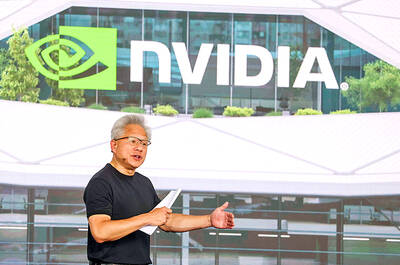
‘BOOMING’: ’ The number of partners we have here is incredible. You can see from their stock prices. They’re doing so well, they’re so happy,’ Jensen Huang said Nvidia Corp’s spending in Taiwan has ballooned to about US$150 billion a year, 10 times the US$10 billion to US$15 billion the company spent five years ago, Nvidia chief executive officer Jensen Huang (黃仁勳) said yesterday, suggesting Taiwan’s strategic importance in the global artificial intelligence (AI) supply chain. “Taiwan is the epicenter of the AI revolution. This is where the chips come, packaging comes. This is where the systems are made. This is where AI supercomputers were created,” Huang said at a meeting for the company’s employees in Beitou-Shilin Technology Park (北投士林科技園區) in Taipei, the planned site of Nvidia’s Taipei headquarters. “Taiwan


 RSS
RSS