


Saudi Arabia yesterday formally called on United Arab Emirites (UAE)-backed separatists in Yemen to withdraw from two governorates that their forces control in the country, a move that threatens sparking a confrontation within a fragile coalition battling the Houthi rebels.
The statement from the Saudi Arabian Ministry of Foreign Affairs appeared aimed at putting public pressure on the Southern Transitional Council, a force long backed by the UAE.
Saudi Arabia has backed other fighters within Yemen, including the National Shield Forces, in the war against the Iranian-backed Houthis that the kingdom launched in 2015.
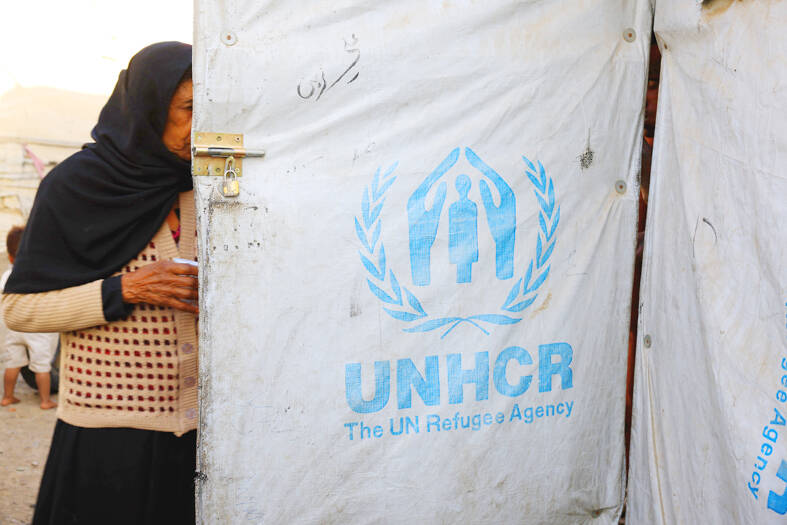
Photo: EPA
The separatists’ actions have “resulted in an unjustified escalation that harmed the interests of all segments of Yemeni people, as well as the southern cause and the coalition’s efforts,” the ministry said in the statement.
“The kingdom stresses the importance of cooperation among all Yemeni factions and components to exercise restraint and avoid any measures that could destabilize security and stability, which may result in undesirable consequences,” it said.
The council has moved into Yemen’s governorates of Hadramout and Mahra.
The statement said that meditation efforts were aimed at having the council’s forces return to “their previous positions outside of the two governorates and hand over the camps in those areas” to the National Shield Forces.
“These efforts remain in progress to restore the situation to its previous statement,” the ministry said.
Those aligned with the council have increasingly flown the flag of South Yemen, which was a separate country from 1967 to 1990.
There were calls for demonstrations yesterday in Aden to support political forces wanting South Yemen to again secede from Yemen, but it was not immediately clear if they would go ahead given Saudi Arabia’s announcement.
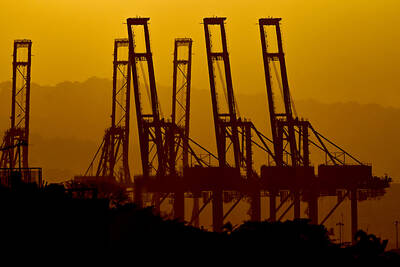
A subsidiary of a Hong Kong-based company that has lost control of two critical ports on the Panama Canal said it is seeking US$2 billion of compensation in damages from Panama over its “illegal” takeover of the ports. Panama Ports Co, a unit of Hong Kong’s CK Hutchison Holdings (長江和記實業), on Friday said in a statement that it is demanding the sum under international arbitration proceedings that it had already started. The Panamanian government last week seized control of the Balboa and Cristobal ports on each end of the Panama Canal, after the country’s Supreme Court declared earlier that a concession allowing
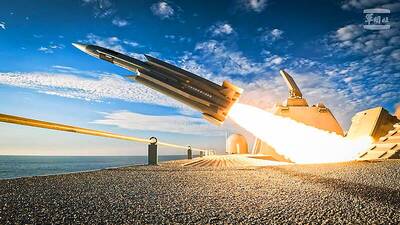
DETERRENCE: With 1,000 indigenous Hsiung Feng II and III missiles and 400 Harpoon missiles, the nation would boast the highest anti-ship missile density in the world With Taiwan wrapping up mass production of Hsiung Feng II and III missiles by December and an influx of Harpoon missiles from the US, Taiwan would have the highest density of anti-ship missiles in the world, a source said yesterday. Taiwan is to wrap up mass production of the indigenous anti-ship missiles by the end of year, as the Chungshan Institute of Science and Technology has been meeting production targets ahead of schedule, a defense official with knowledge of the matter said. Combined with the 400 Harpoon anti-ship missiles Taiwan expects to receive from the US by 2028, the nation would have

POSSIBILITIES EMERGE: With Taiwan’s victory and Japan’s narrow win over Australia, Taiwan now have a chance to advance if South Korea also beat the Aussies Taiwan has high hopes that the national baseball team would advance to the World Baseball Classic (WBC) quarter-finals after clinching a crucial 5-4 victory over South Korea in a nail-biting extra-inning game at the Tokyo Dome yesterday. Boosted by three home runs — two solo shots by Yu Chang (張育成) and Cheng Tsung-che (鄭宗哲) and a two-run homer by Stuart Fairchild — the triumph gave Taiwan a much-needed second victory in the five-team Pool C, where only the top two finishers would advance to the knockout stage in Miami, Florida. Entering extra innings with the game tied at four apiece, Taiwan scored
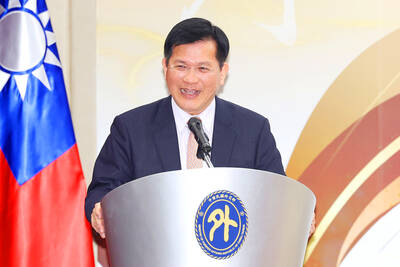
MISSION OF PEACE: The foreign minister urged Beijing to respect Taiwan’s existence as an independent nation, and work together to ensure peace and stability in the region Minister of Foreign Affairs Lin Chia-lung (林佳龍) yesterday rejected Chinese Minister of Foreign Affairs Wang Yi’s (王毅) comments about Taiwan, criticizing China as a “troublemaker” in the international community and a disruptor of cross-strait peace. Speaking at a news conference on the sidelines of the Chinese National People’s Congress, Wang said that Taiwan has always been a territory of China and that it would be impossible for it to become its own country. The “return” of Taiwan to China was the natural outcome of the Chinese people’s resistance against Japan in World War II, and that any pursuit of independence was “doomed


 RSS
RSS