

The BBC yesterday said it would fight a US$10 billion lawsuit brought by US President Donald Trump against the British broadcaster over a documentary that edited his 2021 speech ahead of the US Capitol riot.
“As we have made clear previously, we will be defending this case,” a BBC spokesperson said in a statement, adding that the company would not be making “further comment on ongoing legal proceedings.”
The lawsuit, filed in federal court in Miami, seeks “damages in an amount not less than [US]$5,000,000,000” for each of two counts against the British broadcaster, for alleged defamation and violation of the Florida Deceptive and Unfair Trade Practices Act.
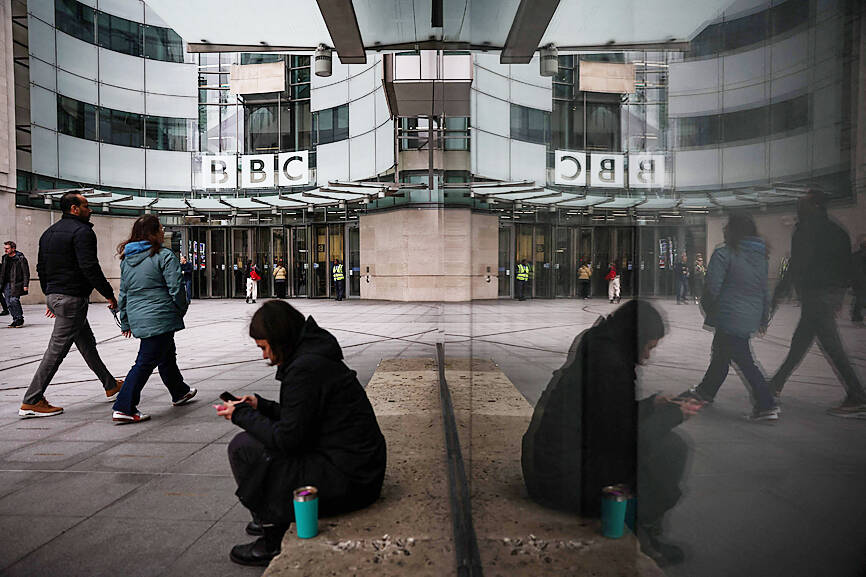
Photo: AFP
The video that triggered the lawsuit spliced together two separate sections of Trump’s speech on Jan. 6, 2021, in a way that made it appear he explicitly urged supporters to attack the Capitol, where lawmakers were certifying then-US presidential candidate Joe Biden’s 2020 election win.
The lawsuit comes as the British government yesterday launched the politically sensitive review of the BBC’s Royal Charter, which outlines the corporation’s funding and governance and needs to be renewed in 2027.
As part of the review, it launched a public consultation on issues including the role of “accuracy” in the BBC’s mission and contentious reforms to the corporation’s funding model, which currently relies on a mandatory fee for anyone in the kingdom who watches television.
British Minister of State for Care Stephen Kinnock stressed after the lawsuit was filed that the British government “is a massive supporter of the BBC.”
The BBC has “been very clear that there is no case to answer in terms of Mr Trump’s accusation on the broader point of libel or defamation. I think it’s right the BBC stands firm on that point,” Kinnock told Sky News.
Trump, 79, had said the lawsuit was imminent, claiming the BBC had “put words in my mouth,” even positing that “they used AI [artificial intelligence] or something.”
The documentary at issue aired last year before the election, on the BBC’s Panorama flagship current affairs program.
“The formerly respected and now disgraced BBC defamed President Trump by intentionally, maliciously, and deceptively doctoring his speech in a brazen attempt to interfere in the 2024 Presidential Election,” a spokesperson for Trump’s legal team said in a statement.
“The BBC has a long pattern of deceiving its audience in coverage of President Trump, all in service of its own leftist political agenda,” the statement added.
The BBC last month faced a period of turmoil after a media report brought renewed attention to the edited clip. The scandal led then-BBC director general Tim Davie and top news executive Deborah Turness to resign.
The BBC lawsuit is the latest in a string of legal actions Trump has taken against media companies in recent years, several of which have led to multimillion-dollar settlements.
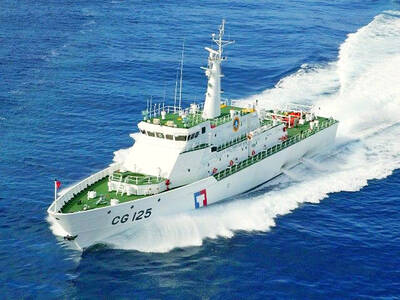
GEOPOLITICAL SIGNIFICANCE: The CGA’s nonmilitary role makes it a tool to avert diplomatic issues, an official said, while confirming the donation of a ship to Manila Coast Guard Administration (CGA) ships are scheduled to sail to the Philippines bearing the words “Taiwan Coast Guard” in a high-profile visit in October next year, the first such visit by a Taiwanese maritime law enforcement vessel to the Southeast Asian nation, the agency said yesterday. The CGA also confirmed that it had donated one of its decommissioned patrol vessels to the Philippines in a rare transfer of a retired ship to a nondiplomatic ally. The Republic of China (ROC) Navy last made such a visit in 1974, shortly before the Philippines switched diplomatic recognition to the People’s Republic of China in

‘GLOBAL WARNING’: The infiltration is not just a local problem, as Beijing has been deploying the same tactics worldwide against Western democracies, a report said Between 50,000 and 100,000 Chinese spies are operating in Taiwan, far more than the National Security Bureau’s previous estimate of 5,000, German journalist and author Jurgen Kremb said on Monday. Kremb presented his research, titled “The War of Spies: How China’s Intelligence Services Are Infiltrating Taiwan — and What Europe Must Learn from It,” at a joint event held by the Taiwan offices of the Friedrich Naumann Foundation and the European Values Center for Security Policy. The report was published in June in the Ministry of Justice Investigation Bureau’s Prospect & Exploration Monthly (展望與探索月刊). By spies, he said he was referring to informants,

PRICE STABILIZATION: The Ministry of Economic Affairs has urged the legislature to support the Cabinet’s supplementary budget for state-owned energy companies State-owned oil supplier CPC Corp, Taiwan (CPC, 台灣中油) on Saturday announced that it would raise domestic gasoline prices by NT$0.7 (US$0.02) per liter and diesel prices by NT$0.6 per liter this week after international crude oil prices rose above US$100 per barrel last week. Formosa Petrochemical Corp (台塑石化) yesterday said that it matched CPC’s price adjustments for this week. The decisions end a six-week period during which CPC and Formosa kept fuel prices in Taiwan unchanged. Retail gasoline prices this week would rise to NT$31.2, NT$32.7 and NT$34.7 per liter for 92, 95 and 98-octane unleaded gasoline respectively at CPC
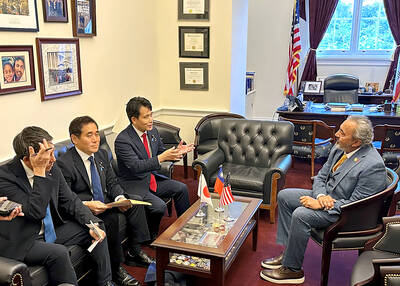
WASHINGTON MEETING: Japan’s Hirofumi Takinami said participants rejected the idea that the US should limit its defensive perimeter to the Second Island Chain US and Japanese lawmakers agree that the US must defend the First Island Chain, including Taiwan, and should not fall back to the Second Island Chain, while “a Taiwan contingency is a Japan contingency and therefore a US-Japan alliance contingency,” media reported after a meeting between officials of the two nations in Washington on Tuesday. A delegation of Japanese lawmakers from the Liberal Democratic Party met with US Senator Thom Tillis, co-chair of the Senate Taiwan Caucus, and US Representative Ami Bera, co-chair of the US Congressional Taiwan caucus, to discuss issues concerning East Asia and the Taiwan Strait. The Japanese and


 RSS
RSS