


Thailand and Cambodia pounded each other with heavy artillery fire for a third day yesterday, as a border conflict that killed at least 33 people and displaced more than 150,000 from their homes spread across the frontier.
Clashes broke out for the first time in the countries’ coastal regions where they meet on the Gulf of Thailand, about 250km southwest of the main front lines thumping with blasts yesterday afternoon.
“It feels like I’m escaping a war zone,” 76-year-old Samlee Sornchai told reporters at a temple shelter for evacuees in Kanthararom, Thailand, after abandoning his farm near the embattled frontier.
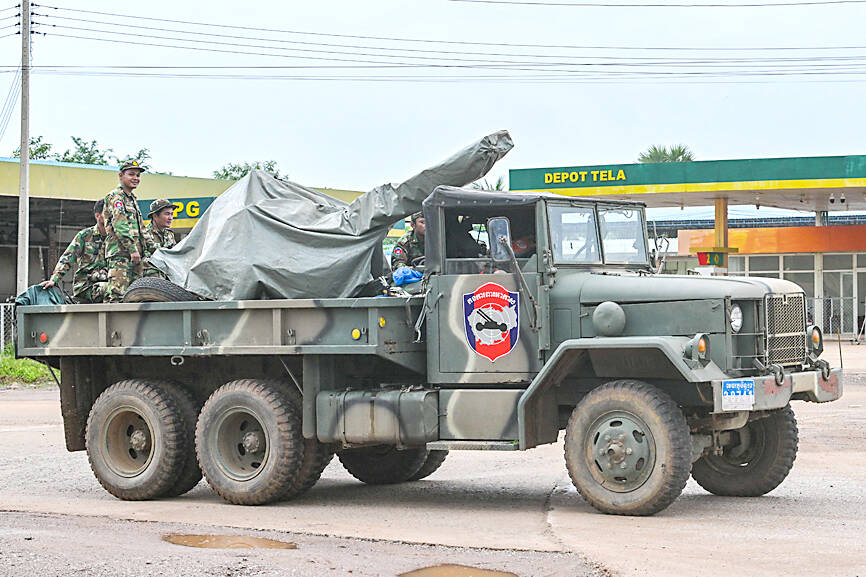
Photo: AFP
Both sides said they are open to a truce in the combat being fought with jets, tanks and ground troops, but have accused the other of undermining armistice efforts.
Tensions initially flared over long-contested ancient temple sites, before fighting spread along the countries’ rural border region, marked by a ridge of hills surrounded by wild jungle and agricultural land where locals farm rubber and rice.
The Cambodian Ministry of Defense said that 13 people have been confirmed killed in the fighting since Thursday, including eight civilians and five soldiers, with 71 people wounded.
Thai authorities said 13 civilians and seven soldiers have been killed on their side, taking the toll across both nations higher than it was in the last major round of fighting between 2008 and 2011.
Both sides reported a coastline clash at about 5am yesterday, with Cambodia accusing Thai forces of firing “five heavy artillery shells” into Cambodia’s Pursat Province.
The conflict has also forced more than 138,000 people to be evacuated from Thailand’s border regions, and more than 35,000 have been driven from their homes in Cambodia.
After an urgent UN Security Council meeting in New York on Friday, Cambodian Ambassador to the UN Chhea Keo said his country wanted a ceasefire.
“Cambodia asked for an immediate ceasefire — unconditionally — and we also call for the peaceful solution of the dispute,” he said.
Thai Minister of Foreign Affairs Maris Sangiampongsa yesterday said that for any ceasefire or talks to proceed, Cambodia needed to show “genuine sincerity in ending the conflict.”
“I urge Cambodia to stop violating Thai sovereignty and to return to resolving the issue through bilateral dialogue,” Maris said.
Thai Ministry of Foreign Affairs spokesman Nikorndej Balankura on Friday said that Bangkok was open to talks, possibly aided by Malaysia.
Malaysia holds the chair of the ASEAN regional bloc, of which Thailand and Cambodia are both members.
Both sides have blamed the other for firing first.

SILENCING CRITICS: In addition to blocking Taiwan, China aimed to prevent rights activists from speaking out against authoritarian states, a Cabinet department said The Ministry of Foreign Affairs (MOFA) yesterday condemned transnational repression by Beijing after RightsCon, a major digital human rights conference scheduled to be held in Zambia this week, was abruptly canceled due to Chinese pressure over Taiwanese participation. This year’s RightsCon, the world’s largest conference discussing issues “at the intersection of human rights and technology,” was scheduled to take place from tomorrow to Friday in Lusaka, and expected to draw 2,600 in-person attendees from 150 countries, along with 1,100 online participants. However, organizers were forced to cancel the event due to behind-the-scenes pressure from China, the ministry said, expressing its “strongest condemnation”
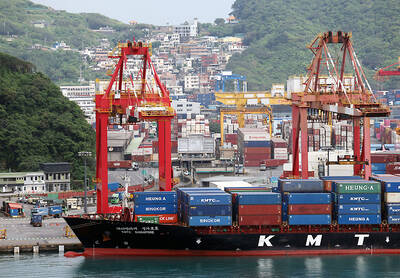
Taiwan’s economy grew far faster than expected in the first quarter, as booming demand for artificial intelligence (AI) applications drove a surge in exports, spilling over into investment and consumption, the Directorate-General of Budget, Accounting and Statistics (DGBAS) said yesterday. GDP growth was 13.69 percent year-on-year during the January-to-March period, beating the DGBAS’ February forecast by 2.23 percentage points and marking the most robust growth in nearly four decades, DGBAS senior official Chiang Hsin-yi (江心怡) told a news conference in Taipei. The result was powered by exports, which remain the backbone of Taiwan’s economy, Chiang said. Outbound shipments jumped 51.12 percent year-on-year to
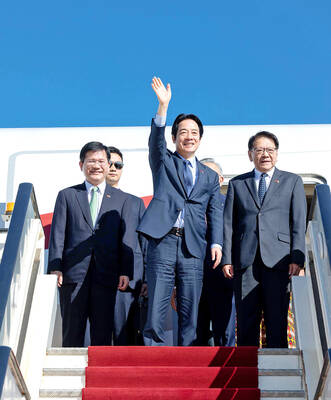
DELAYED BUT DETERMINED: The president’s visit highlights Taiwan’s right to international engagement amid regional pressure from China President Willaim Lai (賴清德) yesterday arrived in Eswatini, more than a week after his planned visit to Taiwan’s sole African ally was suspended because of revoked overflight permits. “The visit, originally scheduled for April 22, was postponed due to unforeseen external factors,” Lai wrote on social media. “After several days of careful arrangements by our diplomatic and national security teams, we successfully arrived today.” Lai said he looked forward to further deepening Taiwan-Eswatini relations through closer cooperation in the economy, agriculture, culture and education, as well as advancing the nation’s international partnerships. The president was initially scheduled to arrive in time to celebrate
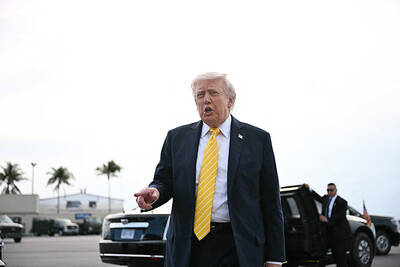
Iran’s Islamic Revolutionary Guard Corp (IRGC) yesterday said the US faced a choice between an “impossible” military operation or a “bad deal” with Tehran, after US President Donald Trump disparaged Iran’s latest peace proposal. Negotiations between the two countries have been deadlocked since a ceasefire came into effect on April 8, with only one round of direct peace talks held so far. Iran’s Tasnim and Fars news agencies reported that Tehran had submitted a 14-point proposal to mediator Pakistan, but Trump was quick to cast doubt on it. “I will soon be reviewing the plan that Iran has just sent to us, but


 RSS
RSS