


The Endeavor Manta, Taiwan’s first military-specification uncrewed surface vehicle (USV) tailor-made to operate in the Taiwan Strait in a bid to bolster the nation’s asymmetric combat capabilities made its first appearance at Kaohsiung’s Singda Harbor yesterday.
Taking inspiration from Ukraine’s navy, which is using USVs to force Russia’s Black Sea fleet to take shelter within its own ports, CSBC Taiwan (台灣國際造船) established a research and development unit on USVs last year, CSBC chairman Huang Cheng-hung (黃正弘) said.
With the exception of the satellite guidance system and the outboard motors — which were purchased from foreign companies that were not affiliated with Chinese-funded or Chinese-owned supply chains — the rest of the USV was produced in Taiwan, he said.
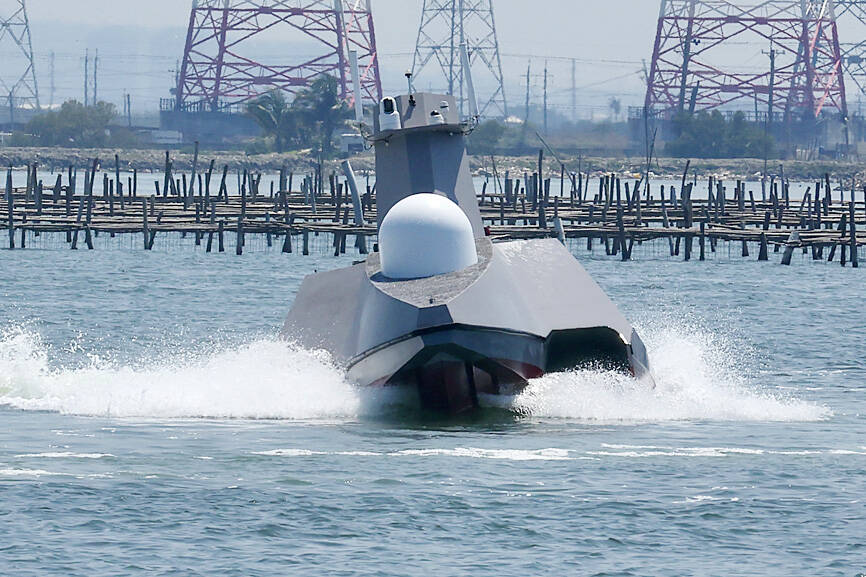
Photo: CNA
The ship uses a trimaran hull for better balance in choppy seas and is designed for low observability. It is 8.6m long and 3.7m wide, can carry up to 1 tonne of payload — including lightweight torpedoes and high-powered explosives — and has a top speed of 35 knots (64.8kph), Huang said.
The vessel can alternate between 4G networks, radio frequency or satellite guidance for remote control when its signal is interrupted, he said.
The ship is programmed to automatically return to its designated home port and would self-destruct if seized by another party, he added.
The USV has in-built settings for multiple USVs to operate together, collision prevention, artificial intelligence-assisted target acquisition and anti-ship hijacking, Huang said.
The Yushan-class landing platform dock, for example, can carry about 20 USVs, he said, adding that a single control station can control up to 50 USVs.
CSBC said it would not be attending the Chungshan Institute of Science and Technology USV contest involving the institute’s project Kuai Chi (快奇), as it would have its hands full with the development of the Endeavor Manta, which was so named because the designers took inspiration from the manta’s camouflage abilities and the comparably severe sting compared with its size.
Meanwhile, the Chinese-language Liberty Times (sister newspaper of the Taipei Times) reported yesterday that the first F-16 block 70 jets have completed tests would be turned over to Taiwan in Greenville, South Carolina, on Friday.
As of press time last night, neither the air force nor the Ministry of National Defense had commented on the report.
The ministry on March 13 said that it would send a deputy minister to the event, while the air force said it would send its deputy chief of staff.
Additional reporting by Fang Wei-li and Chen Chih-cheng
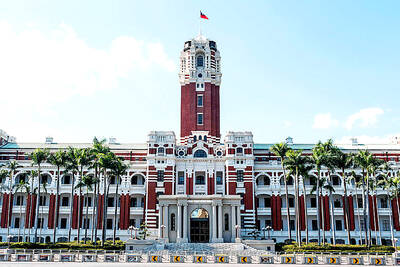
SECURITY: Taipei presses the US for arms supplies, saying the arms sales are not only a reflection of the US security commitment to Taiwan but also serve as a mutual deterrent against regional threats Taiwan is committed to preserving the cross-strait “status quo” and contributing to regional peace and stability, the Presidential Office said yesterday. “It is an undeniable fact that the Republic of China is a sovereign and independent democratic nation,” Presidential Office spokeswoman Karen Kuo (郭雅慧) reiterated, adding that Beijing has no right to claim sovereignty over Taiwan. The statements came after US President Donald Trump warned against Taiwanese independence. Trump wrapped up a state visit to Beijing on Friday, during which Chinese President Xi Jinping (習近平) had pressed him not to support Taiwan. Taiwan depends heavily on US security backing to deter China from carrying
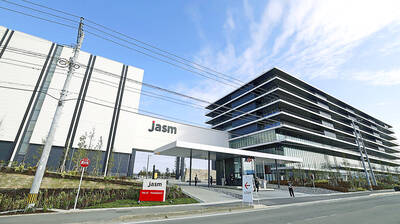
The subsidiary of Taiwan Semiconductor Manufacturing Co (TSMC, 台積電) in Kumamoto, Japan, turned a profit in the first quarter of this year, marking the first time the first fab of the unit has become profitable since mass production started at the end of 2024. According to the contract chipmaker’s financial statement released on Friday, Japan Advanced Semiconductor Manufacturing Inc (JASM), a joint venture running the fab in Kumamoto, posted NT$951 million (US$30.19 million) in profit in the January-to-March period, compared with a loss of NT$1.39 billion in the previous quarter, and a loss of NT$3.25 billion in the first quarter of
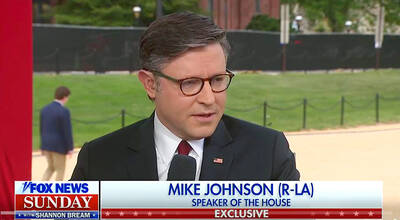
RESOLUTE BACKING: Two Republican senators are planning to introduce legislation that would impose immediate sanctions on China if it attempts to invade Taiwan US House of Representatives Speaker Mike Johnson on Sunday reaffirmed US congressional support for Taiwan, saying the US and “all freedom-loving people” have a stake in preventing China from seizing Taiwan by force. Johnson made the remarks in an interview with Fox News Sunday on US President Donald Trump’s summit with Chinese President Xi Jinping (習近平) last week. In an interview that aired on Friday on Fox News, just as Trump wrapped up a high-stakes visit to China, he said he has yet to green-light a new US$14 billion arms package to Taiwan and that it “depends on China.” “It’s a very good
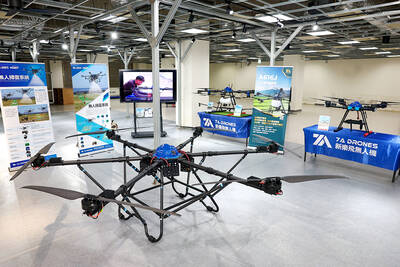
DRONE CENTRAL: Taiwan aims to become Asia’s democratic hub for drones, with most exports focused on high-quality military-grade models, an official said Taiwan’s drone industry is expected to expand significantly by 2030, producing 100,000 units per month and exporting half of them, the Ministry of Economic Affairs said yesterday. Current drone production capacity is about 15,000 units per month, but the industry can quickly scale up as demand increases, Industrial Development Administration Director-General Chiou Chyou-huey (邱求慧) told a news conference in Taipei. Taiwan’s drone output grew 2.5-fold last year to NT$12.9 billion (US$408.3 million) under a government program to develop the uncrewed vehicle sector, he said. The Executive Yuan in October last year approved plans to invest NT$44.2 billion into domestic production of uncrewed aerial


 RSS
RSS