


The number of criminal cases involving military personnel has increased fivefold in the past 10 years, with national security contraventions having a significant impact, the Supreme Prosecutors’ Office said yesterday.
Compulsory military service was returned to one year for all men born after Jan. 1, 2005, starting on Jan. 1 last year.
The Supreme Prosecutors’ Office anticipates this would cause an increase in military criminal cases that could influence national security.
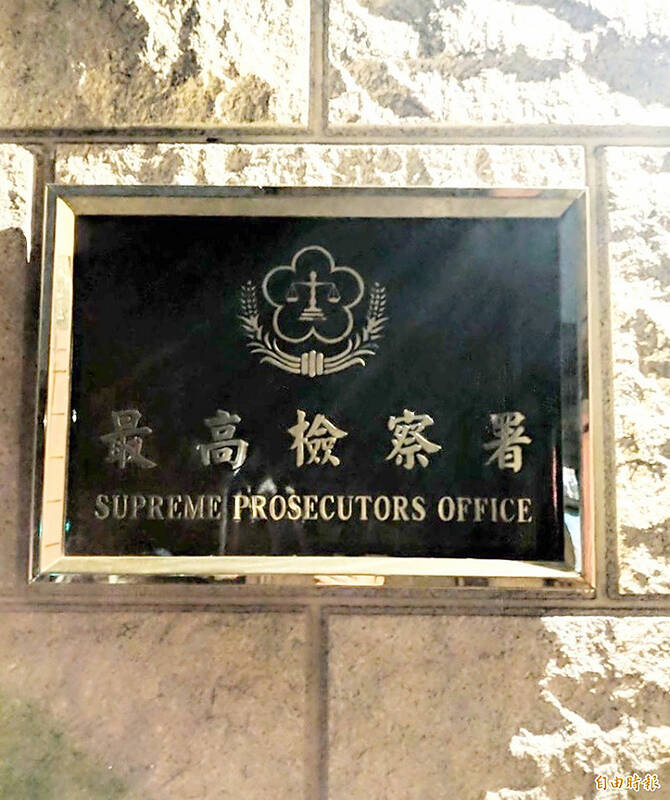
Photo: Taipei Times
The office released a special report on prosecution strategies last month.
Data compiled by the High Prosecutors’ Office showed that there were 28,837 criminal cases involving 41,520 military personnel from 2014 to last year, with the number increasing annually, the High Prosecutors’ Office said.
There were 867 cases involving 1,096 people in 2014 and 4,743 cases involving 6,753 people last year, a fivefold increase in 10 years, the data showed.
Of those cases, 55.6 percent involved fraud, drugs, assault, money laundering or gambling, 35 percent involved sexual assault or murder, and 9.4 percent involved transgressions of military duties.
The prosecution rate was highest for those who transgressed their duties, contravening the Anti-Corruption Act (犯貪污治罪條例), at 59 percent, the office said.
The prosecution rate for contraventions of the National Security Act (國家安全法) was 46.7 percent, it added.
Those cases included spying on state secrets, developing organizations and filming psychological warfare videos, it said.
Although the number of those cases is not high, they had significant and far-reaching impact, it added.
China’s infiltration tactics have shifted from targeting senior officers to recruiting ordinary soldiers and even the public, the office said.
The office met with national security and military agencies to discuss how to respond to growing criminal cases in the military, it said.
They developed nine major strategies, including clearly defining military discipline violations, strengthening communication between prosecutors and military authorities, handling military desertion cases better and assisting victims in filing complaints, the office said.
A strong military can ensure a stable nation, the office said.
If prosecutors can handle military criminal cases with strictness and efficiency, it would prevent similar crimes from reoccurring, it said.
This would uphold military discipline and leadership, safeguarding national security, it added.
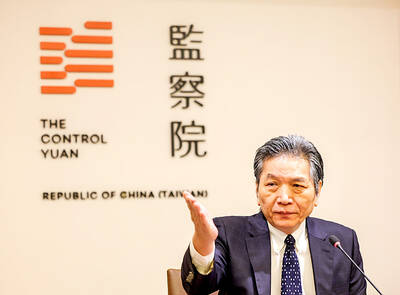
‘ABUSE OF POWER’: Lee Chun-yi allegedly used a Control Yuan vehicle to transport his dog to a pet grooming salon and take his wife to restaurants, media reports said Control Yuan Secretary-General Lee Chun-yi (李俊俋) resigned on Sunday night, admitting that he had misused a government vehicle, as reported by the media. Control Yuan Vice President Lee Hung-chun (李鴻鈞) yesterday apologized to the public over the issue. The watchdog body would follow up on similar accusations made by the Chinese Nationalist Party (KMT) and would investigate the alleged misuse of government vehicles by three other Control Yuan members: Su Li-chiung (蘇麗瓊), Lin Yu-jung (林郁容) and Wang Jung-chang (王榮璋), Lee Hung-chun said. Lee Chun-yi in a statement apologized for using a Control Yuan vehicle to transport his dog to a
BEIJING’S ‘PAWN’: ‘We, as Chinese, should never forget our roots, history, culture,’ Want Want Holdings general manager Tsai Wang-ting said at a summit in China The Mainland Affairs Council (MAC) yesterday condemned Want Want China Times Media Group (旺旺中時媒體集團) for making comments at the Cross-Strait Chinese Culture Summit that it said have damaged Taiwan’s sovereignty, adding that it would investigate if the group had colluded with China in the matter and contravened cross-strait regulations. The council issued a statement after Want Want Holdings (旺旺集團有限公司) general manager Tsai Wang-ting (蔡旺庭), the third son of the group’s founder, Tsai Eng-meng (蔡衍明), said at the summit last week that the group originated in “Chinese Taiwan,” and has developed and prospered in “the motherland.” “We, as Chinese, should never
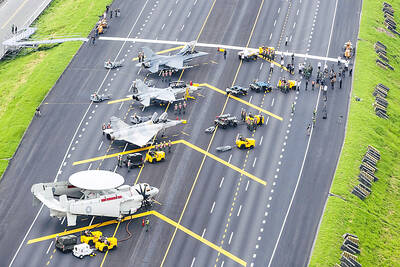
‘A SURVIVAL QUESTION’: US officials have been urging the opposition KMT and TPP not to block defense spending, especially the special defense budget, an official said The US plans to ramp up weapons sales to Taiwan to a level exceeding US President Donald Trump’s first term as part of an effort to deter China as it intensifies military pressure on the nation, two US officials said on condition of anonymity. If US arms sales do accelerate, it could ease worries about the extent of Trump’s commitment to Taiwan. It would also add new friction to the tense US-China relationship. The officials said they expect US approvals for weapons sales to Taiwan over the next four years to surpass those in Trump’s first term, with one of them saying
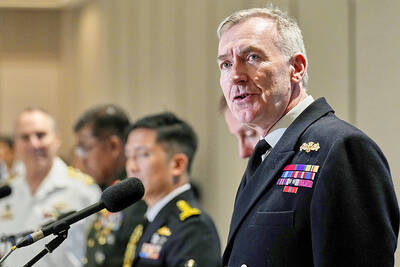
INDO-PACIFIC REGION: Royal Navy ships exercise the right of freedom of navigation, including in the Taiwan Strait and South China Sea, the UK’s Tony Radakin told a summit Freedom of navigation in the Indo-Pacific region is as important as it is in the English Channel, British Chief of the Defence Staff Admiral Tony Radakin said at a summit in Singapore on Saturday. The remark came as the British Royal Navy’s flagship aircraft carrier, the HMS Prince of Wales, is on an eight-month deployment to the Indo-Pacific region as head of an international carrier strike group. “Upholding the UN Convention on the Law of the Sea, and with it, the principles of the freedom of navigation, in this part of the world matters to us just as it matters in the


 RSS
RSS