


Starting next year, young Taiwanese can apply for individual subsidies of up to NT$2 million (US$61,453) for internships abroad as part of an Executive Yuan program approved yesterday.
The four-year program proposed by the Ministry of Education was approved at the weekly Cabinet meeting.
It was one of the pledges President William Lai (賴清德) made when running for president.

Photo from the iYouth Web site
People aged 15 to 30 would be qualified to apply, the ministry said.
They can propose projects that would take two weeks to one year to complete, with each person receiving no more than NT$2 million, it said.
The government would allocate NT$1 billion to cover the first year of the program, followed by NT$2 billion in 2026, NT$3 billion in 2027 and NT$4 billion in 2028, it said.
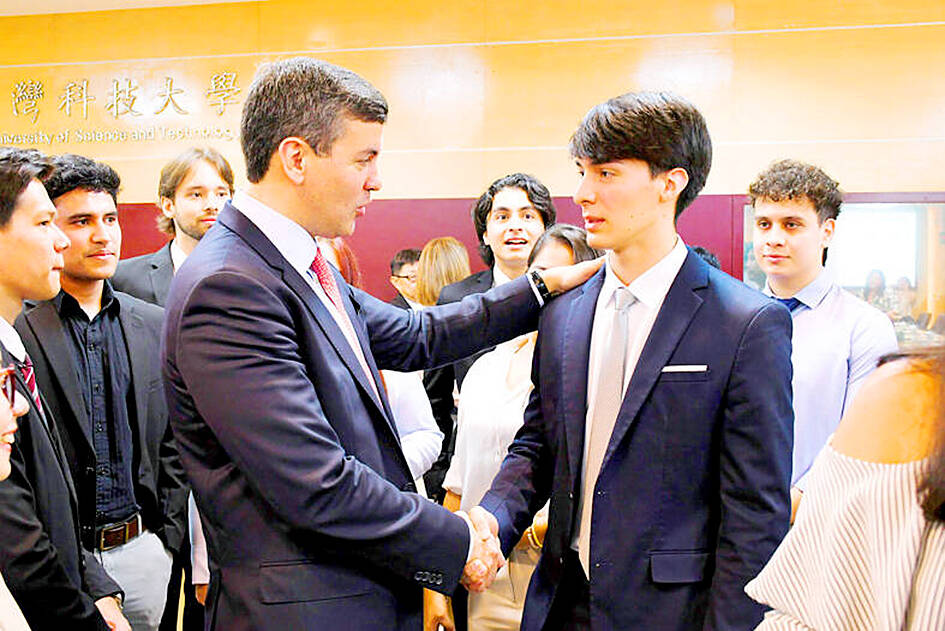
Photo: CNA
At most 550 people would receive funding next year, the ministry said.
Applicants have three options, Deputy Minister of Education Yeh Ping-cheng (葉丙成) said.
The first would allow them to propose the goal they want to achieve in foreign countries and their action plan, he said.
Aside from funding, the ministry would also provide resources to help them achieve their dreams, he added.
“We hope to help 200 people fulfill their dreams in foreign countries, particularly those who are from underprivileged families,” Yeh said.
The second option would be to receive funding to sponsor study, work or travel overseas, such as internships in international organizations, foundations or think tanks, Yeh said.
For example, young people aged 18 to 30 could study animal conservation in a zoo in Japan or serve as interns at a start-up campus in Paris, while those aged 15 to 18 can study in culinary schools in Italy, work in an environmental protection organization in Sweden or participate in exchange activities that allow them to visit the US Major League Baseball league or other organizations, the ministry said.
It said it plans to sponsor 350 people who choose this track.
The third option would be to participate in flagship initiatives organized by government agencies in Taiwan, Yeh said, adding that 60 of the 550 spots available during the first year would be reserved for such participants.
For next year, young people would be able to participate in the government’s zero carbon emissions initiative organized by the Ministry of Education and the Ministry of Environment, which would allow them to visit groups advocating sustainability in developed nations, he said.
The Cabinet also approved a proposal from the Ministry of Economic Affairs to spend NT$500 million in the next four years to improve the economy and upgrade facilities in 368 towns across the country.
The economic ministry’s plan has two parts, the Cabinet said.
First, towns would recommend industries and services that represent their localities, which would be reviewed by the economics ministry.
Once the ministry selects industry highlights, it would divert resources to improve and promote them through domestic and international marketing channels.
The second part would be to hold a national competition to evaluate the shopping, food and travel experience in cities and towns across the country.
In other news, the Executive Yuan approved the proposed amendments to Customs Import Tariff Act (海關進口稅則) including removing tariffs on boneless pork, plastic bottles, socks and 14 other goods from Paraguay.
Tariff on rice crackers would be reduced to 10 percent, while those on honey would gradually drop to 20 percent over the next three years.
The draft amendments would take effect within 30 days of both countries completing legislative procedures, the Ministry of Finance said.

Taiwan Semiconductor Manufacturing Co (TSMC, 台積電), the world’s largest foundry service provider, yesterday said that global semiconductor revenue is projected to hit US$1.5 trillion in 2030, after the figure exceeds US$1 trillion this year, as artificial intelligence (AI) demand boosts consumption of token and compute power. “We are still at the beginning of the AI revolution, but we already see a significant impact across the whole semiconductor ecosystem,” TSMC deputy cochief operating officer Kevin Zhang (張曉強) said at the company’s annual technology symposium in Hsinchu City. “It is fair to say that in the past decade, smartphones and other mobile devices were
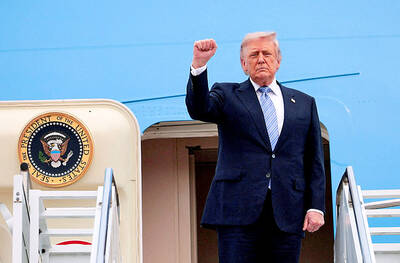
US-CHINA SUMMIT: MOFA welcomed US reassurance of no change in its Taiwan policy; Trump said he did not comment when Xi talked of opposing independence US President Donald Trump yesterday said he has not made a decision on whether to move forward with a major arms package for Taiwan after hearing concerns about it from Chinese President Xi Jinping (習近平). Trump’s comments on Taiwan came as he flew back to Washington after wrapping up critical talks in which both leaders said important progress was made in stabilizing US-China relations even as deep differences persist between the world’s two biggest powers on Iran and Taiwan. “I will make a determination,” Trump said, adding: “I’ll be making decisions. But, you know, I think the last thing we need right
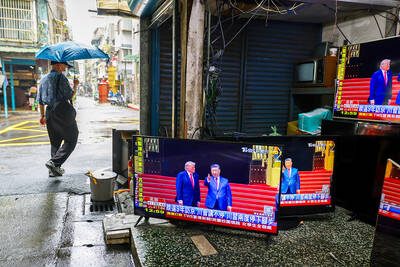
TAIWAN ISSUE: US treasury secretary Scott Bessent said on the first day of meetings that ‘it wouldn’t be a US-China summit without the Taiwan issue coming up’ There were no surprises on the first day of the summit between US President Donald Trump and Chinese President Xi Jinping (習近平), the Mainland Affairs Council (MAC) said yesterday, as the government reiterated that cross-strait stability is crucial to the Asia-Pacific region, as well as the world. As the two presidents met for a highly anticipated summit yesterday, Chinese state media reported that Xi warned Trump that missteps regarding Taiwan could push their two countries into “conflict.” Trump arrived in China with accolades for his host, calling Xi a “great leader” and “friend,” and extending an invitation to visit the White House
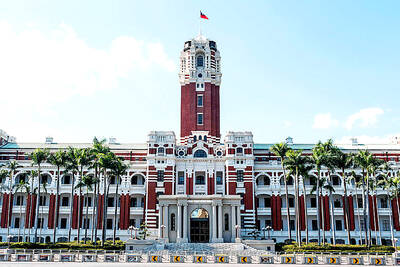
SECURITY: Taipei presses the US for arms supplies, saying the arms sales are not only a reflection of the US security commitment to Taiwan but also serve as a mutual deterrent against regional threats Taiwan is committed to preserving the cross-strait “status quo” and contributing to regional peace and stability, the Presidential Office said yesterday. “It is an undeniable fact that the Republic of China is a sovereign and independent democratic nation,” Presidential Office spokeswoman Karen Kuo (郭雅慧) reiterated, adding that Beijing has no right to claim sovereignty over Taiwan. The statements came after US President Donald Trump warned against Taiwanese independence. Trump wrapped up a state visit to Beijing on Friday, during which Chinese President Xi Jinping (習近平) had pressed him not to support Taiwan. Taiwan depends heavily on US security backing to deter China from carrying


 RSS
RSS