


The US Congress late on Tuesday gave final approval to a US$95 billion aid package for Taiwan, Ukraine and Israel, with US President Joe Biden quickly vowing to sign the long-delayed bill and begin delivering fresh supplies this week to Ukraine.
The bill includes US$8 billion in military support for Taiwan, in addition to US$61 billion for Ukraine, US$13 billion for Israel and more than US$9 billion for humanitarian assistance in Gaza and elsewhere.
Of the US$8 billion, more than US$3.3 billion would go toward submarine infrastructure and development, with an additional US$1.9 billion to replenish US weapons provided to Taiwan and other Asia-Pacific allies.
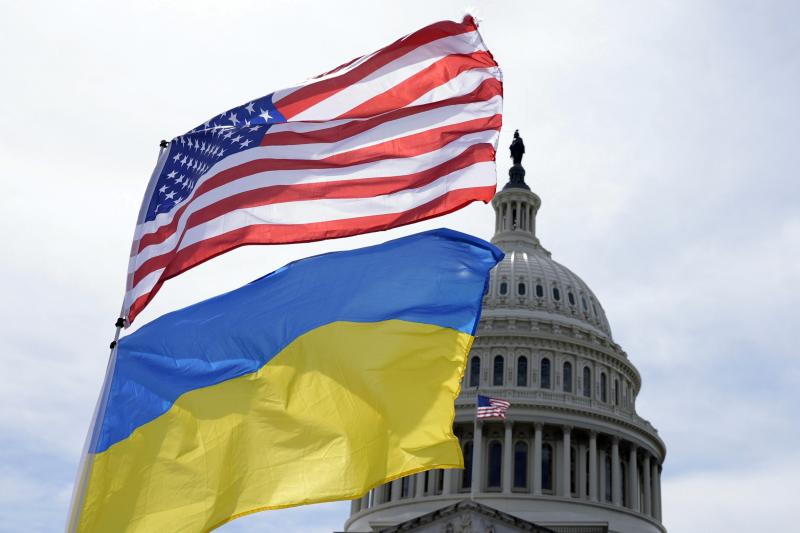
Photo: AP
The package of legislation also contains text that would ban TikTok in the US if the popular social media app does not soon cut ties with its Chinese parent company.
Days after the Republican-led US House of Representatives cleared the aid, the Democratic-controlled Senate followed suit, passing it with bipartisan support on a 79-18 vote.
"I will sign this bill into law and address the American people as soon as it reaches my desk tomorrow so we can begin sending weapons and equipment to Ukraine this week," Biden said in a statement shortly after the vote.
Passage of the bill, which also provides much-needed humanitarian assistance to Gaza, Sudan and Haiti, comes after months of acrimonious debate among lawmakers over how or even whether to help Ukraine defend itself.
A similar aid package passed the Senate in February, but had been stalled in the House while Republican Speaker Mike Johnson — heeding calls from former US president Donald Trump and his hardline allies — demanded concessions from Biden on immigration policies, before a sudden recent reversal.
Biden said the bill's approval showed the US stands "resolutely for democracy and freedom, and against tyranny and oppression.”
The Ukraine measure also allows Biden to confiscate and sell Russian assets and provide the money to Kyiv to finance reconstruction, a move that has been embraced by other G7 nations.
A Pentagon spokesperson told reporters on Tuesday it could deliver fresh aid to Ukraine "within days."
Additional reporting by AP

TRAGEDY STRIKES TAIPEI: The suspect died after falling off a building after he threw smoke grenades into Taipei Main Station and went on a killing spree in Zhongshan A 27-year-old suspect allegedly threw smoke grenades in Taipei Main Station and then proceeded to Zhongshan MRT Station in a random killing spree that resulted in the death of the suspect and two other civilians, and seven injured, including one in critical condition, as of press time last night. The suspect, identified as a man surnamed Chang Wen (張文), allegedly began the attack at Taipei Main Station, the Taipei Fire Department said, adding that it received a report at 5:24pm that smoke grenades had been thrown in the station. One man in his 50s was rushed to hospital after a cardiac arrest

SAFETY FIRST: Double the number of police were deployed at the Taipei Marathon, while other cities released plans to bolster public event safety Authorities across Taiwan have stepped up security measures ahead of Christmas and New Year events, following a knife and smoke bomb attack in Taipei on Friday that left four people dead and 11 injured. In a bid to prevent potential copycat incidents, police deployments have been expanded for large gatherings, transport hubs, and other crowded public spaces, according to official statements from police and city authorities. Taipei Mayor Chiang Wan-an (蔣萬安) said the city has “comprehensively raised security readiness” in crowded areas, increased police deployments with armed officers, and intensified patrols during weekends and nighttime hours. For large-scale events, security checkpoints and explosives
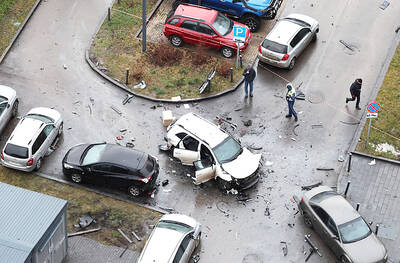
A car bomb killed a senior Russian general in southern Moscow yesterday morning, the latest high-profile army figure to be blown up in a blast that came just hours after Russian and Ukrainian delegates held separate talks in Miami on a plan to end the war. Kyiv has not commented on the incident, but Russian investigators said they were probing whether the blast was “linked” to “Ukrainian special forces.” The attack was similar to other assassinations of generals and pro-war figures that have either been claimed, or are widely believed to have been orchestrated, by Ukraine. Russian Lieutenant General Fanil Sarvarov, 56, head
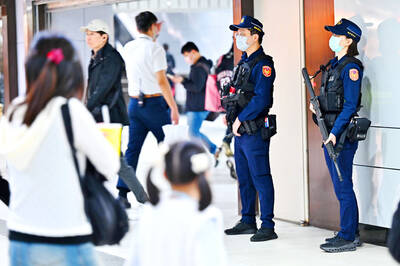
PUBLIC SAFETY: The premier said that security would be tightened in transport hubs, while President Lai commended the public for their bravery The government is to deploy more police, including rapid response units, in crowded public areas to ensure a swift response to any threats, President William Lai (賴清德) said yesterday after a knife attack killed three people and injured 11 in Taipei the previous day. Lai made the remarks following a briefing by the National Police Agency on the progress of the investigation, saying that the attack underscored the importance of cooperation in public security between the central and local governments. The attack unfolded in the early evening on Friday around Taipei Main Station’s M7 exit and later near the Taipei MRT’s Zhongshan


 RSS
RSS