


The release of hidden camera footage showing South Korea’s first lady accepting a Dior bag as a gift was a “political maneuver,” South Korean President Yoon Suk-yeol said on Wednesday, but vowed to draw clearer lines to ensure such incidents do not happen again.
The comments were his first public response to a controversy, dubbed the “Dior bag scandal” by local media, that has roiled his ruling party ahead of a key election in April.
Some members of Yoon’s conservative People Power Party (PPP) had urged the president and his wife, Kim Keon-hee, to apologize and admit that receiving the purse was, at least, inappropriate, in the hope of putting the matter to rest.
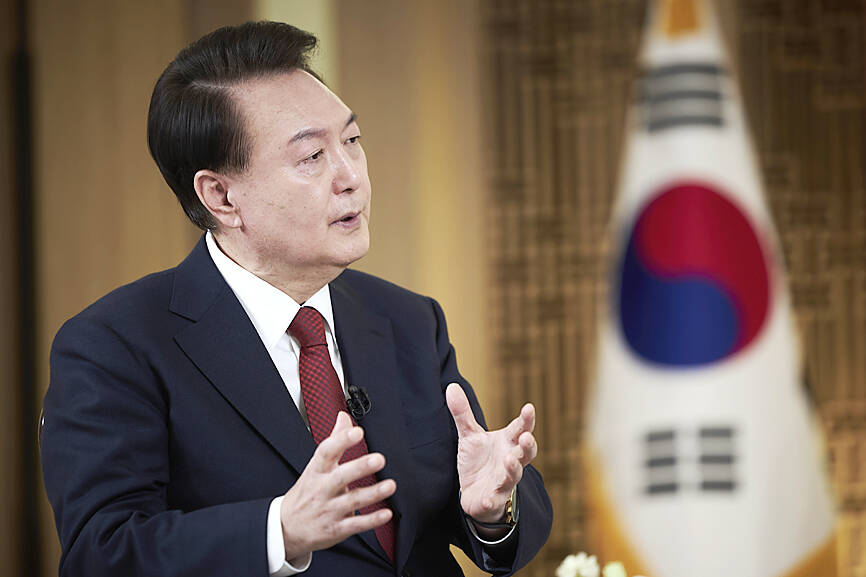
Photo: South Korean Presidential Office via AP
In an interview with broadcaster KBS, Yoon stopped short of apologizing or addressing the legal implications and said that the footage, filmed in September 2022 but released in November last year, had been revealed ahead of an election should be seen as “a political maneuver.”
“However, it’s not important whether to call it a political maneuver or not,” he said. “What’s important is to set clearer boundaries with others to prevent something like this from happening in the future.”
The pastor who offered the 3 million won (US$2,254) gift and secretly filmed the exchange claimed to have ties to Kim’s father who died when she was a child, Yoon said.
That the couple were still living in their private home ahead of moving into a newly constructed presidential residence might also have contributed to confusion about how the gift should have been handled, he added.
The pastor, Reverend Abraham Choi, earlier told Reuters that he initially wanted to raise concerns about Yoon’s hardline North Korea policies and that offering pricey gifts seemed to be the way to secure a meeting with the first lady.
A Gallup Korea weekly poll on Friday last week showed that Yoon’s approval ratings had fallen to 29 percent
Respondents cited a lack of communication, the first lady issue, and the economy among the reasons for their disapproval.
The scandal has threatened to fracture Yoon’s PPP, with some members last month urging the president to address the issue ahead of April’s South Korean parliamentary election, when the party hopes to make gains in the opposition-controlled body.

SECURITY: As China is ‘reshaping’ Hong Kong’s population, Taiwan must raise the eligibility threshold for applications from Hong Kongers, Chiu Chui-cheng said When Hong Kong and Macau citizens apply for residency in Taiwan, it would be under a new category that includes a “national security observation period,” Mainland Affairs Council (MAC) Minister Chiu Chui-cheng (邱垂正) said yesterday. President William Lai (賴清德) on March 13 announced 17 strategies to counter China’s aggression toward Taiwan, including incorporating national security considerations into the review process for residency applications from Hong Kong and Macau citizens. The situation in Hong Kong is constantly changing, Chiu said to media yesterday on the sidelines of the Taipei Technology Run hosted by the Taipei Neihu Technology Park Development Association. With

CARROT AND STICK: While unrelenting in its military threats, China attracted nearly 40,000 Taiwanese to over 400 business events last year Nearly 40,000 Taiwanese last year joined industry events in China, such as conferences and trade fairs, supported by the Chinese government, a study showed yesterday, as Beijing ramps up a charm offensive toward Taipei alongside military pressure. China has long taken a carrot-and-stick approach to Taiwan, threatening it with the prospect of military action while reaching out to those it believes are amenable to Beijing’s point of view. Taiwanese security officials are wary of what they see as Beijing’s influence campaigns to sway public opinion after Taipei and Beijing gradually resumed travel links halted by the COVID-19 pandemic, but the scale of
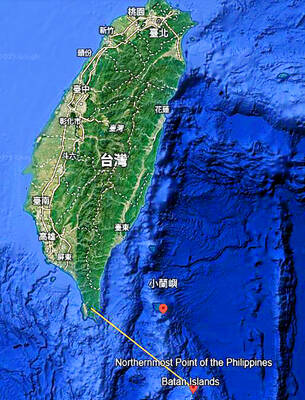
A US Marine Corps regiment equipped with Naval Strike Missiles (NSM) is set to participate in the upcoming Balikatan 25 exercise in the Luzon Strait, marking the system’s first-ever deployment in the Philippines. US and Philippine officials have separately confirmed that the Navy Marine Expeditionary Ship Interdiction System (NMESIS) — the mobile launch platform for the Naval Strike Missile — would take part in the joint exercise. The missiles are being deployed to “a strategic first island chain chokepoint” in the waters between Taiwan proper and the Philippines, US-based Naval News reported. “The Luzon Strait and Bashi Channel represent a critical access
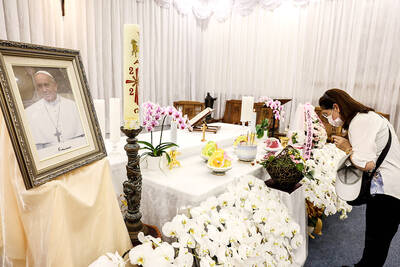
Pope Francis is be laid to rest on Saturday after lying in state for three days in St Peter’s Basilica, where the faithful are expected to flock to pay their respects to history’s first Latin American pontiff. The cardinals met yesterday in the Vatican’s synod hall to chart the next steps before a conclave begins to choose Francis’ successor, as condolences poured in from around the world. According to current norms, the conclave must begin between May 5 and 10. The cardinals set the funeral for Saturday at 10am in St Peter’s Square, to be celebrated by the dean of the College


 RSS
RSS