


Taiwan and the UK are to begin official-level talks on an Enhanced Trade Partnership (ETP) in three key areas with the aim of signing a memorandum of understanding.
Minister Without Portfolio John Deng (鄧振中), who heads the Executive Yuan’s Office of Trade Negotiations, and British Minister of State for Business and Trade Nigel Huddleston announced the talks after a videoconference on Wednesday.
The ETP is to focus on two-way investment, digital trade, energy and net zero, the British Department for Business and Trade said in a press release on the same day.
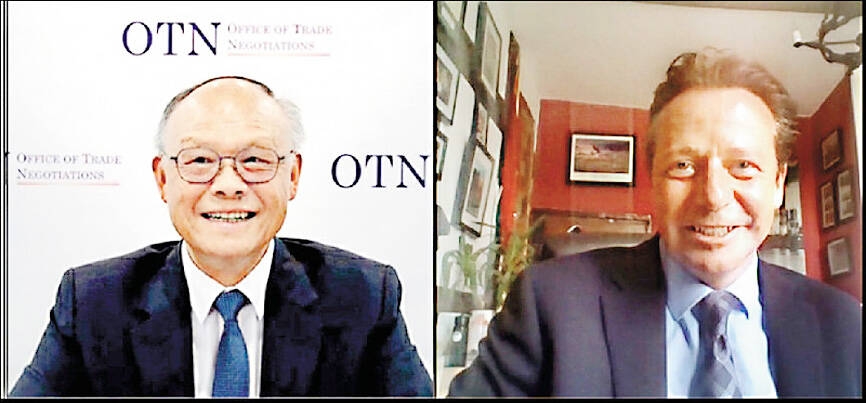
Photo courtesy of the Office of Trade Negotiations
The UK and Taiwan will begin engaging businesses on the ETP in due course, it said.
The topics covered by the ETP can be further expanded in the future, the Taiwanese office said yesterday.
Taiwan would coordinate trade policies and rules on trade issues of common concern with the UK under the ETP framework to establish a long-term trade partnership, it said.
Taiwan is the third country with which the UK is pursuing an ETP, after India and Thailand, it said.
The ultimate goal of an ETP is the signing of a free-trade agreement (FTA), but the process might not be as smooth as expected, it said.
For example, the UK and India formed an ETP in 2021, but the FTA is still under negotiation as opinions are divided in regard to market opening and immigration, it said.
Deng said that having signed its first agreement with the US, called the US-Taiwan Initiative on 21st-Century Trade, Taiwan could ink similar agreements with other countries.
Huddleston is to cohost the 26th annual Trade Talks later this year in London with Deputy Minister of Economic Affairs Chen Chern-chyi (陳正祺), the office said, adding that the two held an introductory call to discuss the event on Wednesday.
The UK and Taiwan have been holding annual ministerial trade talks since 1991. The latest was held in Taiwan in November last year, with the two sides discussing barriers to trade in sectors such as fintech, food and drinks, and pharmaceuticals, the British Department for Business and Trade said.
“The ETP will build on our ongoing collaboration through annual Trade Talks to tackle barriers to trade and promote UK expertise, deepening our relationship to take advantage of increasing commercial opportunities,” it said.
Taiwan is an important trading partner for the UK, with bilateral trade reaching £8.6 billion (US$11.1 billion) last year, it said.
Taiwan offers “significant potential for UK companies in areas such as offshore wind and hydrogen,” it said.
Both the UK and Taiwan are champions of free and fair trade underpinned by a rules-based global trading system, it said, adding that the two sides regularly discuss ways to enhance trade and investment ties and tackle market access issues.
Additional reporting by Chung Li-hua
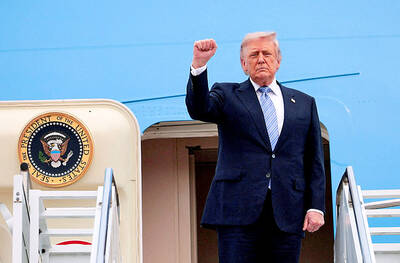
US-CHINA SUMMIT: MOFA welcomed US reassurance of no change in its Taiwan policy; Trump said he did not comment when Xi talked of opposing independence US President Donald Trump yesterday said he has not made a decision on whether to move forward with a major arms package for Taiwan after hearing concerns about it from Chinese President Xi Jinping (習近平). Trump’s comments on Taiwan came as he flew back to Washington after wrapping up critical talks in which both leaders said important progress was made in stabilizing US-China relations even as deep differences persist between the world’s two biggest powers on Iran and Taiwan. “I will make a determination,” Trump said, adding: “I’ll be making decisions. But, you know, I think the last thing we need right
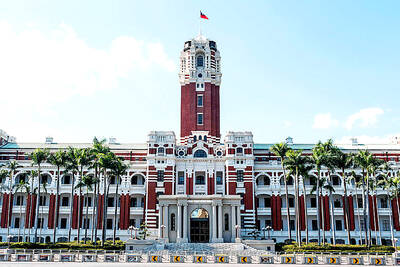
SECURITY: Taipei presses the US for arms supplies, saying the arms sales are not only a reflection of the US security commitment to Taiwan but also serve as a mutual deterrent against regional threats Taiwan is committed to preserving the cross-strait “status quo” and contributing to regional peace and stability, the Presidential Office said yesterday. “It is an undeniable fact that the Republic of China is a sovereign and independent democratic nation,” Presidential Office spokeswoman Karen Kuo (郭雅慧) reiterated, adding that Beijing has no right to claim sovereignty over Taiwan. The statements came after US President Donald Trump warned against Taiwanese independence. Trump wrapped up a state visit to Beijing on Friday, during which Chinese President Xi Jinping (習近平) had pressed him not to support Taiwan. Taiwan depends heavily on US security backing to deter China from carrying
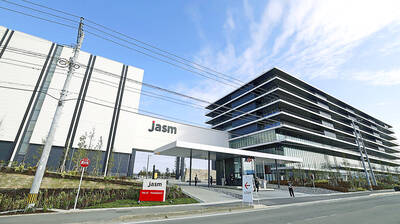
The subsidiary of Taiwan Semiconductor Manufacturing Co (TSMC, 台積電) in Kumamoto, Japan, turned a profit in the first quarter of this year, marking the first time the first fab of the unit has become profitable since mass production started at the end of 2024. According to the contract chipmaker’s financial statement released on Friday, Japan Advanced Semiconductor Manufacturing Inc (JASM), a joint venture running the fab in Kumamoto, posted NT$951 million (US$30.19 million) in profit in the January-to-March period, compared with a loss of NT$1.39 billion in the previous quarter, and a loss of NT$3.25 billion in the first quarter of
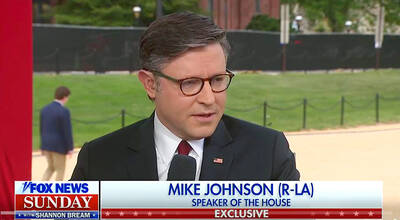
RESOLUTE BACKING: Two Republican senators are planning to introduce legislation that would impose immediate sanctions on China if it attempts to invade Taiwan US House of Representatives Speaker Mike Johnson on Sunday reaffirmed US congressional support for Taiwan, saying the US and “all freedom-loving people” have a stake in preventing China from seizing Taiwan by force. Johnson made the remarks in an interview with Fox News Sunday on US President Donald Trump’s summit with Chinese President Xi Jinping (習近平) last week. In an interview that aired on Friday on Fox News, just as Trump wrapped up a high-stakes visit to China, he said he has yet to green-light a new US$14 billion arms package to Taiwan and that it “depends on China.” “It’s a very good


 RSS
RSS