


G7 leaders are planning to issue a statement of concern about China’s use of economic leverage abroad when they gather next week, a US official familiar with the discussions said.
The statement, a likely component of the overall communique that would be released by leaders during the summit in Hiroshima, Japan, from Friday to Sunday is expected to be paired with a broader written proposal for how the seven advanced economies would work together to counter “economic coercion” from any country.
The main G7 statement is set to include “a section specific to China” with a list of concerns that include “economic coercion and other behavior that we have seen specifically from the [People’s Republic of China],” the official said.

Photo: REUTERS
A separate “economic security statement will speak more to tools” used to counter those efforts, including planning and coordination, they said.
In each case, these statements are expected to go further than prior statements by the G7 on the topic.
US President Joe Biden has made China a focus of his foreign policy, working to keep the tense and competitive relationship from veering into one of open conflict, including over Taiwan.
The G7, which also includes Canada, France, Germany, Italy and the UK, is closely tied economically to China, the world’s biggest exporter and a key market for many of their companies.
FORMER ALLY
Separately, Honduras said it would soon begin negotiating a trade deal with China, marking the latest step toward stronger bilateral ties between the two nations after Honduras broke off relations with Taiwan.
Honduran Minister of Foreign Affairs Eduardo Enrique Reina told a news conference that the goal is to launch talks soon and eventually sign a free-trade deal with China.
“It will be good news and [offer] opportunities for access to our products to China,” Reina said.
In March, Tegucigalpa severed its decades-old diplomatic ties with Taiwan, after Honduran President Xiomara Castro opted for relations with China in a bid for more investment and jobs.
Coffee would be the first Honduran export to the Chinese market, Reina said, adding that both countries are also evaluating future shipments of shrimp and melon to China.
Honduras is one of Central America’s top coffee growers.
Reina said that China has also expressed interest in buying Honduran beef and bananas, among other products.
In April, the diplomat said that Honduras also hopes to reach agreements with China to lighten the nation’s debt burden with the support of financial organizations from its new partner.
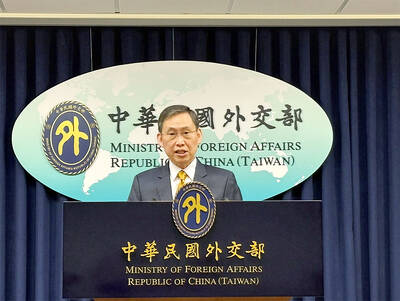
A Ministry of Foreign Affairs official yesterday said that a delegation that visited China for an APEC meeting did not receive any kind of treatment that downgraded Taiwan’s sovereignty. Department of International Organizations Director-General Jonathan Sun (孫儉元) said that he and a group of ministry officials visited Shenzhen, China, to attend the APEC Informal Senior Officials’ Meeting last month. The trip went “smoothly and safely” for all Taiwanese delegates, as the Chinese side arranged the trip in accordance with long-standing practices, Sun said at the ministry’s weekly briefing. The Taiwanese group did not encounter any political suppression, he said. Sun made the remarks when
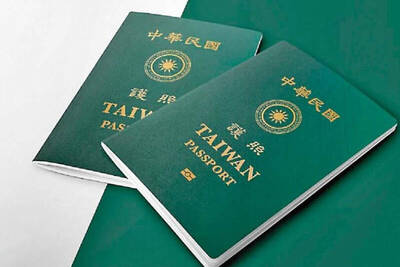
The Taiwanese passport ranked 33rd in a global listing of passports by convenience this month, rising three places from last month’s ranking, but matching its position in January last year. The Henley Passport Index, an international ranking of passports by the number of designations its holder can travel to without a visa, showed that the Taiwan passport enables holders to travel to 139 countries and territories without a visa. Singapore’s passport was ranked the most powerful with visa-free access to 192 destinations out of 227, according to the index published on Tuesday by UK-based migration investment consultancy firm Henley and Partners. Japan’s and
BROAD AGREEMENT: The two are nearing a trade deal to reduce Taiwan’s tariff to 15% and a commitment for TSMC to build five more fabs, a ‘New York Times’ report said Taiwan and the US have reached a broad consensus on a trade deal, the Executive Yuan’s Office of Trade Negotiations said yesterday, after a report said that Washington is set to reduce Taiwan’s tariff rate to 15 percent. The New York Times on Monday reported that the two nations are nearing a trade deal to reduce Taiwan’s tariff rate to 15 percent and commit Taiwan Semiconductor Manufacturing Co (TSMC, 台積電) to building at least five more facilities in the US. “The agreement, which has been under negotiation for months, is being legally scrubbed and could be announced this month,” the paper said,

NATIONAL SECURITY THREAT: An official said that Guan Guan’s comments had gone beyond the threshold of free speech, as she advocated for the destruction of the ROC China-born media influencer Guan Guan’s (關關) residency permit has been revoked for repeatedly posting pro-China content that threatens national security, the National Immigration Agency said yesterday. Guan Guan has said many controversial things in her videos posted to Douyin (抖音), including “the red flag will soon be painted all over Taiwan” and “Taiwan is an inseparable part of China,” while expressing hope for expedited “reunification.” The agency received multiple reports alleging that Guan Guan had advocated for armed reunification last year. After investigating, the agency last month issued a notice requiring her to appear and account for her actions. Guan Guan appeared as required,


 RSS
RSS