


Taiwan ranked 14th on last year’s Human Freedom Index, the highest placement among countries in Asia, two places ahead of Japan, 16 ahead of South Korea and 138 in front of China, a report published by the Washington-based Cato Institute and the Vancouver-based Fraser Institute said.
The top 10 countries, in descending order, are Switzerland, New Zealand, Estonia, Denmark, Ireland, Sweden, Iceland, Finland, the Netherlands and Luxembourg, said the report, which was published on Thursday last week.
Canada took the No. 13 spot, followed by Taiwan, with Germany at 18, the UK at 20, the US at 23, Ukraine at 89, Russia at 119 and Syria last at 165.
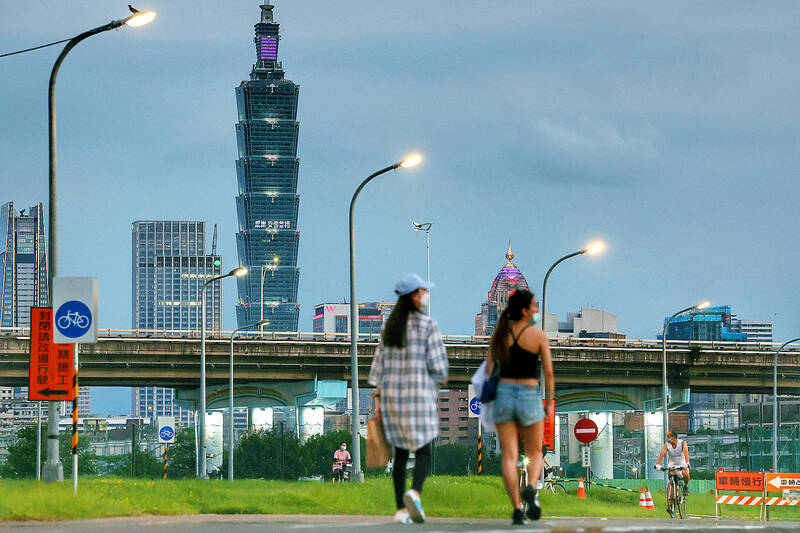
Photo: CNA
The report found a strong link between freedom and democracy, and said that freedom plays a critical role in people’s well-being.
The index used data from more than 165 jurisdictions in 2020, the most recent year for which there was sufficient information.
The index — a ranking on how free the people of the world are — represents 98.1 percent of the global population and is the most comprehensive freedom index to date.
It is based on 83 indicators in categories including: rule of law; security and safety; movement; religion; association, assembly and civil society; expression and information; relationships; size of government; and legal system and property rights.
On a scale of 0 to 10, with 10 representing more freedom, the average human freedom rating dropped to 6.81 in 2020 from 7.03 in 2019, the report said.
“There can be no doubt that the coronavirus [COVID-19] pandemic was calamitous for overall human freedom,” the report said, adding that the crucial question highlighted by the index is whether governments would gradually roll back restraints that were imposed in the name of disease prevention.
Only 13.4 percent of the world’s population are living in jurisdictions ranking in the first quartile of those in the index, while 39.9 percent are living in the bottom quartile, the report said.

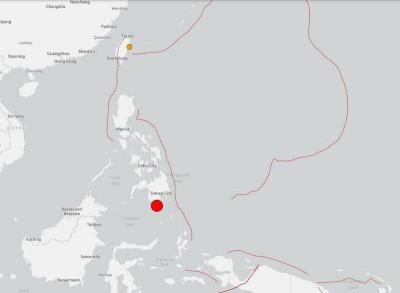
A magnitude 7.8 earthquake struck off the southern coast of Mindanao in the Philippines at 7:38am today, prompting the US Tsunami Warning System to issue an alert for neighboring countries, including Taiwan. The system issued a purple alert indicating a "tsunami threat." The potential threat zone includes Taiwan, the Philippines, Papua New Guinea, Yap and Palau. A spokesperson for Indonesia disaster mitigation agency said there were no reports of damage so far. Arlene Hollero, disaster chief of Maasim town in the Philippines' Sarangani Province, said their evacuation was underway in coastal villages and there were no reported casualties so far. DZBB radio, broadcasting from the
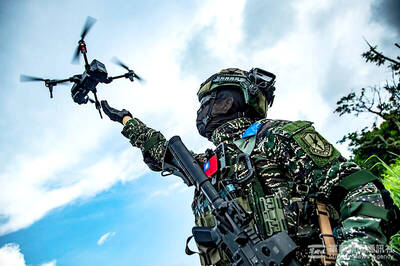
RESILIENCE: Taiwan plays a key role in semiconductors, energy, information infrastructure and advanced manufacturing, AIT Director Raymond Greene said Taiwan’s continued investment in deterrence and resilience remains vital, especially in uncrewed systems and other emerging technologies, American Institute in Taiwan (AIT) Director Raymond Greene said yesterday. Greene made the remarks at the annual National Strategic Summit on Supply Chain Resilience held by the Research Institute for Democracy, Society and Emerging Technology (DSET), a government-backed think tank. As Taiwan last year became the US’ fourth-largest trading partner and supply chain security is becoming more important, cooperation in emerging technologies continues to deepen between the two countries, he said. The US is committed to accelerating innovation, building key infrastructure, strengthening cooperation

The National Chungshan Institute of Science and Technology yesterday showcased its locally developed variants of the Vision 60 robotic patrol dog, which it plans to deploy on the nation’s outlying territories in the South China Sea. The variants were produced under the Joint Lab project — created by the institute and domestic companies — and assembled with domestically produced motors, lenses and artificial intelligence (AI) systems alongside licensed tech from the US, Missile and Rocket Systems Research Division deputy director Jen Kuo-kang (任國光) told the media event at a military base in Taipei’s Dazhi (大直) area. Taiwan has built up its strengths

RIGHT DIRECTION: Taiwan’s efforts to prevent forced labor include a proposal to ‘fully prohibit’ employers from withholding workers’ documents, an official said Taiwan is to establish a mechanism to restrict imports of goods linked to forced labor, the Executive Yuan said yesterday, after the US proposed imposing additional tariffs on Taiwanese goods over labor concerns. “The Ministry of Labor and the Ministry of Economic Affairs are to establish an interministerial review procedure,” Executive Yuan spokesperson Michelle Lee (李慧芝) said at a news briefing in Taipei. “The government is to use the Foreign Trade Act [貿易法] as the legal basis to restrict imports of goods produced with forced labor” and bring its supply chain governance more in line with international standards on human rights, resilience


 RSS
RSS