


US President Joe Biden promised “consequences” for Saudi Arabia after a Riyadh-led coalition of oil-producing nations sided with Russia to slash output.
The 13-nation OPEC cartel and its 10 allies headed by Moscow angered the White House last week with its decision to cut production by 2 million barrels a day from next month, raising fears that oil prices could soar.
“I’m not going to get into what I’d consider and what I have in mind, but there will be — there will be consequences,” Biden told CNN when asked about possible responses.
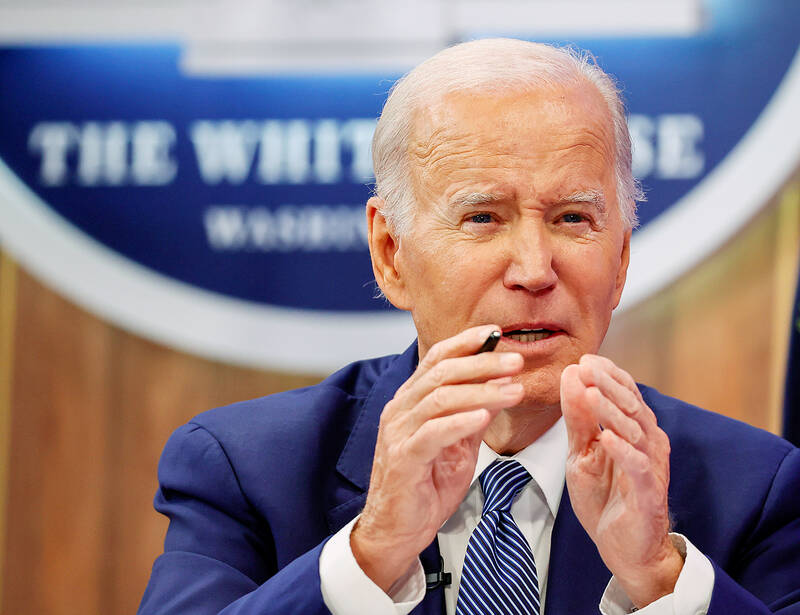
Photo: EPA-EFE
Biden did not reveal what options were being considered, but the White House had made clear earlier that he was reassessing ties between the allies.
“I think the president’s been very clear that this is a relationship that we need to continue to re-evaluate, that we need to be willing to revisit,” US National Security Council spokesman John Kirby told CNN. “Certainly in light of the OPEC decision, I think that’s where he is.”
The OPEC move was widely seen as a diplomatic slap in the face, as Biden traveled to Saudi Arabia in July and met with Saudi Arabian Crown Prince Mohammad bin Salman, despite vowing to make the kingdom an international “pariah” following the murder of journalist Jamal Khashoggi.
It also comes at a sensitive moment for Biden’s Democratic party, as it faces midterm elections next month with rising consumer prices a key talking point.
Saudi Arabia has defended the planned production cuts, saying the priority of OPEC+ was “to maintain a sustainable oil market.”
On Tuesday, Saudi Arabian Minister of Foreign Affairs Prince Faisal bin Farhan told al-Arabiya channel that the move “was purely economic and was taken unanimously by the [organization’s] member states.”
“OPEC+ members acted responsibly and took the appropriate decision,” he said.
Kirby said that Biden was “willing to work with [the US] Congress to think through what that relationship [with Saudi Arabia] ought to look like going forward,” although he clarified that no formal discussions had yet begun.

US PUBLICATION: The results indicated a change in attitude after a 2023 survey showed 55 percent supported full-scale war to achieve unification, the report said More than half of Chinese were against the use of force to unify with Taiwan under any circumstances, a survey conducted by the Atlanta, Georgia-based Carter Center and Emory University found. The survey results, which were released on Wednesday in a report titled “Sovereignty, Security, & US-China Relations: Chinese Public Opinion,” showed that 55.1 percent of respondents agreed or somewhat agreed that “the Taiwan problem should not be resolved using force under any circumstances,” while 24.5 percent “strongly” or “somewhat” disagreed with the statement. The results indicated a change in attitude after a survey published in “Assessing Public Support for (Non)Peaceful Unification
The CIA has a message for Chinese government officials worried about their place in Chinese President Xi Jinping’s (習近平) government: Come work with us. The agency released two Mandarin-language videos on social media on Thursday inviting disgruntled officials to contact the CIA. The recruitment videos posted on YouTube and X racked up more than 5 million views combined in their first day. The outreach comes as CIA Director John Ratcliffe has vowed to boost the agency’s use of intelligence from human sources and its focus on China, which has recently targeted US officials with its own espionage operations. The videos are “aimed at
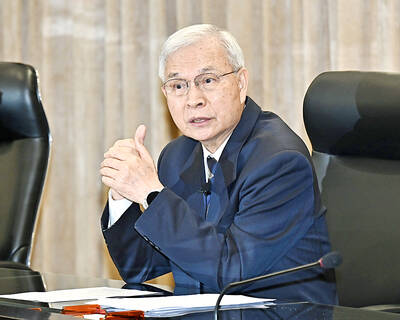
SHIFT: Taiwan’s better-than-expected first-quarter GDP and signs of weakness in the US have driven global capital back to emerging markets, the central bank head said The central bank yesterday blamed market speculation for the steep rise in the local currency, and urged exporters and financial institutions to stay calm and stop panic sell-offs to avoid hurting their own profitability. The nation’s top monetary policymaker said that it would step in, if necessary, to maintain order and stability in the foreign exchange market. The remarks came as the NT dollar yesterday closed up NT$0.919 to NT$30.145 against the US dollar in Taipei trading, after rising as high as NT$29.59 in intraday trading. The local currency has surged 5.85 percent against the greenback over the past two sessions, central

‘MISGUIDED EDICT’: Two US representatives warned that Somalia’s passport move could result in severe retaliatory consequences and urged it to reverse its decision Minister of Foreign Affairs Lin Chia-lung (林佳龍) has ordered that a special project be launched to counter China’s “legal warfare” distorting UN Resolution 2758, a foreign affairs official said yesterday. Somalia’s Civil Aviation Authority on Wednesday cited UN Resolution 2758 and Mogadishu’s compliance with the “one China” principle as it banned people from entering or transiting in the African nation using Taiwanese passports or other Taiwanese travel documents. The International Air Transport Association’s system shows that Taiwanese passport holders cannot enter Somalia or transit there. The Ministry of Foreign Affairs (MOFA) protested the move and warned Taiwanese against traveling to Somalia or Somaliland


 RSS
RSS