


Italy yesterday took a sharp turn to the right after Giorgia Meloni’s euroskeptic populist party swept to victory in general elections, putting the Taiwan-friendly politician on course to become the first female Italian prime minister.
Meloni’s Brothers of Italy party, which has neo-fascist roots, won 26 percent in Sunday’s election, according to partial results.
It leads a coalition set to win a majority in parliament and install the most right-wing government since World War II.
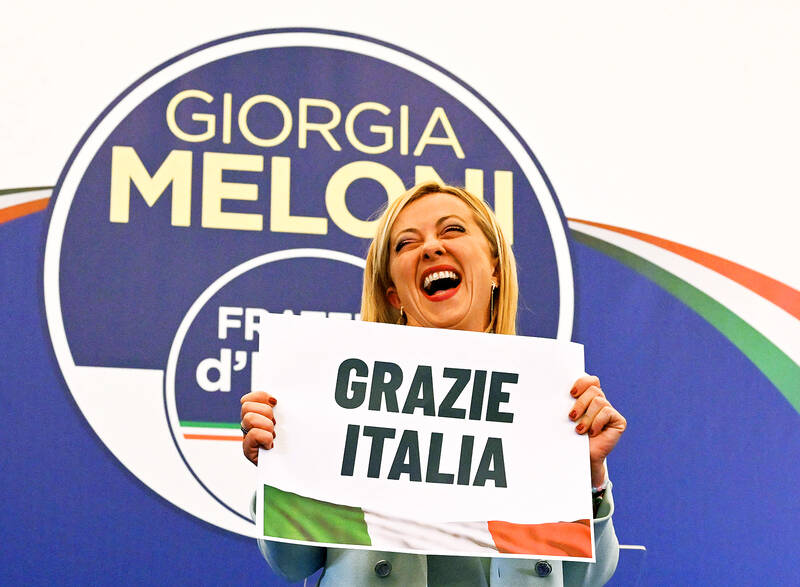
Photo: AFP
Her success represents a seismic change in Italy — a founding member of the EU and the eurozone’s third-largest economy — and for the EU.
“Meloni takes Italy,” read the headline in Repubblica, while editorialist Stefano Folli said that Italy “awakes this morning very changed.”
“It is the first time in decades that the country’s political face has transformed so completely. We don’t know yet whether its destiny in Europe has changed, too, but that is the first of many questions” now facing Italians, he said.
Meloni, who campaigned on a motto of “God, country and family,” is expected to become Italy’s first female prime minister, although the process of forming a new government could take weeks.
At a time of soaring inflation, a looming energy crisis and the war in Ukraine, the 45-year-old sought to reassure those worried about her lack of experience and radical past.
Meloni said voters had sent a “clear message” of support for her party to lead their right-wing coalition to power.
“If we are called to govern this nation we will do it for all Italians. We will do it with the aim of uniting people, of enhancing what unites them rather than what divides them,” she told reporters.
In a recent interview with Taiwan’s Central News Agency, Meloni said that she would reverse course on her nation’s support for China’s Belt and Road Initiative and strengthen ties with Taiwan.
She voiced support for Taiwan and criticized China’s assertive actions across the globe, and their implications for Italy and the EU.
On the prospective relationship between Italy and Taiwan under her watch, Meloni said Taiwan would be “an essential concern for Italy.”
“We like to think of a new and more intense season of cooperation: cultural exchanges, tourism, prevention and management of health crises, scientific research and projects in the key sector of microchips, where Taiwan is a world leader,” she said.
Meloni’s coalition allies, Matteo Salvini’s far-right League and former Italian prime minister Silvio Berlusconi’s Forza Italia, lagged behind her in the polls, but together they were forecast to win about 44 percent, enough to secure a majority in both houses of parliament.
Full results were not due until later yesterday, but the center-left Democratic Party, the coalition’s main rival, conceded, saying it was a “sad” day.
Turnout fell to a historic low of about 64 percent.
Congratulations came in quickly from her nationalist allies across the continent, from Polish Prime Minister Mateusz Morawiecki to Spain’s far-right party Vox.
“Meloni has shown the way for a proud, free Europe of sovereign nations,” Vox leader Santiago Abascal wrote on Twitter.
However, Spanish Minister of Foreign Affairs, EU and Cooperation Jose Manuel Albares said that “populist movements always grow, but it always ends in the same way — in catastrophe.”
Meloni no longer wants Italy to leave the eurozone, but says Rome must assert its interests more, and she has policies that look set to challenge Brussels on everything from public spending rules to mass migration.
Additional reporting by CNA
The CIA has a message for Chinese government officials worried about their place in Chinese President Xi Jinping’s (習近平) government: Come work with us. The agency released two Mandarin-language videos on social media on Thursday inviting disgruntled officials to contact the CIA. The recruitment videos posted on YouTube and X racked up more than 5 million views combined in their first day. The outreach comes as CIA Director John Ratcliffe has vowed to boost the agency’s use of intelligence from human sources and its focus on China, which has recently targeted US officials with its own espionage operations. The videos are “aimed at
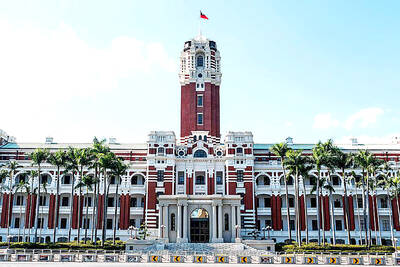
STEADFAST FRIEND: The bills encourage increased Taiwan-US engagement and address China’s distortion of UN Resolution 2758 to isolate Taiwan internationally The Presidential Office yesterday thanked the US House of Representatives for unanimously passing two Taiwan-related bills highlighting its solid support for Taiwan’s democracy and global participation, and for deepening bilateral relations. One of the bills, the Taiwan Assurance Implementation Act, requires the US Department of State to periodically review its guidelines for engagement with Taiwan, and report to the US Congress on the guidelines and plans to lift self-imposed limitations on US-Taiwan engagement. The other bill is the Taiwan International Solidarity Act, which clarifies that UN Resolution 2758 does not address the issue of the representation of Taiwan or its people in
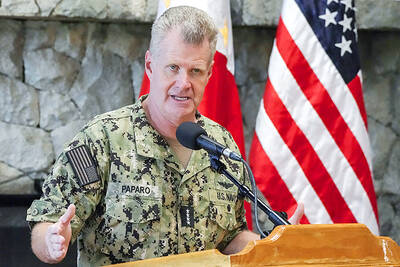
US Indo-Pacific Commander Admiral Samuel Paparo on Friday expressed concern over the rate at which China is diversifying its military exercises, the Financial Times (FT) reported on Saturday. “The rates of change on the depth and breadth of their exercises is the one non-linear effect that I’ve seen in the last year that wakes me up at night or keeps me up at night,” Paparo was quoted by FT as saying while attending the annual Sedona Forum at the McCain Institute in Arizona. Paparo also expressed concern over the speed with which China was expanding its military. While the US
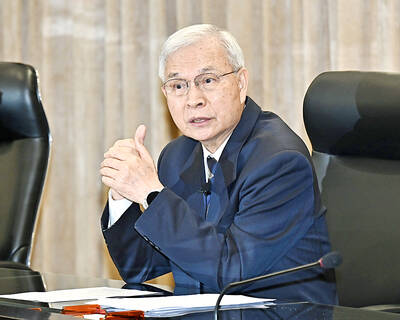
SHIFT: Taiwan’s better-than-expected first-quarter GDP and signs of weakness in the US have driven global capital back to emerging markets, the central bank head said The central bank yesterday blamed market speculation for the steep rise in the local currency, and urged exporters and financial institutions to stay calm and stop panic sell-offs to avoid hurting their own profitability. The nation’s top monetary policymaker said that it would step in, if necessary, to maintain order and stability in the foreign exchange market. The remarks came as the NT dollar yesterday closed up NT$0.919 to NT$30.145 against the US dollar in Taipei trading, after rising as high as NT$29.59 in intraday trading. The local currency has surged 5.85 percent against the greenback over the past two sessions, central


 RSS
RSS