


Ukrainian President Volodymyr Zelenskiy on Sunday sacked the head of the nation’s domestic security service and state prosecutor, citing hundreds of cases of alleged treason and collaboration with Russia, as Moscow appeared set to step up military operations.
Zelenskiy said more than 60 officials from the SBU security service and prosecutor’s office were working against Ukraine in Russian-occupied territories, and 651 treason and collaboration cases had been opened against law enforcement officials.
The sackings on Sunday of Ivan Bakanov, head of the security service, and Ukrainian Prosecutor General Iryna Venediktova, who led efforts to prosecute Russian war crimes, and the sheer number of treason cases reveals the huge challenge of Russian infiltration as Kyiv battles Moscow in what it says is a fight for survival.
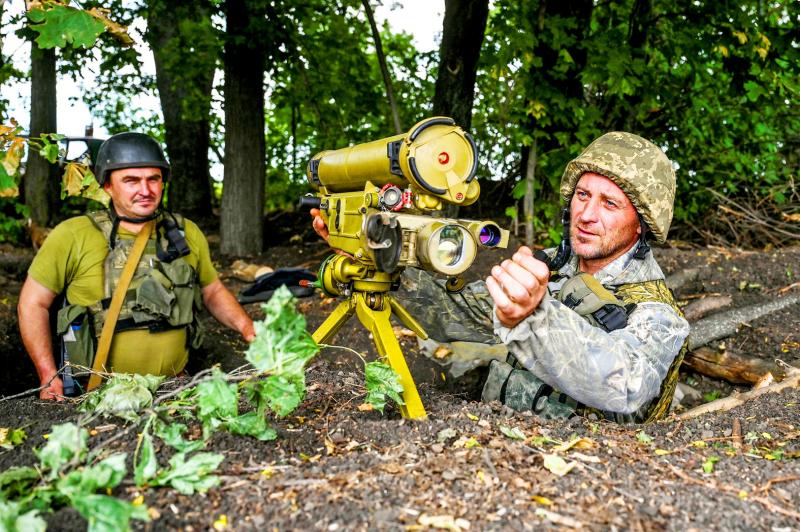
Photo: Reuters
“Such an array of crimes against the foundations of the national security of the state ... pose very serious questions to the relevant leaders,” Zelenskiy said. “Each of these questions will receive a proper answer.”
In his nightly speech to the nation, Zelenskiy noted the arrest on suspicion of treason of the SBU’s former head overseeing the region of Crimea, the peninsula annexed by Russia in 2014 that Kyiv and the West still view as Ukrainian land.
Zelenskiy said he had fired the top security official at the start of the invasion, a decision he said had now been shown to be justified.
“Sufficient evidence has been collected to report this person on suspicion of treason. All his criminal activities are documented,” he said.
After failing to capture the capital, Kyiv, early in the invasion, Russian forces using a campaign of devastating bombing now control large swaths of Ukraine’s south and east, where pro-Russian separatists already control territory.
Zelenskiy said that Russia had used more than 3,000 cruise missiles to date, and it was “impossible to count” the number of artillery and other strikes so far.
Western deliveries of long-range arms are beginning to help Ukraine on the battlefield, with Kyiv citing a string of successful strikes carried out on 30 Russian logistics and ammunition hubs, using several multiple launch rocket systems supplied by the West.
The strikes are causing havoc with Russian supply lines and have significantly reduced Russia’s offensive capability, the Ukrainian Ministry of Defense said.
Ukraine’s southern Operational Command on Sunday reported that in the Kherson region it had destroyed two Russian Pantsir missile systems, three strategic communication systems, one radar station, two ammunition depots, and 11 armored and military vehicles.
The Russian military are also using radio-electronic warfare to suppress satellite communication channels, the Ukrainian General Staff said in a statement early yesterday.
Russia has ordered military units to intensify operations to prevent Ukrainian strikes on areas held by Russia, according to Ukraine, which at the weekend reported shelling along the front line in what it said was preparation for a fresh assault.


A global survey showed that 60 percent of Taiwanese had attained higher education, second only to Canada, the Ministry of the Interior said. Taiwan easily surpassed the global average of 43 percent and ranked ahead of major economies, including Japan, South Korea and the US, data from the Organisation for Economic Co-operation and Development (OECD) for 2024 showed. Taiwan has a high literacy rate, data released by the ministry showed. As of the end of last year, Taiwan had 20.617 million people aged 15 or older, accounting for 88.5 percent of the total population, with a literacy rate of 99.4 percent, the data

NEW LOW: The council in 2024 based predictions on a pessimistic estimate for the nation’s total fertility rate of 0.84, but last year that rate was 0.69, 17 percent lower An expected National Development Council (NDC) report expects the nation’s population to drop below 12 million by 2065, with the old-age dependency ratio to top 100 percent sooner than 2070, sources said yesterday. The council is slated to release its latest population projections in August, using an ultra-low fertility model, the sources said. The previous report projected that Taiwan’s population would fall to 14.37 million by 2070, but based on a new estimate of the total fertility rate (TFR) — the average number of children born to a woman over her lifetime — the population is expected to reach 12 million by
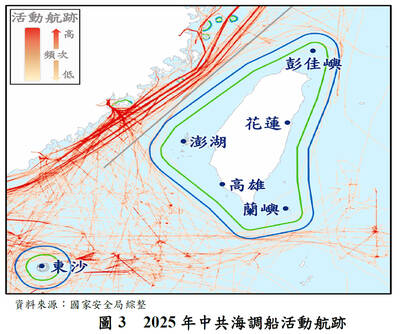
INTENSIFYING THREATS: Beijing’s tactics include massive attacks on the government service network, aircraft and naval vessel incursions and damaging undersea cables China is prepared to interfere in November’s nine-in-one local elections by launching massive attacks on the Taiwanese government’s service network (GSN), a report published by the National Security Bureau showed. The report was submitted to the Legislative Yuan ahead of the bureau’s scheduled briefing at the Foreign Affairs and National Defense Committee tomorrow. The national security team has identified about 13,000 suspicious Internet accounts and 860,000 disputed messages, the bureau said of China’s cognitive warfare against Taiwan. The disputed messages focus on major foreign affairs, national defense and economic issues, which were produced using generative artificial intelligence (AI) and distributed through Chinese

COUNTERING HOSTILITY: The draft bill would require the US to increase diplomatic pressure on China and would impose sanctions on those who sabotage undersea cable networks US lawmakers on Thursday introduced a bipartisan bill to bolster the resilience of Taiwan’s submarine cables to counter China’s hostile activities. The proposal, titled the critical undersea infrastructure resilience initiative act, was cosponsored by Republican representatives Mike Lawler and Greg Stanton, and Democratic Representative Dave Min. US Senators John Curtis and Jacky Rosen also introduced a companion bill in the US Senate, which has passed markup at the chamber’s Committee on Foreign Relations. The House’s version of the bill would prioritize the deployment of sensors to detect disruptions or potential sabotage in real-time and enhance early warning capabilities through global intelligence sharing frameworks,


 RSS
RSS