


Germany’s Bundestag on Thursday adopted a resolution calling on Berlin to push for Taiwan’s participation in WHO activities, as a delegation of Taiwanese legislators yesterday left for Switzerland to advocate for Taiwan on the sidelines of the World Health Assembly (WHA).
The resolution, backed by lawmakers across party lines, urges the German government to work within the UN’s health agency to advocate for Taiwan’s participation in the WHA and relevant WHO mechanisms and activities as an observer.
It also calls on the government to report to the Bundestag regularly about its efforts to support Taiwan’s participation in WHO activities.
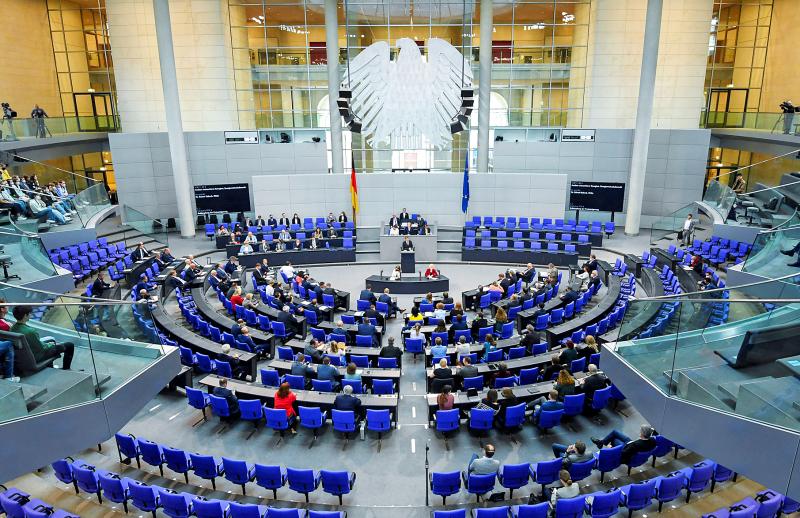
Photo: Reuters
In Taipei, the Ministry of Foreign Affairs yesterday said it was significant that the Bundestag, backed by four parliamentary groups in support of Taiwan, passed the resolution.
Taiwan looks forward to working with the German government and parliament to deepen bilateral ties and contribute to peace and stability in the Indo-Pacific region, it said in a statement.
Ulrich Lechte, a spokesperson for the Free Democratic Party (FDP) parliamentary group, was cited by German media as saying that Taiwan could play an important role in the WHO and that its exclusion because of Chinese pressure must end.
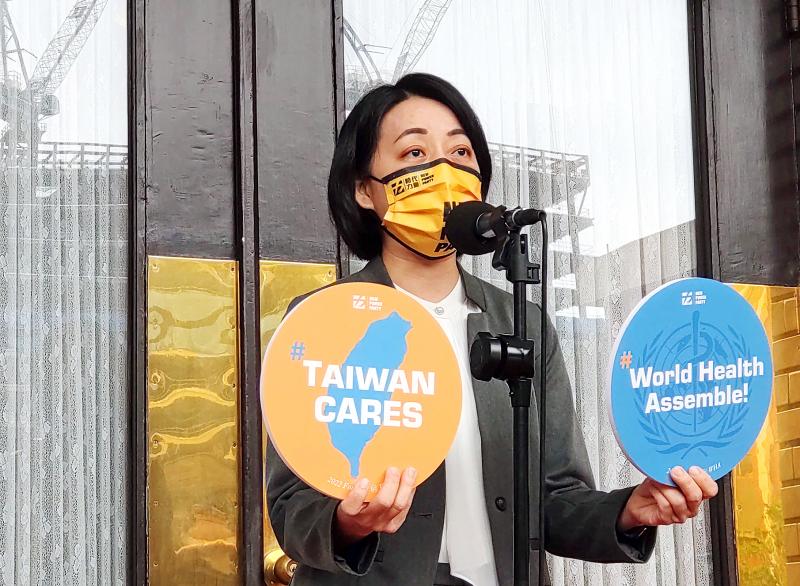
Photo: Yang Cheng-yu, Taipei Times
The FDP was one of the four party caucuses that cosponsored the resolution, along with the Social Democratic Party, CDU/CSU and Bundnis 90/Die Grunen.
Taiwan has yet to receive an invitation to this year’s WHA, which is to be held from Sunday to Saturday next week in Geneva, Switzerland.
A group of cross-party legislators yesterday left for Geneva to voice Taiwan’s hope to participate in international discussions during the 75th WHA.
Democratic Progressive Party Legislator Lin Ching-yi (林靜儀), Chinese Nationalist Party (KMT) legislators Lee De-wei (李德維) and Jessica Chen (陳玉珍), and New Power Party Legislator Claire Wang (王婉諭) formed the observation group, which is scheduled to return to Taiwan on Thursday next week.
Wang told a news conference yesterday that she would condemn the WHO for succumbing to Chinese pressure and excluding Taiwan.
“As a sovereign state, Taiwan should be able to participate in global organizations such as the WHO,” she said, adding that during the trip, she would let other democracies know that Taiwan is an important partner and would fight for more opportunities to participate.
Lin, who is a doctor, said that they would watch live broadcasts of the meetings to listen to experts discuss the post-COVID-19 pandemic world.
She said they hoped to visit some local groups, but could not reveal details for fear of Chinese intervention.
The group is also to present Taiwan’s efforts in COVID-19 prevention to Taiwanese expatriates, as many have been asking when policies would be relaxed, she added.

The National Chungshan Institute of Science and Technology yesterday showcased its locally developed variants of the Vision 60 robotic patrol dog, which it plans to deploy on the nation’s outlying territories in the South China Sea. The variants were produced under the Joint Lab project — created by the institute and domestic companies — and assembled with domestically produced motors, lenses and artificial intelligence (AI) systems alongside licensed tech from the US, Missile and Rocket Systems Research Division deputy director Jen Kuo-kang (任國光) told the media event at a military base in Taipei’s Dazhi (大直) area. Taiwan has built up its strengths

RIGHT DIRECTION: Taiwan’s efforts to prevent forced labor include a proposal to ‘fully prohibit’ employers from withholding workers’ documents, an official said Taiwan is to establish a mechanism to restrict imports of goods linked to forced labor, the Executive Yuan said yesterday, after the US proposed imposing additional tariffs on Taiwanese goods over labor concerns. “The Ministry of Labor and the Ministry of Economic Affairs are to establish an interministerial review procedure,” Executive Yuan spokesperson Michelle Lee (李慧芝) said at a news briefing in Taipei. “The government is to use the Foreign Trade Act [貿易法] as the legal basis to restrict imports of goods produced with forced labor” and bring its supply chain governance more in line with international standards on human rights, resilience
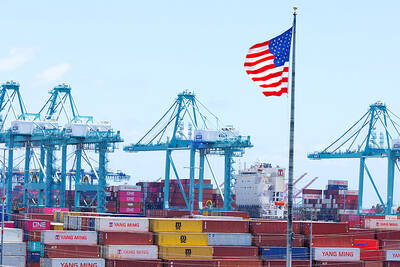
NOT IMMEDIATE: Taiwan has a chance to appeal the proposed 10 percent tariff before it starts, while other countries face a 12.5 percent tariff from the trade office Taiwan is among 60 economies determined by the US to have failed to impose or enforce a ban on the importation of goods produced with forced labor, according to a notice released on Tuesday by the Office of the US Trade Representative (USTR), which proposed imposing an additional 10 percent or more tariff on them. The USTR in a statement said that following an investigation, it had determined under Section 301 of the Trade Act of 1974 that the failure of the 60 economies to impose and effectively enforce a prohibition on the importation of goods produced with forced labor is
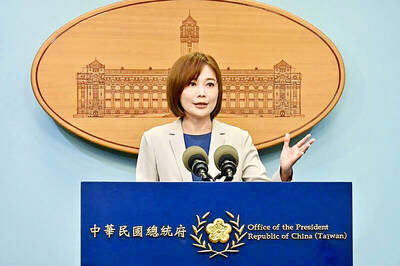
TIT-FOR-TAT: The US allegedly revoked the visa of a Chinese national working at Xinhua News Agency in the US in response to Beijing’s expulsion of Vivian Wang The Presidential Office yesterday condemned China for expelling a New York Times correspondent from Beijing following the newspaper’s interview with President William Lai (賴清德), saying the move highlighted Beijing’s suppression of press freedom and its threat to international news media. Taiwan has noted a series of recent incidents in which Beijing used similar tactics to “threaten and pressure international media outlets and journalists,” Presidential Office spokeswoman Karen Kuo (郭雅慧) said in a statement. “This concerns not only press freedom and freedom of expression, but also the safety of journalists, and Taiwan and relevant partners are paying close attention to the situation,” she


 RSS
RSS