

Taiwan’s military capabilities are inferior to those of China’s People’s Liberation Army (PLA) in almost all regards, the Ministry of National Defense said in a report yesterday.
The legislature requested the report after the military sought a special budget to increase combat capabilities across the armed forces.
The PLA, in general, has superior firepower among its ground forces, better naval surface coverage and better airborne electronic warfare capabilities, the report said.
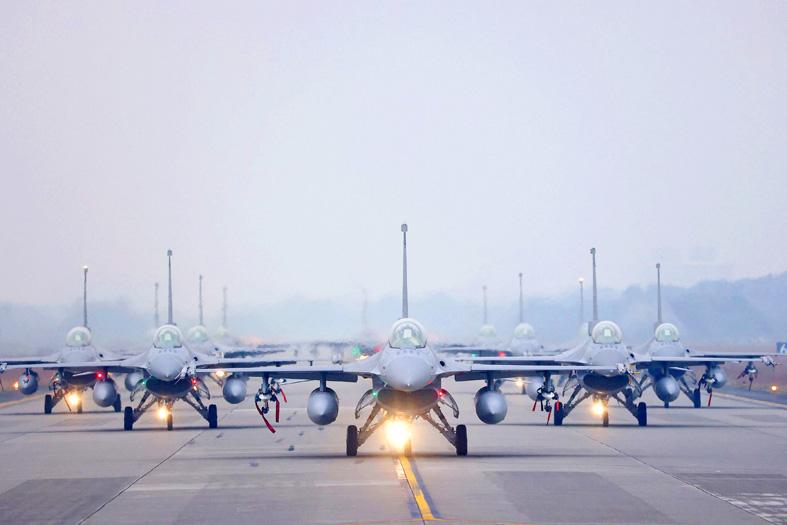
Photo: Ann Wang, Reuters
The advantage in terms of air control capability leans toward the PLA Air Force, while the PLA Navy’s submarine forces far outstrip that of Taiwan’s navy, it said.
The PLA has better ship and plane-building capabilities, and manufactures more of its own equipment and arms, the report said.
The Chinese navy is equipped with China’s latest version of its Russian-built radars, which can detect objects up to 180km away, while the range of China’s ship-borne missiles have increased to 250km from 130km, the report said.
China’s J-20 jets have a greater missile range of 120km, compared to the 112km range of such ordinances in Taiwan, it said.
The ministry’s counter to the Chinese military threat is to create a force with “immediate combat capability,” meaning continued deployment of stratified missile defense systems, it said.
This would increase Taiwan’s overall anti-air and anti-surface capabilities, allowing rapid deployment of combat-ready troops and ramping up overall combat capabilities, the ministry said.
Security collaborations with the US are based on the US’ Taiwan Relations and Taiwan Assurance acts, and the “six assurances,” the report said.
Together, Taiwan and the US jointly maintain the security of the Taiwan Strait, and the peace and stability of the region, it said, adding that while Taiwan has no official diplomatic ties with Japan, Tokyo has reiterated the importance of peace and stability in the Taiwan Strait.
The ministry would continue to expand Taiwan-Japan defense collaborations based on the principle of active participation, improving ties and upholding national defense, it said.

The Hualien District Prosecutors’ Office yesterday launched an investigation following allegations by a former foreign correspondent in Taiwan of widespread vote-buying in Hualien County. In an interview with Formosa TV (FTV, 民視) aired on Saturday, former Financial Times Taiwan correspondent Kathrin Hille spoke about Taiwan’s democracy and said that she now lives in rural Hualien, where “all the votes are bought.” Neighbors would talk about who had come by and leave cash on the table showing “how much each vote was worth that year,” Hille said. The practice needs to be addressed, considering Taiwan has been a democracy for many
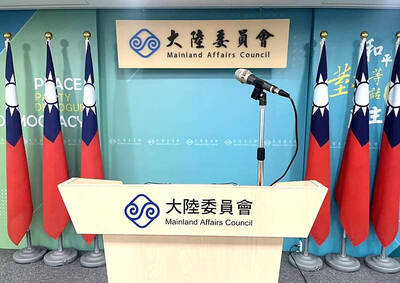
SAFETY RISKS: A Taiwanese man who was traveling to Shanghai for business was allegedly questioned for six hours due to his past work for Amnesty International The Mainland Affairs Council (MAC) urged Taiwanese to exercise caution when considering trips to China after a Taiwanese man was allegedly questioned for six hours in Shanghai over past work with Amnesty International. The council on Saturday said in a report that 426 Taiwanese have gone missing or been detained or had their freedom of movement restricted in China since Jan. 1, 2024. The figure is up by seven from the previous week. New Chinese entry and exit regulations are due to take effect on Sept. 15, the council said. Of the 426 cases, 160 people have gone missing, up
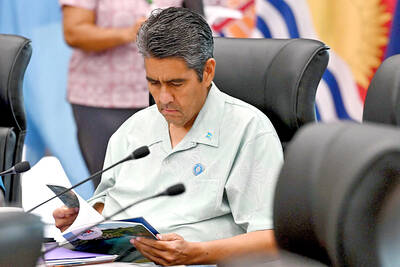
Palau’s president yesterday called for a “unified” Pacific response to a missile test by China in July, while Taiwan and its Pacific allies a day earlier at the Pacific Islands Forum (PIF) reaffirmed their commitment to peace, stability and prosperity. China gave only a handful of nations short notice before test-firing an intercontinental ballistic missile in July, sparking condemnation from several Pacific leaders. The 18-member PIF being held in Palau was expected to release a communique after press time last night, with a formal response to the test possibly included. Palau, which invited Taiwan to attend sideline events as an aid partner, urged
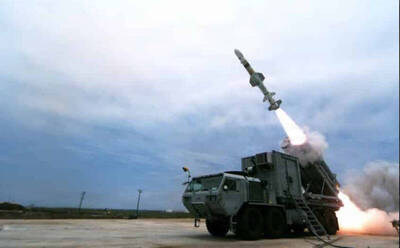
DEFENSE PROCUREMENT: The Pentagon has told a US congressional hearing that Taiwan has ‘top priority worldwide’ in the delivery of Harpoon missile systems The US Navy and Boeing Co have conducted a series of tests for land-based Harpoon anti-ship missile system being supplied to Taiwan and released footage showing the system striking a target vessel at sea. The weapons system and support equipment tested were reportedly tailored for Taiwan, while the first launch vehicles and other components have already begun arriving in Taiwan, with the full delivery of 100 systems scheduled to be completed by the end of 2028. Pentagon officials have previously told a US congressional hearing that Taiwan has “top priority worldwide” in the delivery of Harpoon missile systems, with production


 RSS
RSS