


The government is mulling using COVID-19 tests instead of home isolation for people exposed to the virus in a bid to limit the disease’s social impact, Minister of Health and Welfare Chen Shih-chung (陳時中) said yesterday.
The proposed measure, which would apply to people who had three or more COVID-19 vaccine jabs, would first be implemented among healthcare workers, then to workers who provide vital services and later on possibly the public as a whole, said Chen, who heads the Central Epidemic Command Center (CECC).
The plan is to be finalized at the end of the week, he said, adding that officials are mostly in favor of the policy, and limiting discussions to the pace and scope of the measures.
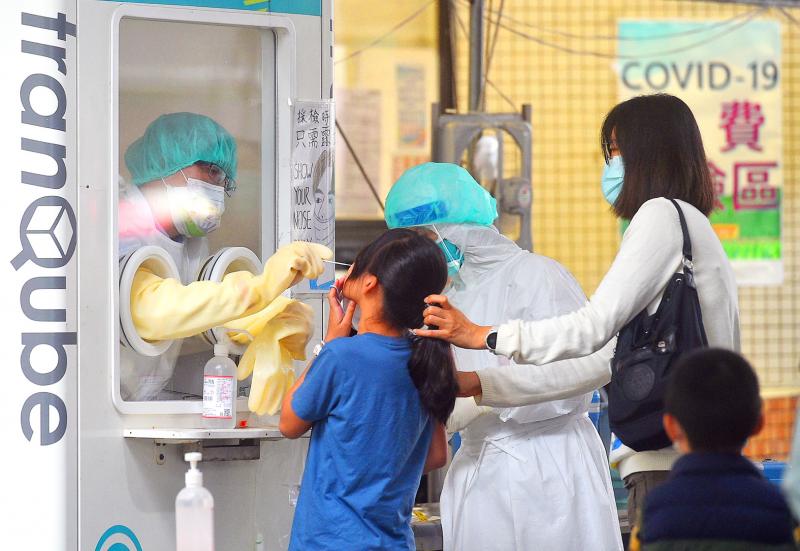
Photo: Chang Chia-ming, Taipei Times
The policy already applies to a limited number of medical workers, he added.
Chen’s remark came hours after Taipei Deputy Mayor Vivian Huang (黃珊珊) called on the CECC to ease COVID-19 isolation protocols as a local outbreak spread, with 2,969 confirmed cases yesterday.
The Taipei City Government is placing people in isolation at a rate of 10.6 close contacts per confirmed case, which would translate into 300,000 people being added to the home isolation list, she wrote on Facebook.
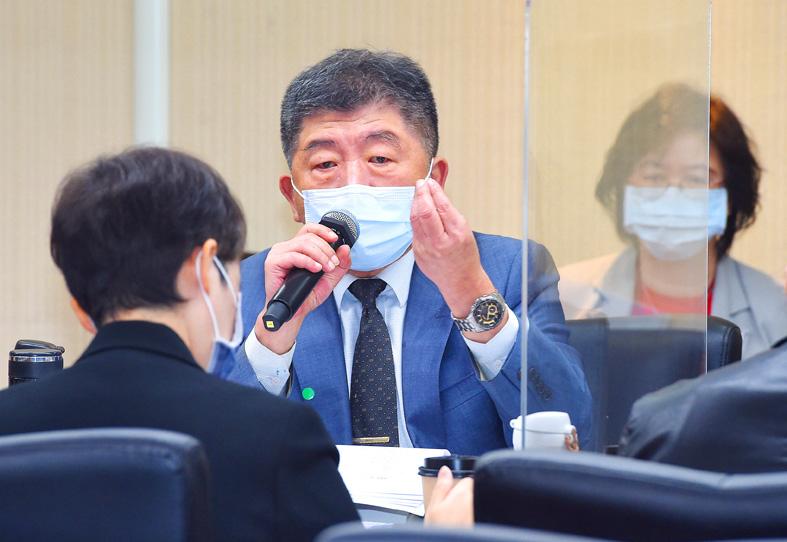
Photo: Liu Hsin-de, Taipei Times
Huang and Taipei Mayor Ko Wen-je (柯文哲) have been isolating at their homes since Sunday after being exposed to a person with COVID-19 at a Taipei City Hall function.
The number of people placed in isolation could reach 1 million, assuming current pandemic trends continue, she said, adding that the figure does not include children staying home due to school closures or people taking leave to care for sick family members.
This level of isolations would seriously strain the nation’s healthcare workers, public services and economic activity, she said.
Isolation protocols should be relaxed for those who had three vaccine jabs so that medical and government resources could be directed toward people with moderate or severe COVID-19 symptoms, she said, citing declining rates of COVID-19 deaths.
The easing of isolation standards should apply in particular to healthcare workers, she said.
That home isolation for large swathes of close contacts had been effective in Taiwan was mainly due to the government’s success in suppressing the pandemic, which is no longer the case, she said, adding that the nation should learn from New Zealand’s COVID-19 response.
“The government should face reality and tell the public honestly that the country has changed its policy to living with COVID-19,” she said. “The government’s main job should be conserving medical capacity for those who need it the most and maintaining the normal functioning of society.”
Chou Jih-haw (周志浩), who leads the CECC’s Pandemic Surveillance Group, told Cabinet officials yesterday that COVID-19 modeling suggests that Taiwan would have 9,599 new cases on Saturday next week.
The projection, which has a confidence level of 95 percent, falls in a range of 6,180 to 15,583 cases, he said, adding that the upper range is highly unlikely to occur.
Asked whether the local outbreak would peak next month, Chen told a CECC news briefing that the outbreak is likely to play out in one or two months, but not sooner.
Taiwan currently reports about 170 new cases per 100,000 people, which is extremely low compared with an infection rate of 16 percent in Hong Kong and New Zealand, or 20 percent rate in Australia and Singapore, he said.
An infection rate of 20 percent would translate to about 4.6 million people infected in Taiwan, at which point the country is to transition to living with COVID-19 model and no additional in-dining restrictions would be necessary, he said.
Additional reporting by Wu Liang-yi
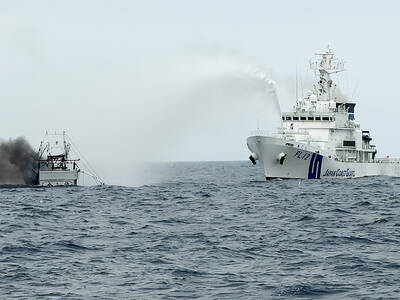
CREDIT-GRABBER: China said its coast guard rescued the crew of a fishing vessel that caught fire, who were actually rescued by a nearby Taiwanese boat and the CGA Maritime search and rescue operations do not have borders, and China should not use a shipwreck to infringe upon Taiwanese sovereignty, the Coast Guard Administration (CGA) said yesterday. The coast guard made the statement in response to the China Coast Guard (CCG) saying it saved a Taiwanese fishing boat. The Chuan Yu No. 6 (全漁6號), a fishing vessel registered in Keelung, on Thursday caught fire and sank in waters northeast of Diaoyutai Islands (釣魚台). The vessel left Keelung’s Badouzih Fishing Harbor (八斗子漁港) at 3:35pm on Sunday last week, with seven people on board — a 62-year-old Taiwanese captain surnamed Chang (張) and six

The Legislative Yuan’s Finance Committee yesterday approved proposed amendments to the Amusement Tax Act (娛樂稅法) that would abolish taxes on films, cultural activities and competitive sporting events, retaining the fee only for dance halls and golf courses. The proposed changes would set the maximum tax rate for dance halls and golf courses at 50 and 20 percent respectively, with local governments authorized to suspend the levies. Article 2 of the act says that “amusement tax shall be levied on tickets sold or fees charged by amusement places, facilities or activities” in six categories: “Cinema; professional singing, story-telling, dancing, circus, magic show, acrobatics

Tainan, Taipei and New Taipei City recorded the highest fines nationwide for illegal accommodations in the first quarter of this year, with fines issued in the three cities each exceeding NT$7 million (US$220,639), Tourism Administration data showed. Among them, Taipei had the highest number of illegal short-term rental units, with 410. There were 3,280 legally registered hotels nationwide in the first quarter, down by 14 properties, or 0.43 percent, from a year earlier, likely indicating operators exiting the market, the agency said. However, the number of unregistered properties rose to 1,174, including 314 illegal hotels and 860 illegal short-term rental
INFLATION UP? The IMF said CPI would increase to 1.5 percent this year, while the DGBAS projected it would rise to 1.68 percent, with GDP per capita of US$44,181 The IMF projected Taiwan’s real GDP would grow 5.2 percent this year, up from its 2.1 percent outlook in January, despite fears of global economic disruptions sparked by the US-Iran conflict. Taiwan’s consumer price index (CPI) is projected to increase to 1.5 percent, while unemployment would be 3.4 percent, roughly in line with estimates for Asia as a whole, the international body wrote in its Global Economic Outlook Report published in the US on Monday. The figures are comparatively better than the IMF outlook for the rest of the world, which pegged real GDP growth at 3.1 percent, down from 3.3 percent


 RSS
RSS